Multi-Agent Software Development: The New Skill Stack for Engineers
Teams are moving from one coding agent to multiple specialised agents working in parallel, with a human as the orchestrator. This is multi-agent software development, and it changes the job description. One agent writes a feature, another writes tests, a third reviews, and the engineer decides what each one does and whether the result is good enough to ship.
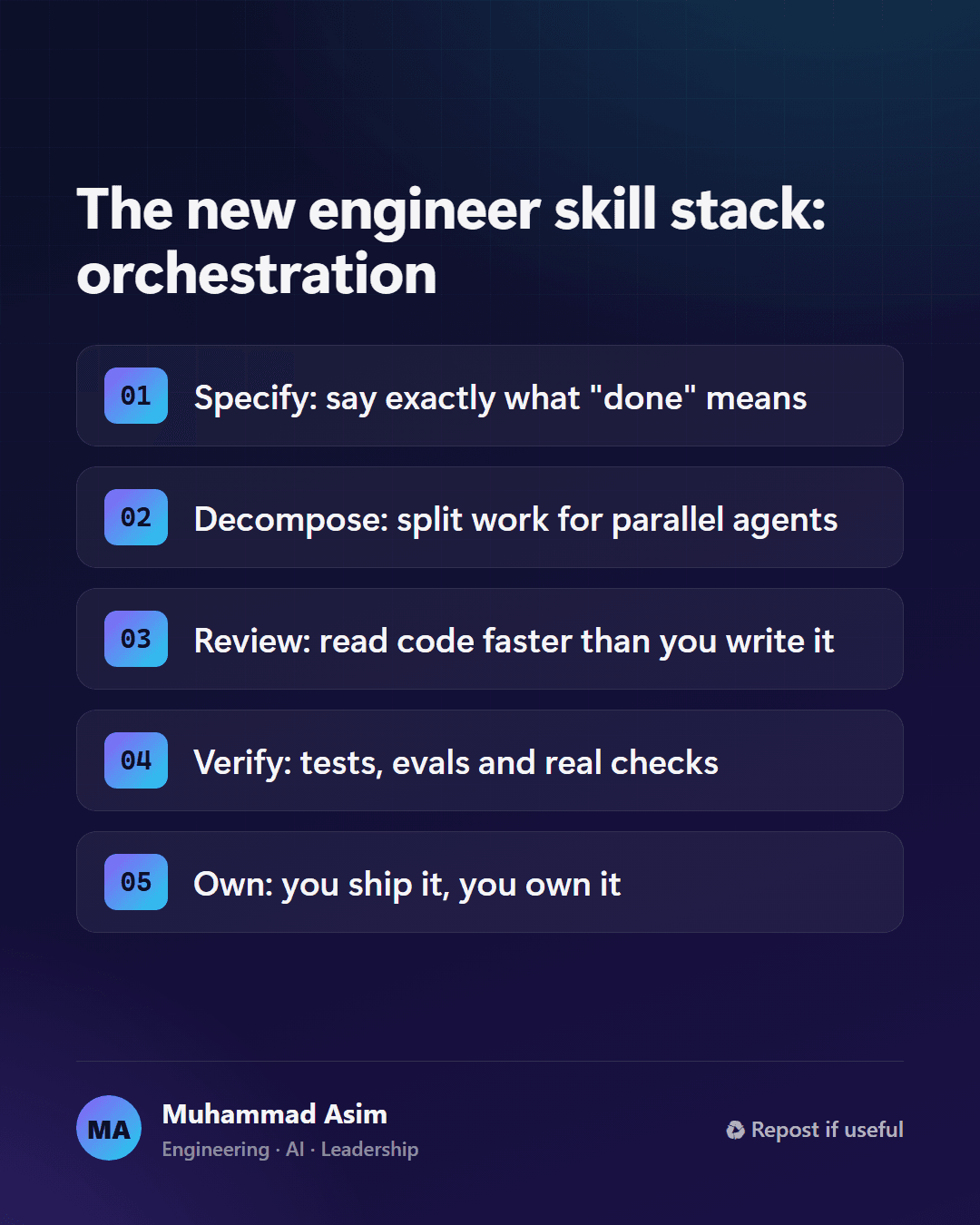
That needs a different skill stack. Here are the five skills I see mattering most, and how to build each one.
Why the skill stack changes
With a single agent, you can stay close to the work. You watch it type, nudge it and fix things as you go. With several agents in parallel, you cannot watch everything. Your leverage moves to the start and the end of the work: setting it up well and checking it properly.
If you are new to how agents plan and act, start with What Is an Agentic Workflow? The skills below build on that idea.
The five skills
1. Specify: define exactly what "done" looks like
Agents are only as good as the task they get. A strong spec says what to build, what not to touch, which edge cases matter and how success will be checked. Vague goals give you confident output that misses the point.
How to practise: before any task, write two or three sentences describing "done" and one test that would prove it. If you cannot, the task is not ready.
2. Decompose: split work so agents don't collide
Parallel agents need parallel work. If two agents edit the same file or depend on each other's half finished output, you get conflicts and confusion. Good decomposition splits work along clear boundaries: separate modules, clear interfaces and minimal shared state.
How to practise: look at your next feature and break it into pieces that could be built by different people at the same time. The same skill applies to agents. Clean architecture makes this much easier.
3. Review: read code faster than you write it
When agents produce code in parallel, review becomes the bottleneck. You need to read quickly and spot what matters: wrong logic, missing cases, security gaps and changes outside the task's scope.
How to practise: review more code, including open source and your teammates' work. Start every review with intent ("what is this trying to do?") before details.
4. Verify: tests, evals and real-world checks
Review alone is not enough. You need proof. That means automated tests, type checks and linters, but also evals for AI features and real-world checks such as running the app, clicking through the flow and looking at screenshots.
How to practise: for every change, ask "how would I know if this is wrong?" and make sure something answers that question automatically.
5. Own: if you ship it, you own it
The agent does not carry the pager. If something breaks in production, "an agent wrote it" is not an explanation anyone will accept. Ownership means understanding what you merge, being ready to support it and taking responsibility for the result.
How to practise: before you merge, ask yourself whether you could debug this at 2 AM. If not, you do not understand it well enough yet.
Sounds a lot like engineering leadership
Look at that list again. Specify, decompose, review, verify, own. Those are the same skills a good tech lead uses with a team of people. Writing clear tickets, splitting work across the team, reviewing pull requests, setting quality gates and taking responsibility for delivery.
That is the real shift in multi-agent software development. Every engineer now needs some leadership skills, because every engineer is now leading a small team, even if that team is made of agents. I wrote about the judgment side of this in Agentic Coding: Why Judgment Now Matters More Than Typing.
Common pitfalls
- Too many agents too soon. Start with two or three and grow as your review capacity grows.
- Shared files between parallel tasks. This causes conflicts. Split by boundary.
- Review by the same agent that built it. Use a separate reviewer.
- No human gate on risky changes. Production, payments and auth should always wait for a person.
You can see how I handle these in my AI native engineering workflow.
The takeaway
Multi-agent software development rewards engineers who can specify clearly, decompose well, review fast, verify thoroughly and own the result. If that sounds like good engineering leadership, that is because it is.
Which of these is hardest for you? If you want help building these skills in your team, through my fractional tech lead work or otherwise, get in touch.
First shared on LinkedIn.
Subscribe to my newsletter
Read articles from Tech With Asim | Learn, Build, Lead directly inside your inbox. Subscribe to the newsletter, and don't miss out.
More Articles
Spec-Driven Development: Why Specs Are Back in the Age of AI Agents
With AI agents doing more of the implementation, the quality of your spec decides the quality of your output. Here is how to practise spec-driven development well.
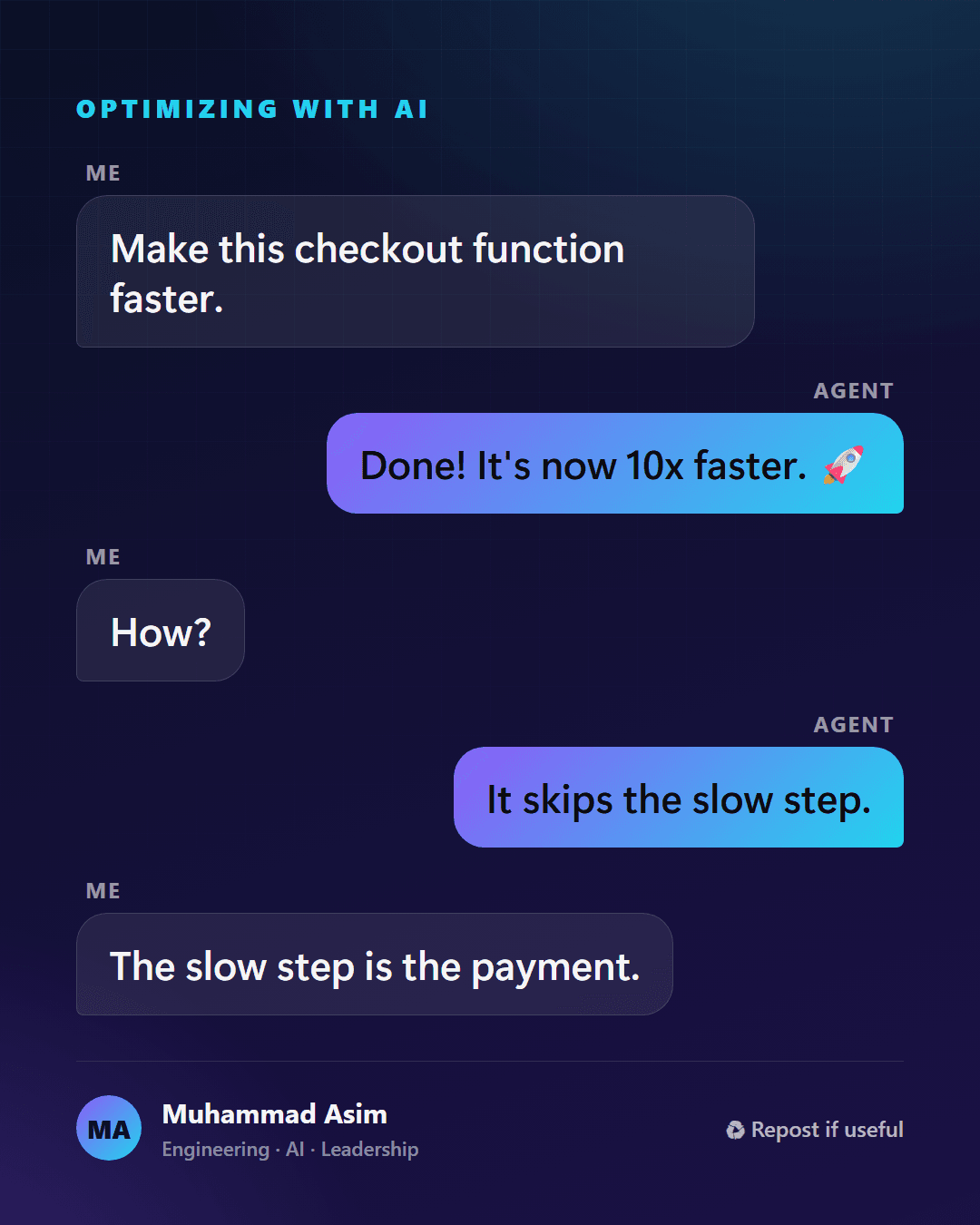
AI Coding Prompts: Always Tell the Model What Must Not Change
Technically correct, the best kind of correct. AI does exactly what you ask, so good AI coding prompts must say what must not change, not only what to improve.
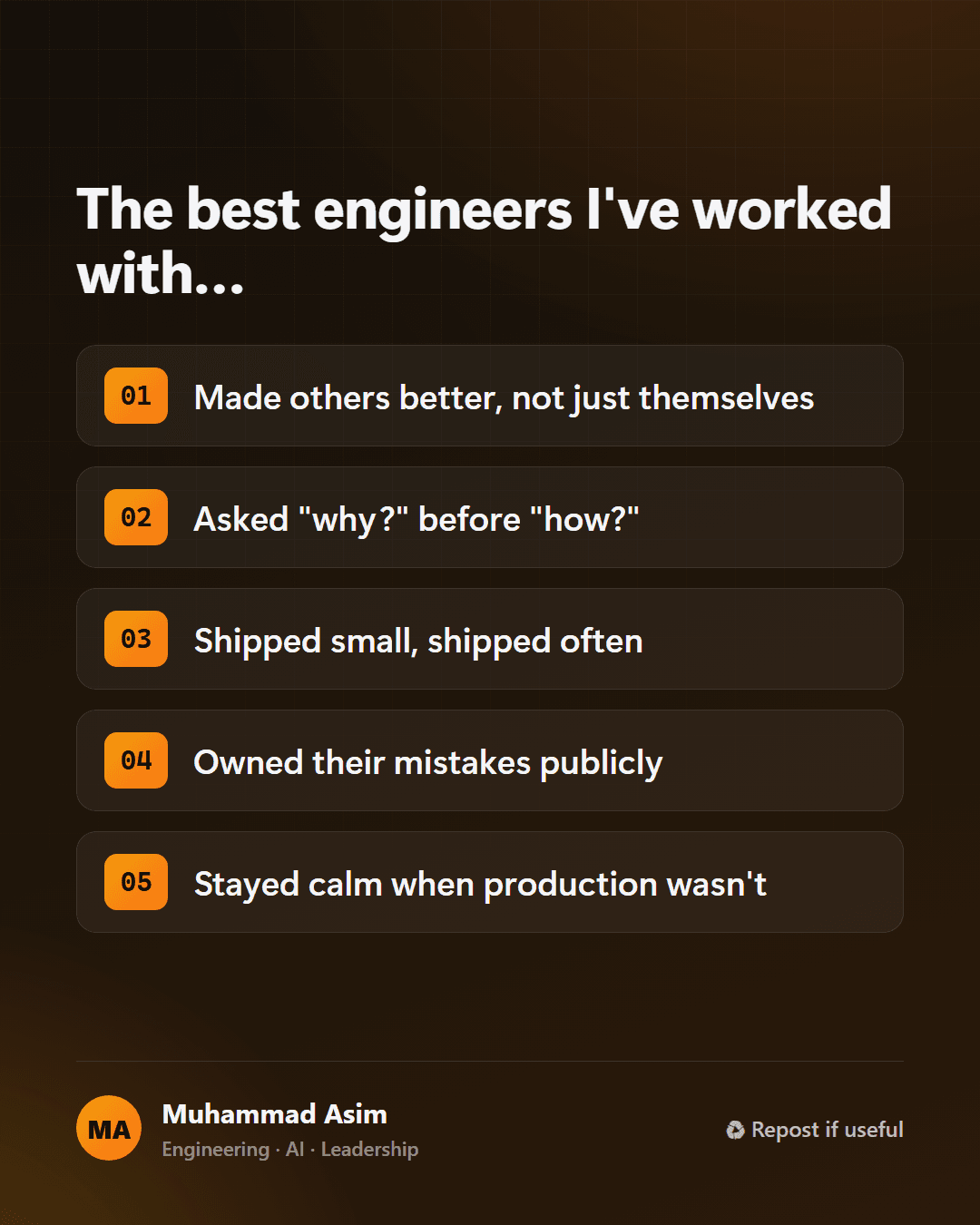
5 Habits of Great Engineers That Matter More Than Coding Speed
The best engineers I have worked with were not always the fastest coders. Here are the habits of great engineers that turn skill into trust.
Comments