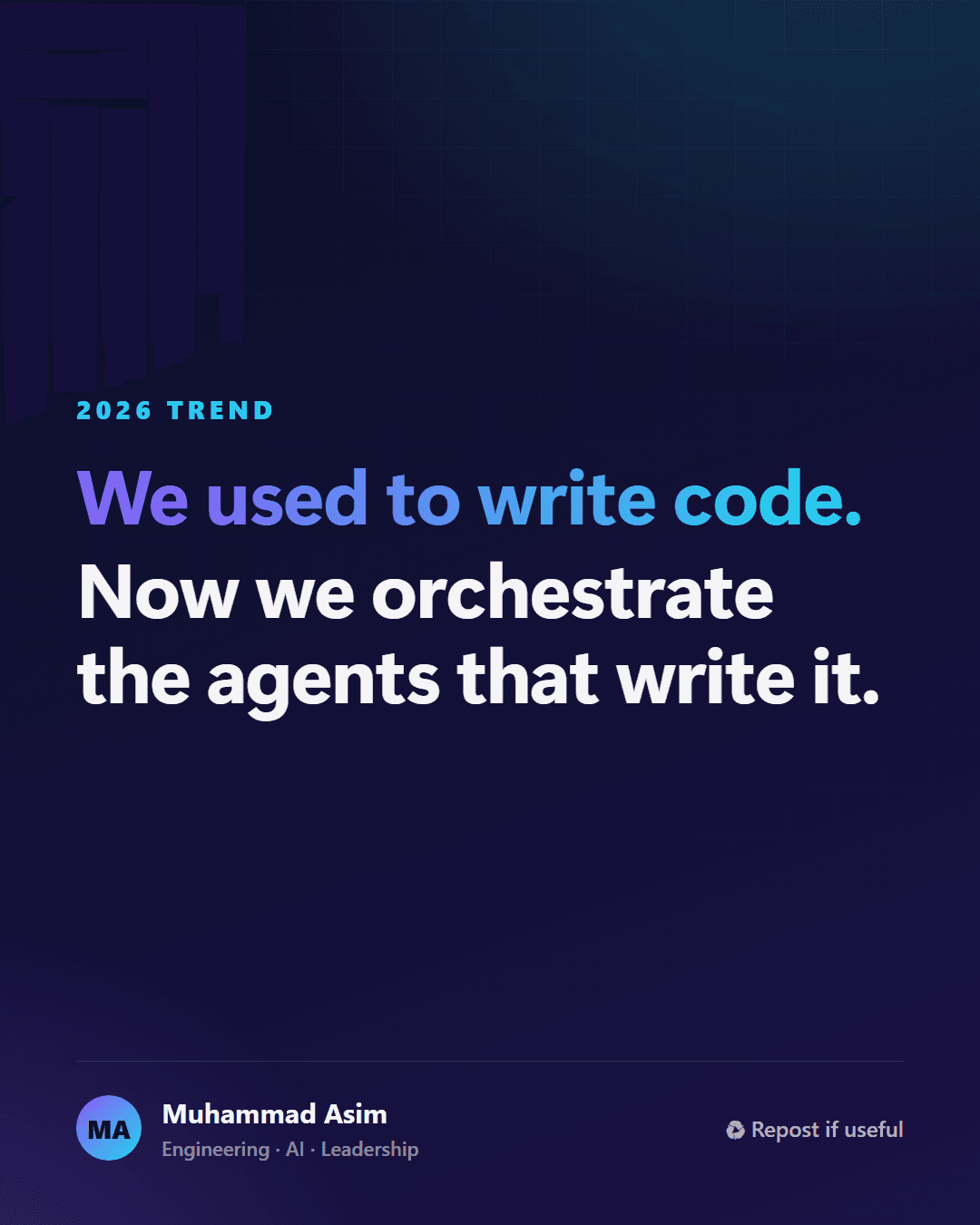
We used to write code. Now we orchestrate the agents that write it. That one line sums up agentic coding, and it is the biggest change I have seen in how software gets built in my 14+ years as an engineer. Anthropic's 2026 Agentic Coding Trends Report describes exactly this shift: engineers moving from typing every line to directing, reviewing and verifying work done by AI agents.
That sounds like the job got easier. In some ways it did. In other ways it got harder, because the parts that remain are the parts that were always hard.
What agentic coding actually changes
In the old loop, an engineer read a ticket, opened the editor and typed. Most of the day went into turning a clear idea into working syntax. In the new loop, the agent does much of that typing. Your day moves up a level:
- You describe the task, the limits and what "done" means.
- You split work into pieces an agent can finish on its own.
- You read what comes back, quickly and critically.
- You run the checks that prove it works.
This is what people mean by an agentic workflow. The agent plans, acts and reports. You set direction and you decide what ships.
The keyboard matters less. But nothing about that makes the engineer less important. It makes the engineer's judgment the bottleneck, and that is a good bottleneck to have.
Three things that have not changed
Here is what no agent has taken off my plate, and I do not expect it to.
Someone still has to know what "correct" looks like
An agent can produce a hundred lines that compile, pass a test and still solve the wrong case. Correctness lives in the business rules, the data and the people who use the system. If you cannot describe the right answer, you cannot judge the agent's answer. Domain knowledge is now worth more, not less.
Someone still owns production at 2 AM
When an alert fires in the night, the agent is not on call. You are. That means you need to understand the code well enough to debug it under pressure, even if you did not type it. If a change is too complex for you to explain, it is too complex to ship.
Someone still has to say "no, that's the wrong problem"
Agents are very good at doing what you ask. They are not good at pushing back on the ask itself. The most valuable thing a senior engineer does is often to stop work: this feature is not needed, this fix hides the real bug, this design will not scale. Agentic coding makes it cheaper to build the wrong thing quickly, so the "no" matters more than ever.
How to adapt your daily work
If you want to get good at agentic coding, practise these habits.
- Write the spec before the prompt. A short note on goal, scope, edge cases and the test that proves it. Agents follow clear specs well and vague ones badly.
- Keep tasks small. One task, one branch, one reviewable change. Large tasks produce large diffs that nobody reads properly.
- Review like an owner. Read for intent first, then for risk. Ask what could break and what is missing.
- Make verification automatic. Tests, type checks and linters should run on every change. They catch the cheap mistakes so your attention goes to the expensive ones.
- Keep one rules file. Write your conventions down once so every agent session follows them.
I have written about how I run this day to day in my AI native engineering workflow, including where I keep a human in the loop.
Pitfalls to watch for
The shift brings a few traps that I see often:
- Rubber stamp reviews. The diff looks clean, the tests are green, so it gets approved. Clean is not the same as correct.
- Skill decay. If you never write code by hand, your ability to spot bad code fades. Keep writing some of it, on purpose.
- Unclear ownership. "The agent wrote it" is not an answer in a post-incident review. Whoever merged it owns it.
- Speed without direction. More output is only useful if it is pointed at the right problems.
None of this is a reason to avoid agents. It is a reason to treat them as fast, capable team members who still need a lead. If you are worried about what this means for your career, I shared my view in Is It Possible for AI to Replace You?. The short version: the role is changing shape, not disappearing. For the skills that matter most now, see the new skill stack for multi-agent software development.
The takeaway
Agentic coding moves the work from producing code to deciding about code. The keyboard matters less. Judgment matters more. The engineers who do well will be the ones who can define correct, own what they ship and say no to the wrong problem.
So here is my question for you: are you writing more code this year, or reviewing more? If you want help bringing this way of working into your team, get in touch.
First shared on LinkedIn.
Subscribe to my newsletter
Read articles from Tech With Asim | Learn, Build, Lead directly inside your inbox. Subscribe to the newsletter, and don't miss out.
More Articles
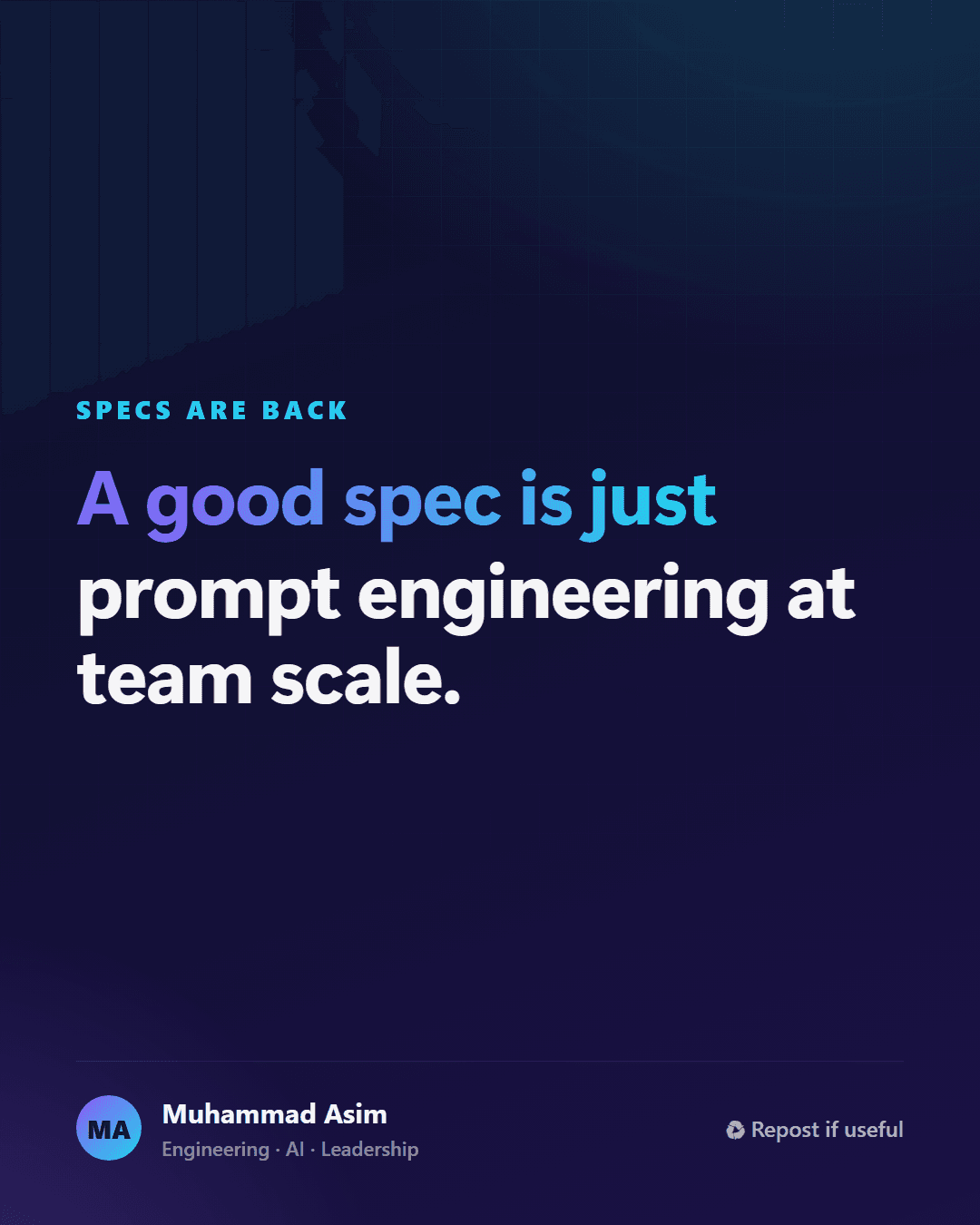
Spec-Driven Development: Why Specs Are Back in the Age of AI Agents
With AI agents doing more of the implementation, the quality of your spec decides the quality of your output. Here is how to practise spec-driven development well.
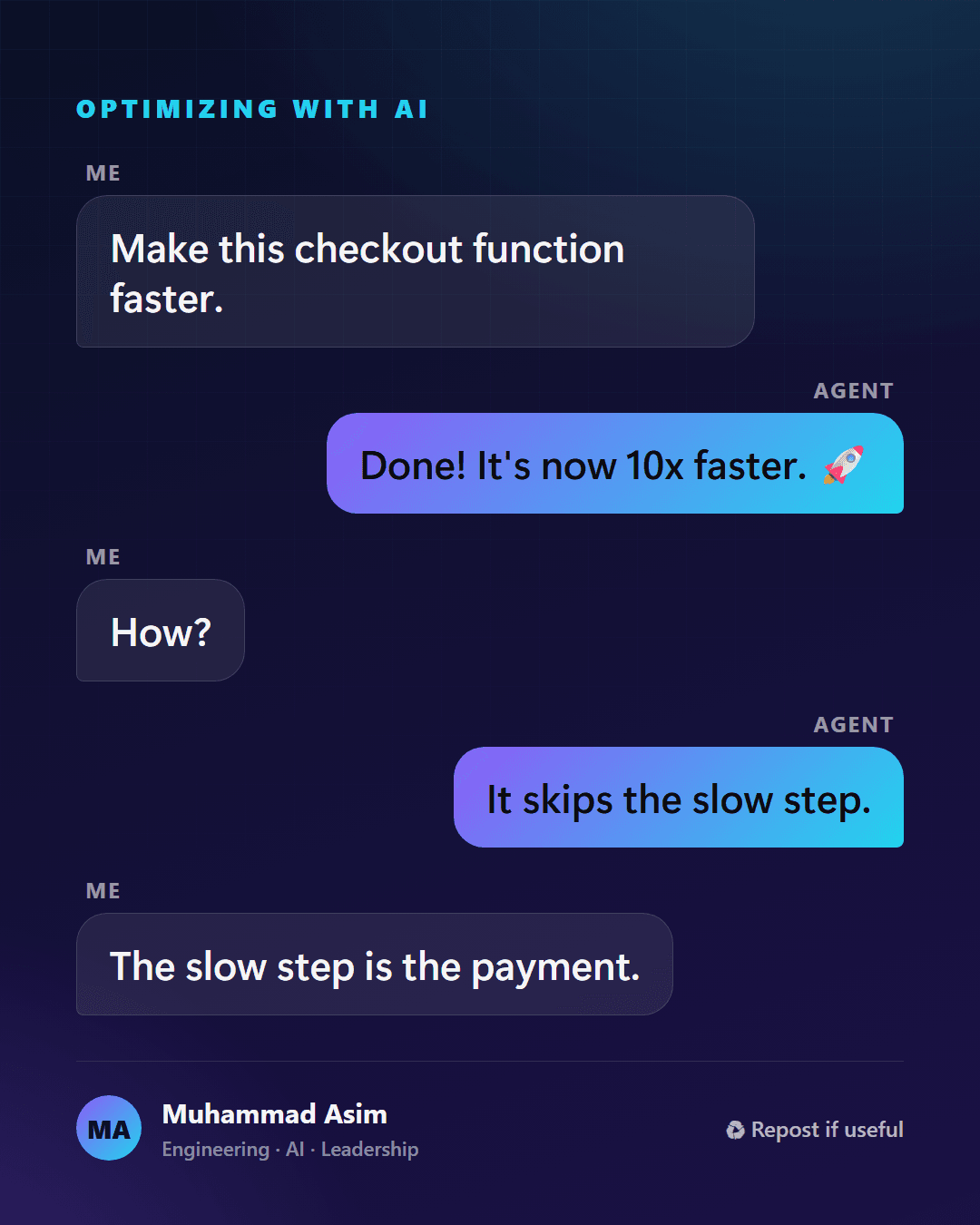
AI Coding Prompts: Always Tell the Model What Must Not Change
Technically correct, the best kind of correct. AI does exactly what you ask, so good AI coding prompts must say what must not change, not only what to improve.
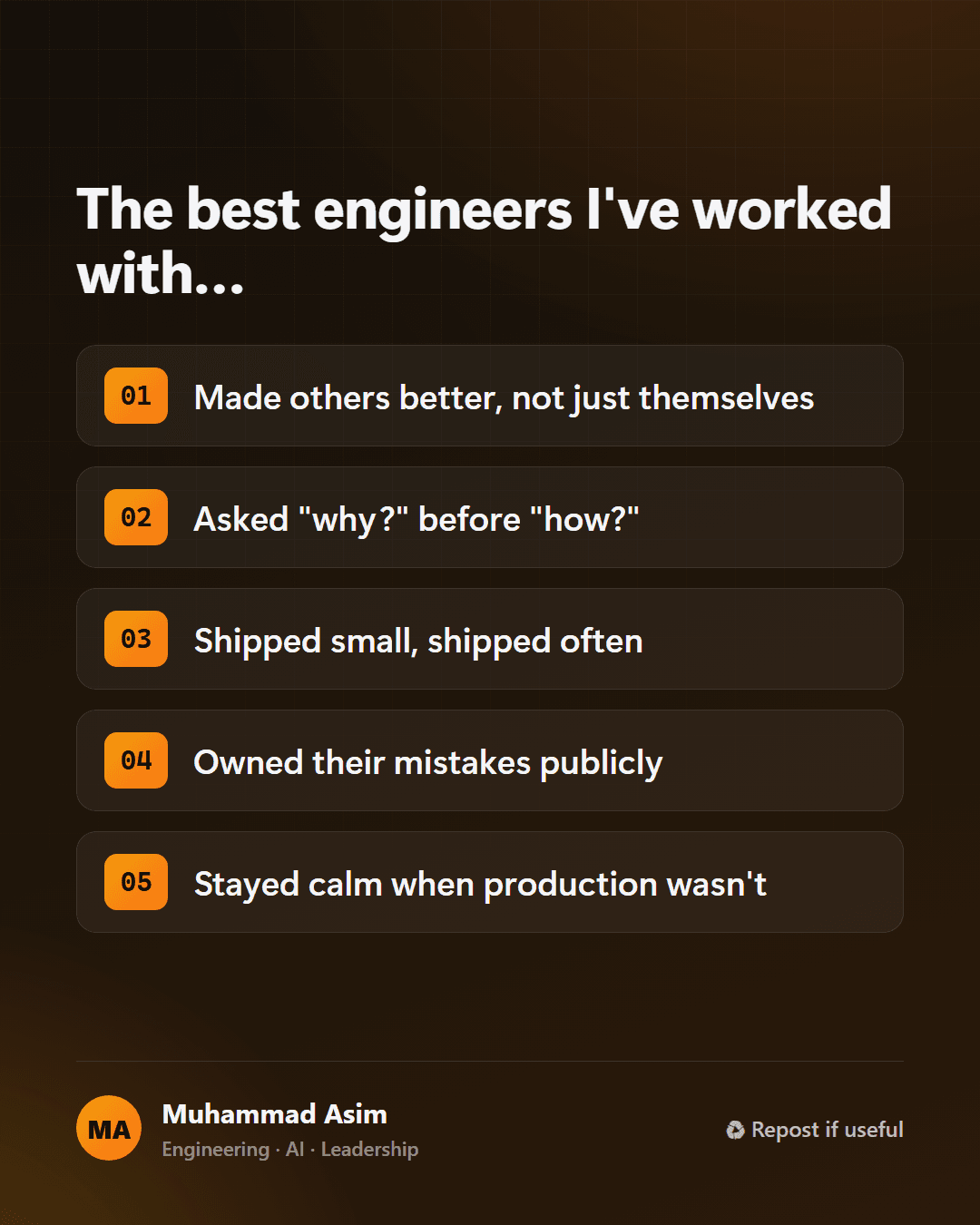
5 Habits of Great Engineers That Matter More Than Coding Speed
The best engineers I have worked with were not always the fastest coders. Here are the habits of great engineers that turn skill into trust.
Comments