How to Measure AI ROI in Engineering (Hint: Not Lines of Code)
Leadership everywhere is asking the same question this year: "Is AI actually paying off?" It is a fair question. Teams are paying for tools, changing workflows and spending time learning. So how do you measure AI ROI in engineering in a way that is honest and useful?
First, a plea. Please do not answer with "lines of code generated". That number is easy to collect and almost meaningless. If AI makes you write twice the code and causes twice the incidents, that is not productivity. That is noise.
Why output metrics mislead
Lines of code, number of PRs and "percentage of code written by AI" all measure activity, not value. They have a few problems:
- More code is often worse. Every line has to be read, tested and maintained.
- They are easy to game. Any metric that rewards volume will get volume.
- They ignore quality. Fast code that breaks production costs more than it saves.
- They ignore the whole flow. Writing code was rarely the slowest part of delivery.
What leadership really wants to know is simple: are we delivering more value, more reliably, with a team that is not burning out?
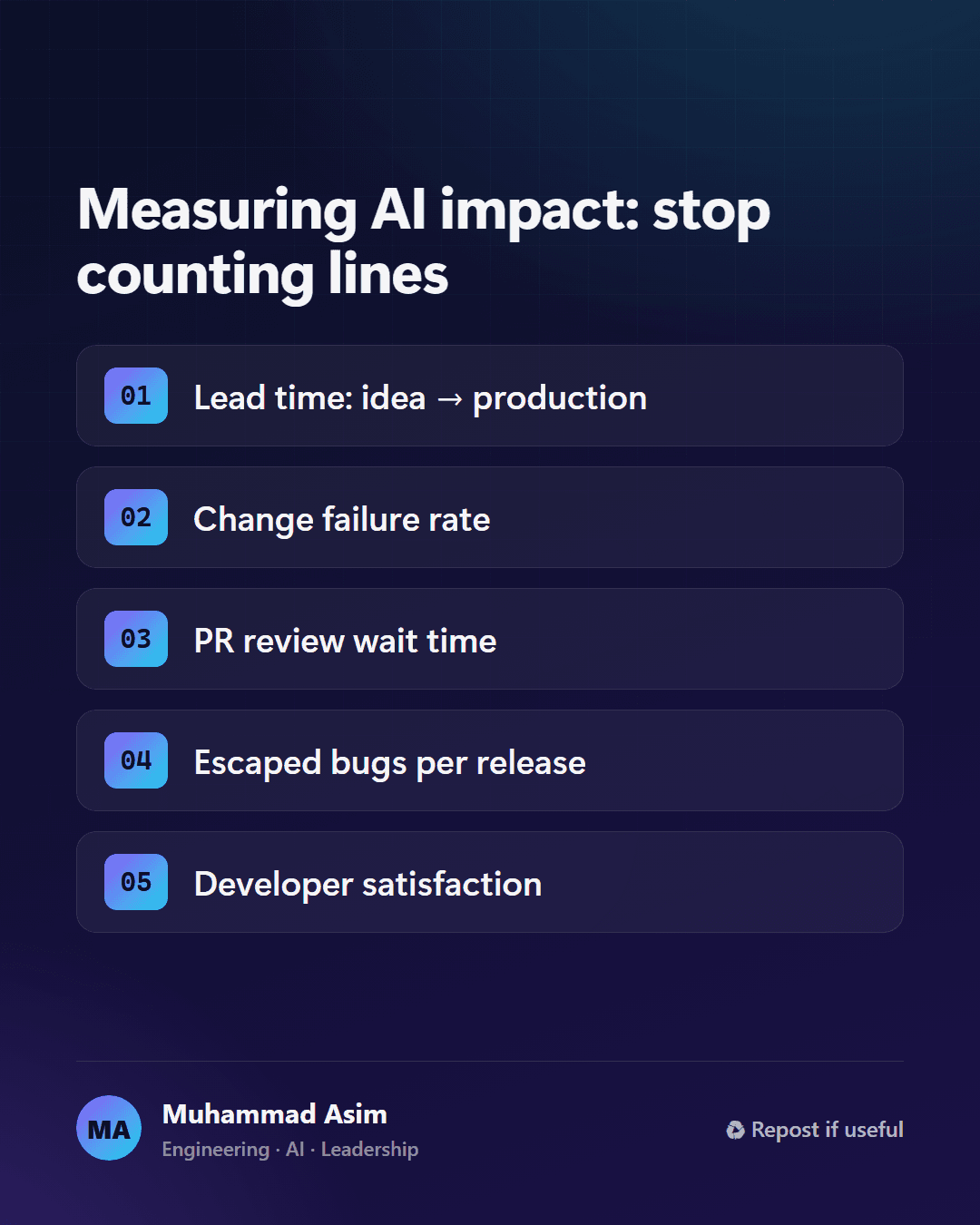
Five outcome metrics that matter
These are the measures I would put in front of leadership. Several of them come from the well known DORA research on software delivery, which makes them easy to explain and compare.
1. Lead time from idea to production
How long does it take for a change to go from "we agreed to build this" to "users have it"? If AI is helping, this should go down. If it does not, the speed gain is being lost somewhere else, often in review or testing.
2. Change failure rate
What share of deployments cause an incident, a rollback or a hotfix? This is your quality check. If lead time drops but change failure rate rises, you are shipping faster in the wrong direction.
3. How long PRs wait for review
AI often moves the bottleneck from writing to reviewing. Track the time between a PR opening and its first real review. If it climbs, your team needs a better review flow, not more generated code. I wrote about this in the AI code review bottleneck.
4. Bugs that escape to production
Count the defects found by users rather than by tests or QA. This tells you whether faster delivery is coming at the cost of trust.
5. Developer satisfaction
Ask your engineers, regularly and simply. Do the tools help? Do they save time on boring work? Do they feel more or less stressed? A short survey every few weeks gives you signals the dashboards miss.
How to measure AI ROI in engineering, step by step
- Set a baseline. Measure the five metrics before or early in your rollout. Without a baseline, any claim is a guess.
- Change one thing at a time where you can, so you can link results to causes.
- Compare like with like. Similar teams, similar types of work, similar time periods.
- Look at trends over months, not single sprints. Early adoption is often messy.
- Include costs. Tool licences, usage costs and time spent on training all belong in the picture.
- Report outcomes and stories together. Numbers show the trend. Real examples show why it matters.
Common traps
- Celebrating adoption. "Everyone uses the tool" is not a result.
- Ignoring hidden costs. Extra review load and rework are real costs.
- Measuring individuals. Use these metrics for teams and systems, not for ranking people.
- Expecting instant gains. Teams need time to change how they work, not just which tools they use.
The honest answer for leadership
A good answer to "is AI paying off?" sounds like this: "Lead time is down, change failure rate is stable, review waits are under control, escaped bugs are flat, and the team says the tools help." That is a story leadership can trust.
In my own AI native engineering workflow, the goal was never more code. It was faster delivery with the same or better quality. If you want help setting up the right measures for your team, a fractional tech lead can help, or simply get in touch.
How does your team measure AI ROI?
First shared on LinkedIn.
Subscribe to my newsletter
Read articles from Tech With Asim | Learn, Build, Lead directly inside your inbox. Subscribe to the newsletter, and don't miss out.
More Articles
Spec-Driven Development: Why Specs Are Back in the Age of AI Agents
With AI agents doing more of the implementation, the quality of your spec decides the quality of your output. Here is how to practise spec-driven development well.
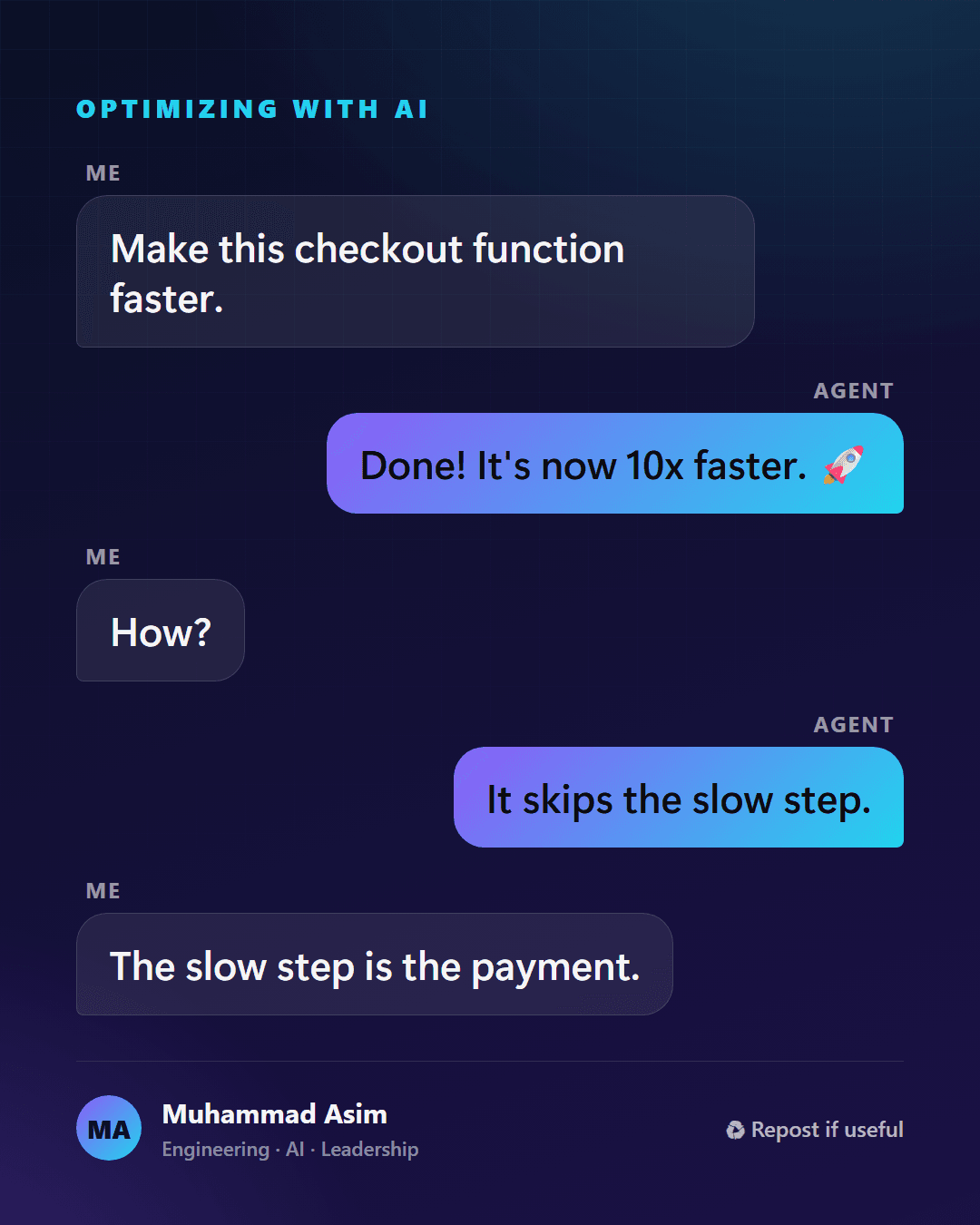
AI Coding Prompts: Always Tell the Model What Must Not Change
Technically correct, the best kind of correct. AI does exactly what you ask, so good AI coding prompts must say what must not change, not only what to improve.
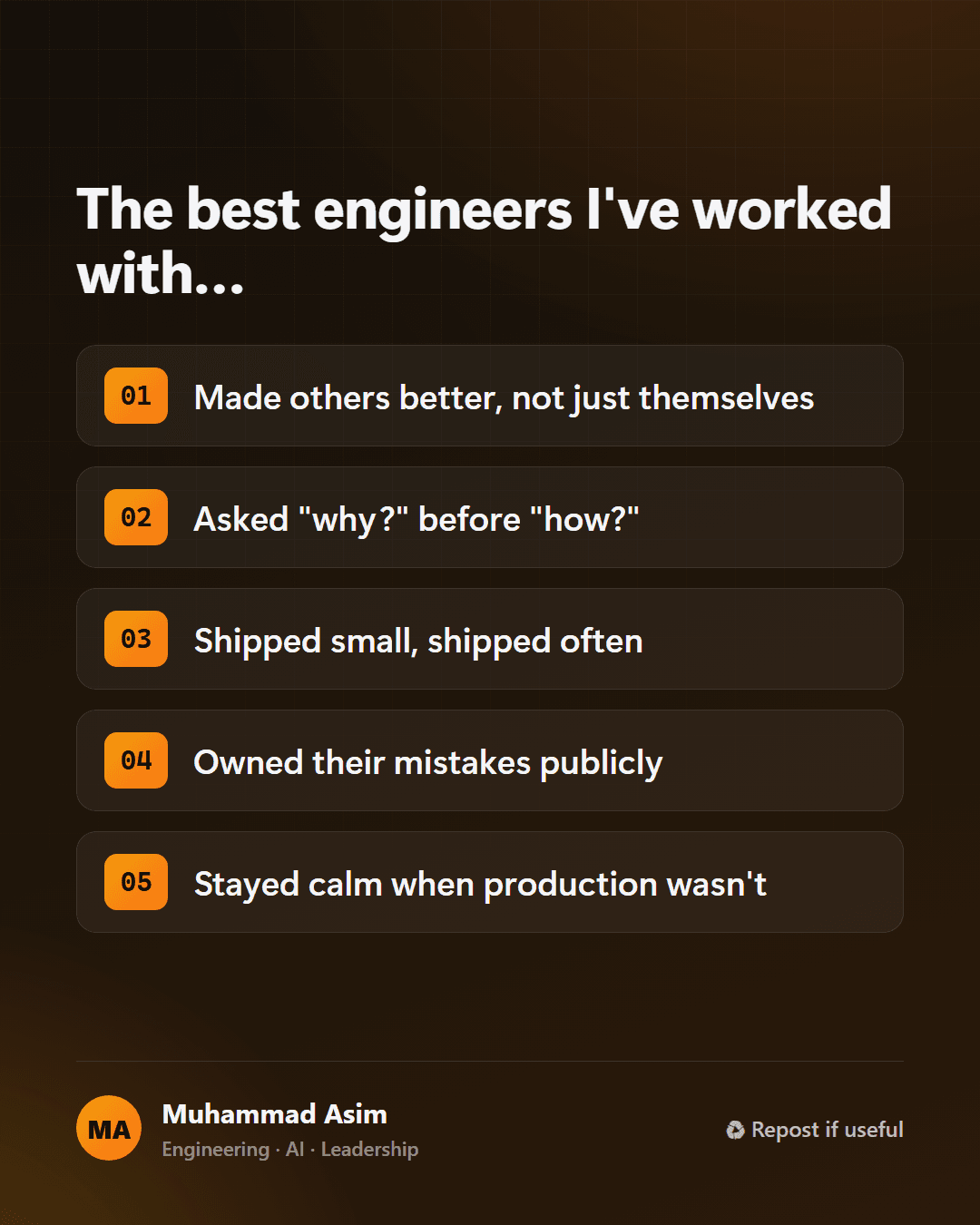
5 Habits of Great Engineers That Matter More Than Coding Speed
The best engineers I have worked with were not always the fastest coders. Here are the habits of great engineers that turn skill into trust.
Comments