The AI Code Review Bottleneck: How to Keep Up When AI Writes Faster
When AI writes code faster, the bottleneck moves to review. Many teams are seeing it right now: more pull requests, bigger pull requests and tired reviewers. The AI code review bottleneck is one of the most common problems I hear about from teams adopting coding agents, and it is easy to miss because the early numbers look great.
Writing speed goes up. Then the queue grows quietly. PRs wait for days, reviewers skim instead of read, and bugs slip through. Speed of writing means nothing if review becomes the queue.
Why review becomes the new constraint
Coding agents are very good at producing code. They are not yet good at being accountable for it. That job still falls on a human, and humans read at roughly the same speed they always did.
There are a few reasons the pressure builds:
- Volume. One engineer with agents can open many more PRs in a day.
- Size. Agents happily change twenty files when two would do.
- Unfamiliar style. Generated code may not match how the team usually writes, which slows reading.
- Lower author context. If the author did not write every line, they may not be able to answer questions quickly.
The fix is not to slow down the agents. It is to make review cheaper and smarter.
Five ways to fix the AI code review bottleneck
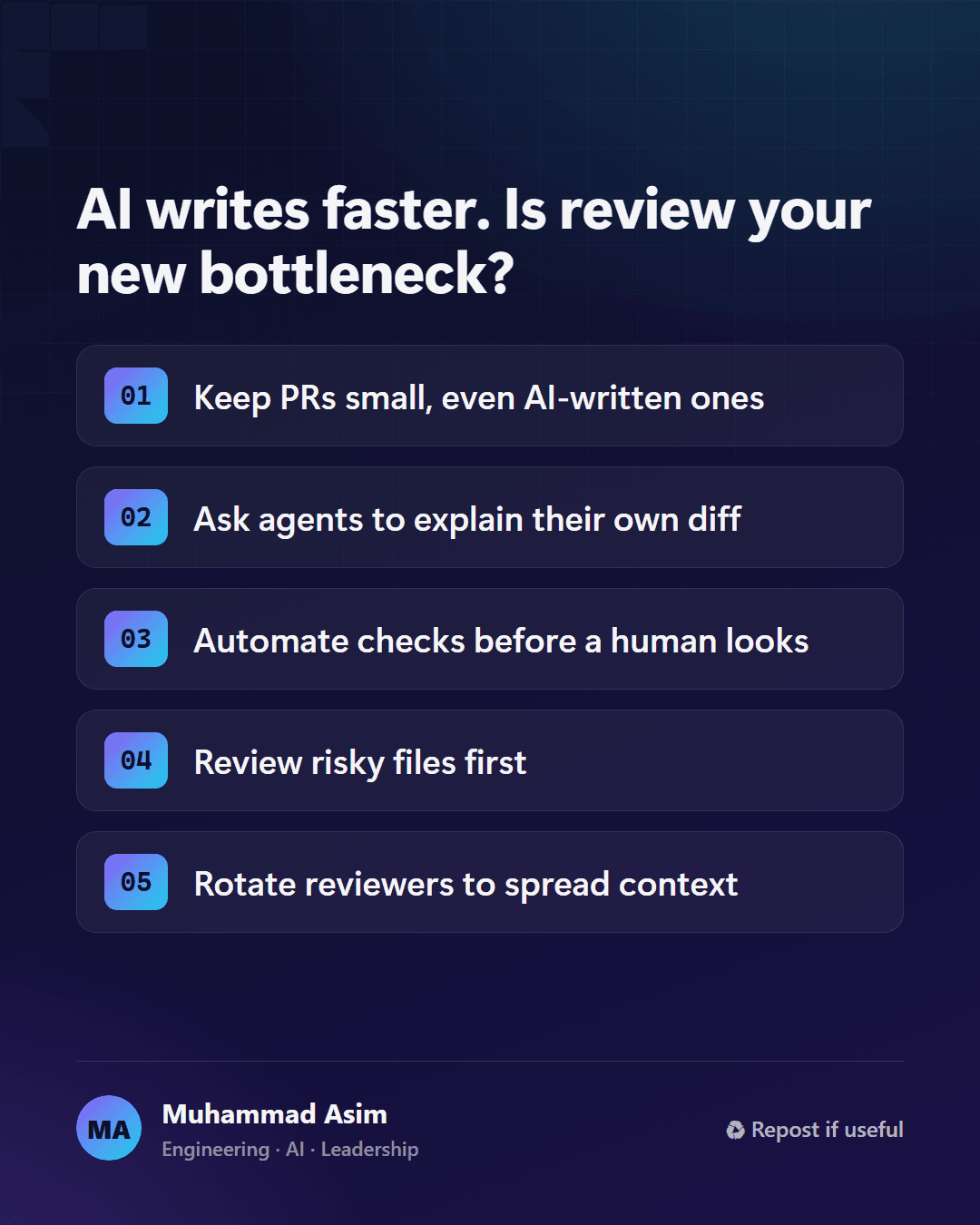
1. Keep PRs small, even AI-generated ones
This rule matters more now, not less. Ask agents for one change per PR. Split refactors from features. A small PR gets a real review. A huge one gets a rubber stamp. If an agent produces a big diff, ask it to break the work into a stack of smaller steps.
2. Ask the agent to explain its own diff
Before any human reads the code, have the agent write a plain English summary: what changed, why, what it did not change, and what the risks are. This gives the reviewer a map. It also catches problems early, because a confused explanation often means a confused change.
3. Let automated checks run first
No human should spend time on something a machine can catch. Linting, type checks, unit tests, security scans and formatting should all pass before a reviewer is even assigned. Make it a rule in your pipeline, not a suggestion. The human review then focuses on design, logic and risk.
4. Review the risky files first
Not every file deserves the same attention. Start with the areas where a mistake hurts most: authentication, payments, data access, migrations and permissions. A typo in a CSS file is not the same as a missing check in an API route. Some teams mark these paths so the review tool flags them automatically.
5. Rotate reviewers
If one senior engineer reviews everything, two bad things happen. They burn out, and all the context about the system lives in one head. Rotate reviewers across the team. Pair a newer engineer with a senior on risky changes. Over time, more people understand more of the codebase, and the queue spreads out.
What good looks like
When teams get this right, the flow feels different. PRs are small and come with a clear summary. Checks are green before anyone looks. Reviewers spend their time on real questions, such as "is this the right approach?" and "what happens when this fails?". Wait times for review drop, and reviewers stop dreading their queue.
I follow the same pattern in my own AI native engineering workflow: agents write and test, an independent review step checks the work, and I focus my own attention on the decisions and the risky parts.
Pitfalls to avoid
- Letting AI review AI with no human. AI review is a great first pass, but someone must own the decision to merge.
- Measuring PR count. More PRs is not the goal. Fewer escaped bugs and shorter lead times are.
- Skipping the "why". If nobody can explain why a change was made, it should not be merged.
A quick checklist
- PRs are small and focused on one change.
- Every PR has a plain English summary.
- All automated checks pass before review starts.
- Risky paths are reviewed first and flagged.
- Reviewers rotate across the team.
If your team is feeling the AI code review bottleneck and wants help reshaping the flow, my Claude Code consulting and fractional tech lead services are built for exactly this. Or simply get in touch.
Has AI changed how your team reviews code?
First shared on LinkedIn.
Subscribe to my newsletter
Read articles from Tech With Asim | Learn, Build, Lead directly inside your inbox. Subscribe to the newsletter, and don't miss out.
More Articles
Spec-Driven Development: Why Specs Are Back in the Age of AI Agents
With AI agents doing more of the implementation, the quality of your spec decides the quality of your output. Here is how to practise spec-driven development well.
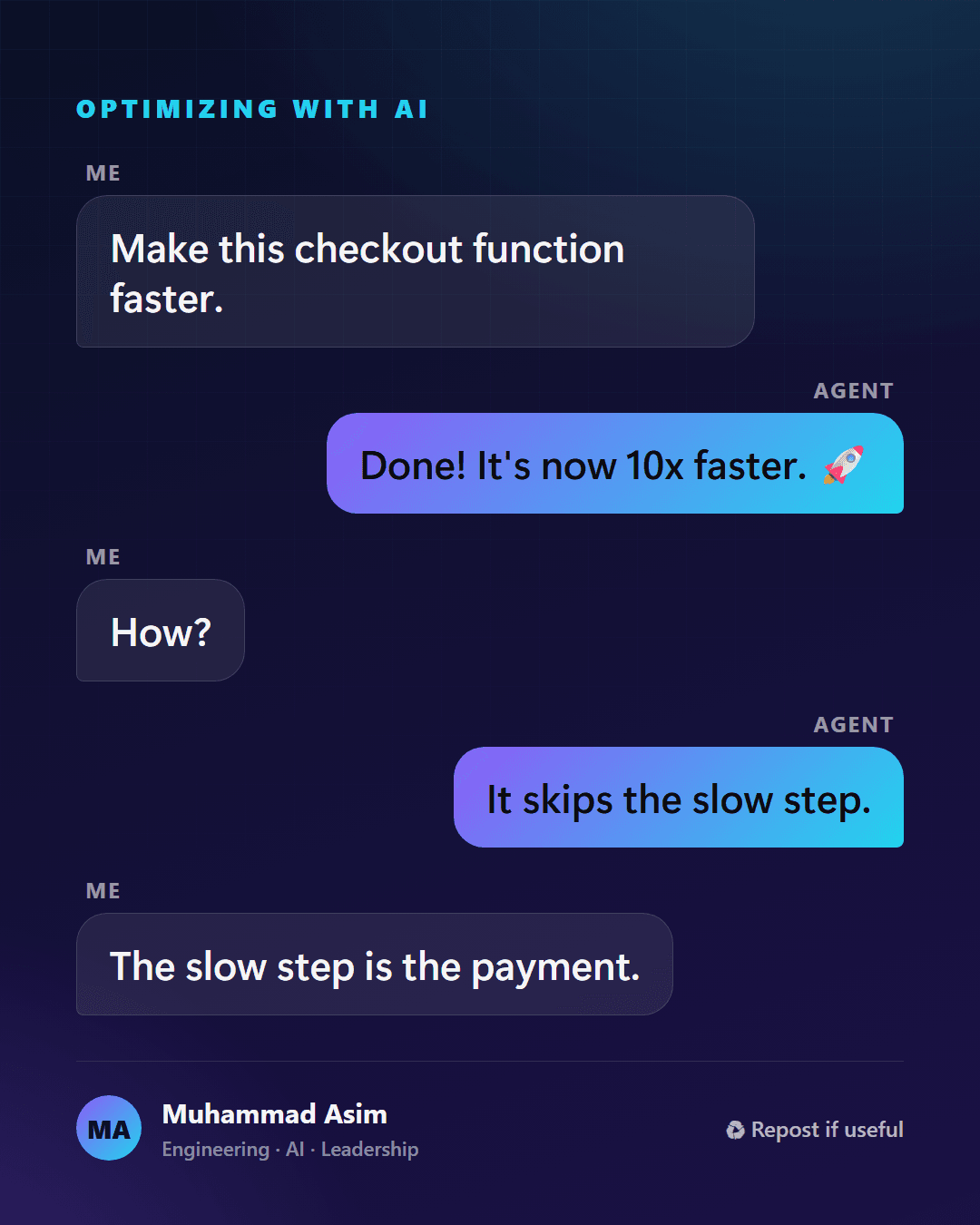
AI Coding Prompts: Always Tell the Model What Must Not Change
Technically correct, the best kind of correct. AI does exactly what you ask, so good AI coding prompts must say what must not change, not only what to improve.
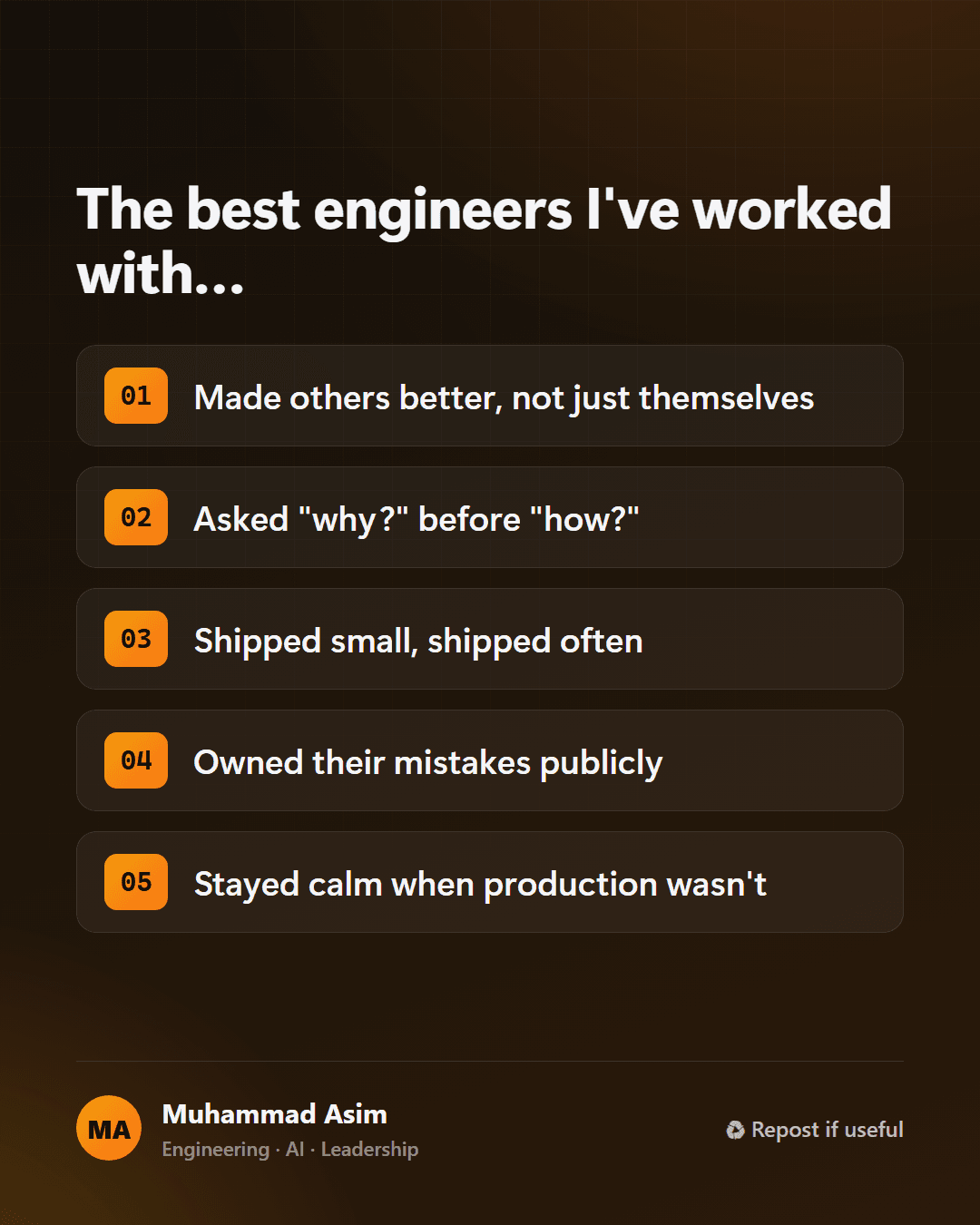
5 Habits of Great Engineers That Matter More Than Coding Speed
The best engineers I have worked with were not always the fastest coders. Here are the habits of great engineers that turn skill into trust.
Comments