The Future of Software Engineering: Where Our Role Is Going With AI
I have been in software for more than 14 years, and the last couple of years with AI have changed how I work more than anything before. So I want to share my honest view on the future of software engineering: where I think our role is going, which skills will matter, and one gap that worries me.
This started as a short carousel on LinkedIn. Here is the longer version, with more room to explain.
How my own work has changed
Today I do not just write code. I run one manager session that drives multiple AI teams for me, and I can control it from my mobile. The agents plan, build, test and review. I set direction, make the decisions that need judgement, and check the work before it ships.
A few years ago that sentence would have sounded like science fiction. Now it is a normal working day. You can read how this setup works in practice in my AI native engineering workflow case study.
I share this not to show off, but because it changes what "being a software engineer" means.
Where I think our role is going
The core shift is simple: we are moving from typing code to directing and judging it.
- From writer to editor. Agents produce first drafts quickly. Engineers decide what is good enough, what needs changing, and what should be thrown away.
- From doing tasks to designing systems of work. The valuable skill is setting up the specs, rules, checks and boundaries that let agents work safely.
- From individual output to orchestration. One engineer can now coordinate work that used to need a small team. That raises the bar for planning and communication.
- From "how" to "what and why". The hard questions are now about the problem, the trade-offs and the risks, not the syntax.
None of this makes engineers less important. It makes judgement more important. I wrote about the replacement fear in is it possible for AI to replace you, and my answer has not changed: the job evolves, it does not disappear.
The skills that will matter
If I had to pick the skills I would invest in for the next few years, they would be these.
1. Clear writing
Your prompt is your code, and your spec is your architecture. Engineers who can explain what they want, what they do not want and how to check it will get far better results. I explored this in clear writing is the new programming.
2. System design and architecture
Agents are good at building pieces. Someone still has to decide how the pieces fit, where the boundaries go and how the system fails. Architecture becomes more valuable, not less.
3. Review and verification
When code is cheap, checking it becomes the real work. Reading code critically, writing good tests and spotting risk are core skills now.
4. Domain understanding
Knowing the business, the users and the rules is what turns generated code into the right product. Agents do not sit in customer calls. You do.
5. Delegation and leadership
Working with agents feels a lot like delegating to people. Describe outcomes, give context, set boundaries and check in early. Engineers who learn this become far more effective, whether or not they manage humans.
The gap that worries me
Here is the part I am less sure we have solved: how the next generation of engineers builds deep understanding.
Senior engineers learned by doing the hands-on work for years. We broke things, debugged them and slowly built intuition. If agents now do most of that hands-on work, where do juniors get those reps? It is possible to ship a lot of code without ever really understanding it, and that is a risky foundation for a career.
I do not think the answer is to ban AI for juniors. I think it is to be deliberate:
- Ask juniors to explain every change they ship, whoever wrote it.
- Keep some work hands-on on purpose, especially debugging.
- Pair juniors with seniors on reviews, not just on tasks.
- Reward understanding, not just output.
I go deeper on this in why you must understand AI-generated code.
What this means for you
For senior engineers: your judgement is your value. Invest in architecture, review and mentoring. For juniors: use AI freely, but never stop asking why. For founders: small teams with strong engineers can now do a lot more, but only with good guardrails.
The future of software engineering is not fewer engineers thinking less. It is engineers thinking at a higher level, with machines doing more of the typing. If you want to talk about how your team can make that shift, get in touch.
Senior engineers, juniors, founders: do you agree with this? I would really like to hear different views.
First shared on LinkedIn.
Subscribe to my newsletter
Read articles from Tech With Asim | Learn, Build, Lead directly inside your inbox. Subscribe to the newsletter, and don't miss out.
More Articles
Spec-Driven Development: Why Specs Are Back in the Age of AI Agents
With AI agents doing more of the implementation, the quality of your spec decides the quality of your output. Here is how to practise spec-driven development well.
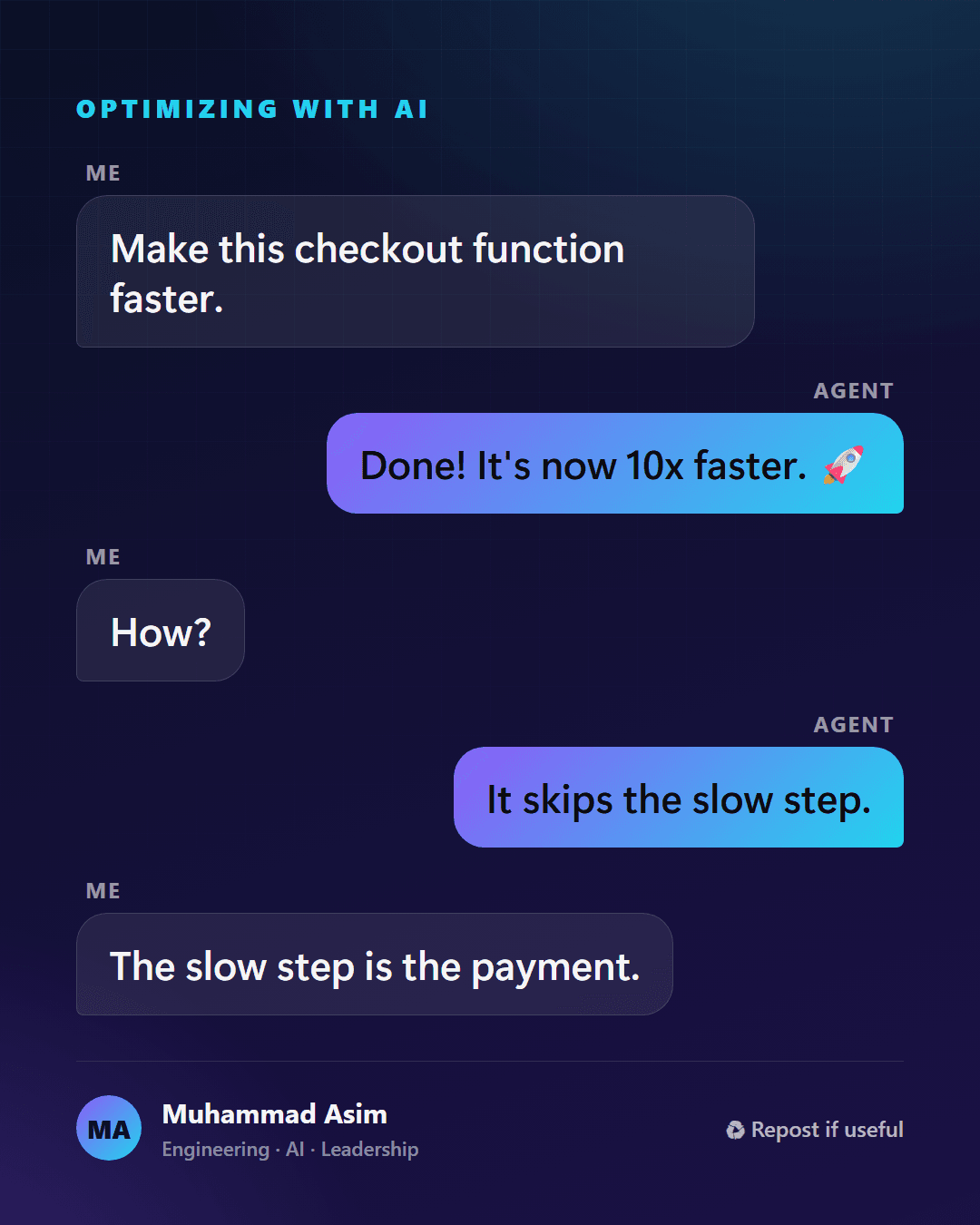
AI Coding Prompts: Always Tell the Model What Must Not Change
Technically correct, the best kind of correct. AI does exactly what you ask, so good AI coding prompts must say what must not change, not only what to improve.
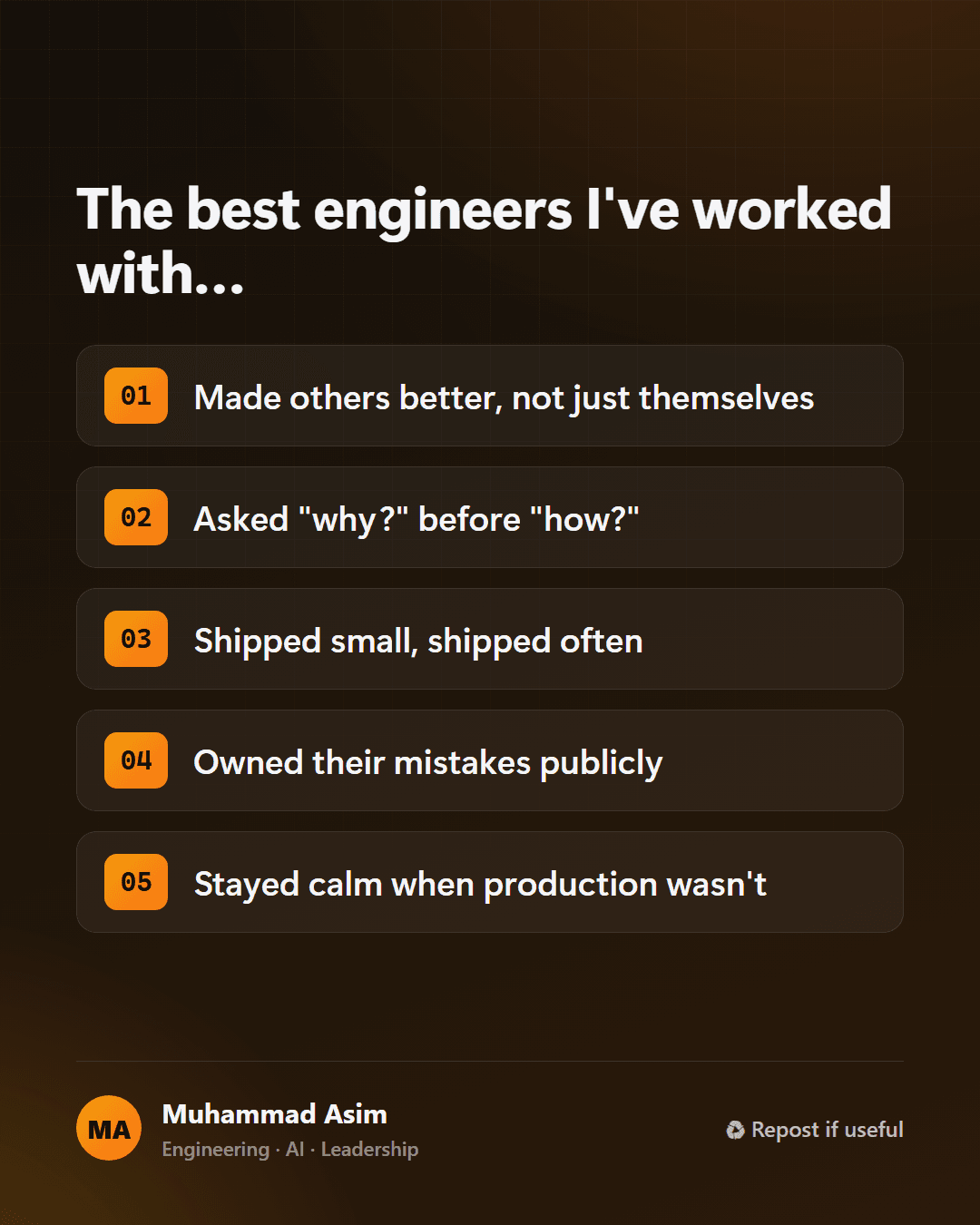
5 Habits of Great Engineers That Matter More Than Coding Speed
The best engineers I have worked with were not always the fastest coders. Here are the habits of great engineers that turn skill into trust.
Comments