Working With QA Engineers: Why the Best Developers Love Their Testers
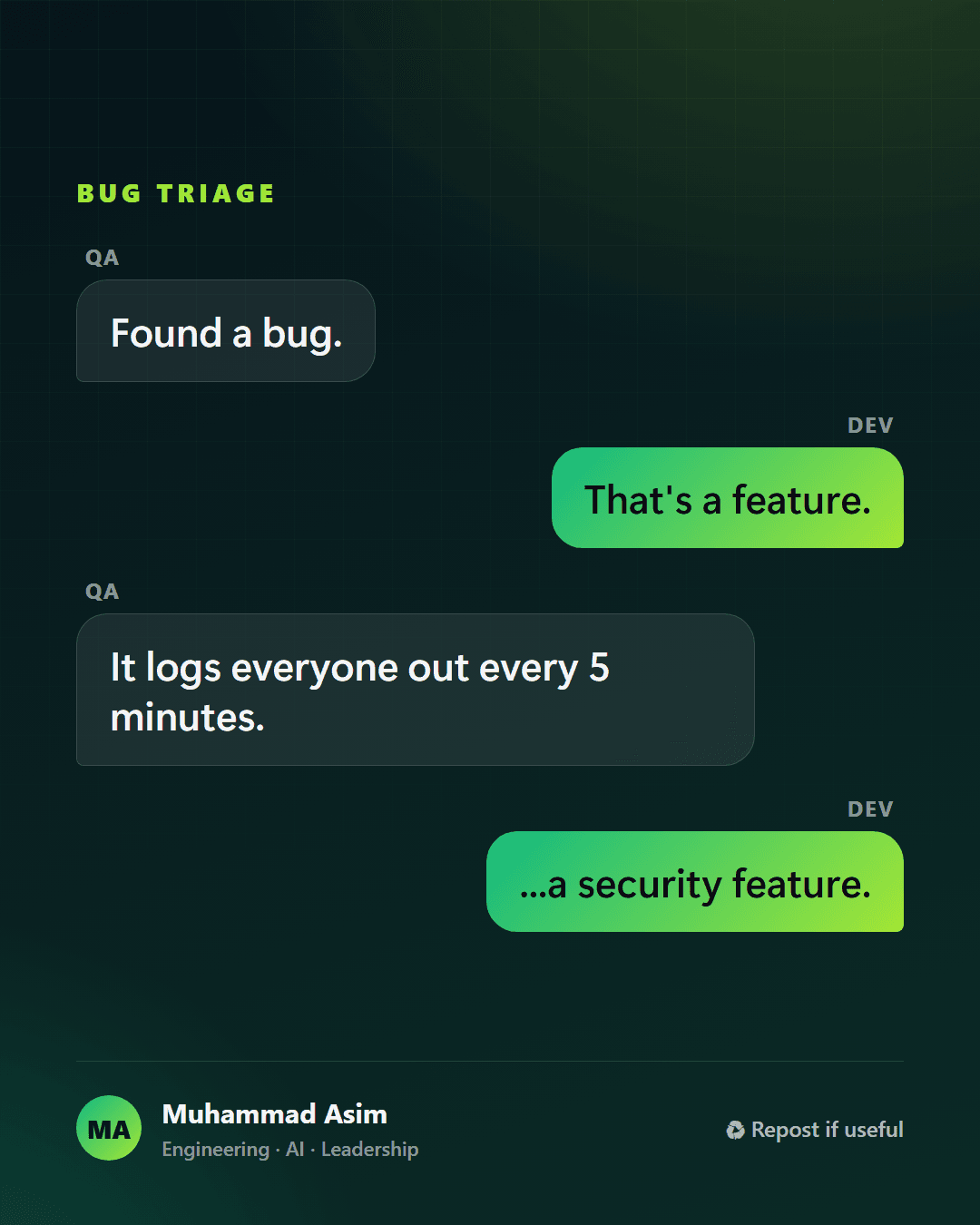
The eternal QA vs Dev negotiation is one of the oldest jokes in tech. "It is not a bug, it is a feature." "Works on my machine." "Can you reproduce it?" We all know the script. But behind the jokes there is a real lesson about working with QA engineers, and it is one that many teams learn late.
Jokes aside, QA engineers are some of the most underrated people in tech. They think about how things break while the rest of us think about how things work. That difference in mindset is exactly why they are so valuable.
Why QA thinks differently
Developers build toward a goal. We picture the happy path: the user fills in the form, clicks save, and sees a success message. Our brains are tuned to make that path work.
A good QA engineer asks different questions. What if the user double clicks save? What if the network drops halfway? What if the name has an emoji, or is 500 characters long? What if two people edit the same record at once?
Both views are needed. One builds the product. The other makes it trustworthy.
What a great QA partner gives you
A great QA partner will:
- Save you from embarrassing launches. They find the broken checkout before your customers do.
- Find edge cases you never imagined. Time zones, permissions, old browsers, odd data.
- Make your product more trustworthy. Users do not see your tests, but they feel the result.
They also make developers better. After a few months of strong QA feedback, you start writing code that handles those edge cases by default.
How to turn the negotiation into a partnership
The negotiation happens when QA is treated as a gate at the end. The partnership happens when QA is part of the work from the start. Here is what helps most.
Involve QA early
Bring QA into refinement and planning, not just testing. When they read a story before it is built, they ask the "what if" questions while changes are still cheap. Many bugs never get written at all.
Agree on acceptance criteria together
Developers, QA and product should agree on what "done" means before work starts. Clear criteria end most arguments, because both sides are checking against the same list.
Write bug reports that are easy to act on
A good bug report saves hours. It includes:
- The exact steps to reproduce.
- What you expected to happen.
- What actually happened.
- The environment, such as browser, device, account and build.
- Screenshots, logs or a short recording.
Developers can help too. When a report is unclear, ask kindly instead of closing it as "cannot reproduce".
Share ownership of automation
Test automation should not be a QA side project. Developers can write unit and integration tests. QA can focus on end to end flows, exploratory testing and risk. Together you get a test suite that people trust.
Respect the "no"
Sometimes QA says a release is not ready. That is not QA being difficult. That is QA doing their job. Discuss the risk openly, decide together, and write the decision down.
Quality in the age of AI
AI agents now write a lot of code, and they write tests too. That makes QA thinking more important, not less. Agents are great at covering the cases you describe. They are less reliable at imagining the strange cases nobody mentioned. A QA mindset fills that gap.
I see the same pattern in good front-end work. Solid structure and clear principles make products easier to test, which I covered in foundations of front-end mastery.
A quick checklist for teams
- QA joins refinement and planning.
- Acceptance criteria are agreed before building.
- Bug reports follow a shared template.
- Developers and QA share test automation.
- Release decisions are made together and written down.
When working with QA engineers feels like a partnership, releases get calmer and products get better. If you want help building that kind of team culture, a fractional tech lead can help set it up, or you can get in touch directly.
Tag a QA engineer who has saved your release.
First shared on LinkedIn.
Subscribe to my newsletter
Read articles from Tech With Asim | Learn, Build, Lead directly inside your inbox. Subscribe to the newsletter, and don't miss out.
More Articles
Spec-Driven Development: Why Specs Are Back in the Age of AI Agents
With AI agents doing more of the implementation, the quality of your spec decides the quality of your output. Here is how to practise spec-driven development well.
AI Coding Prompts: Always Tell the Model What Must Not Change
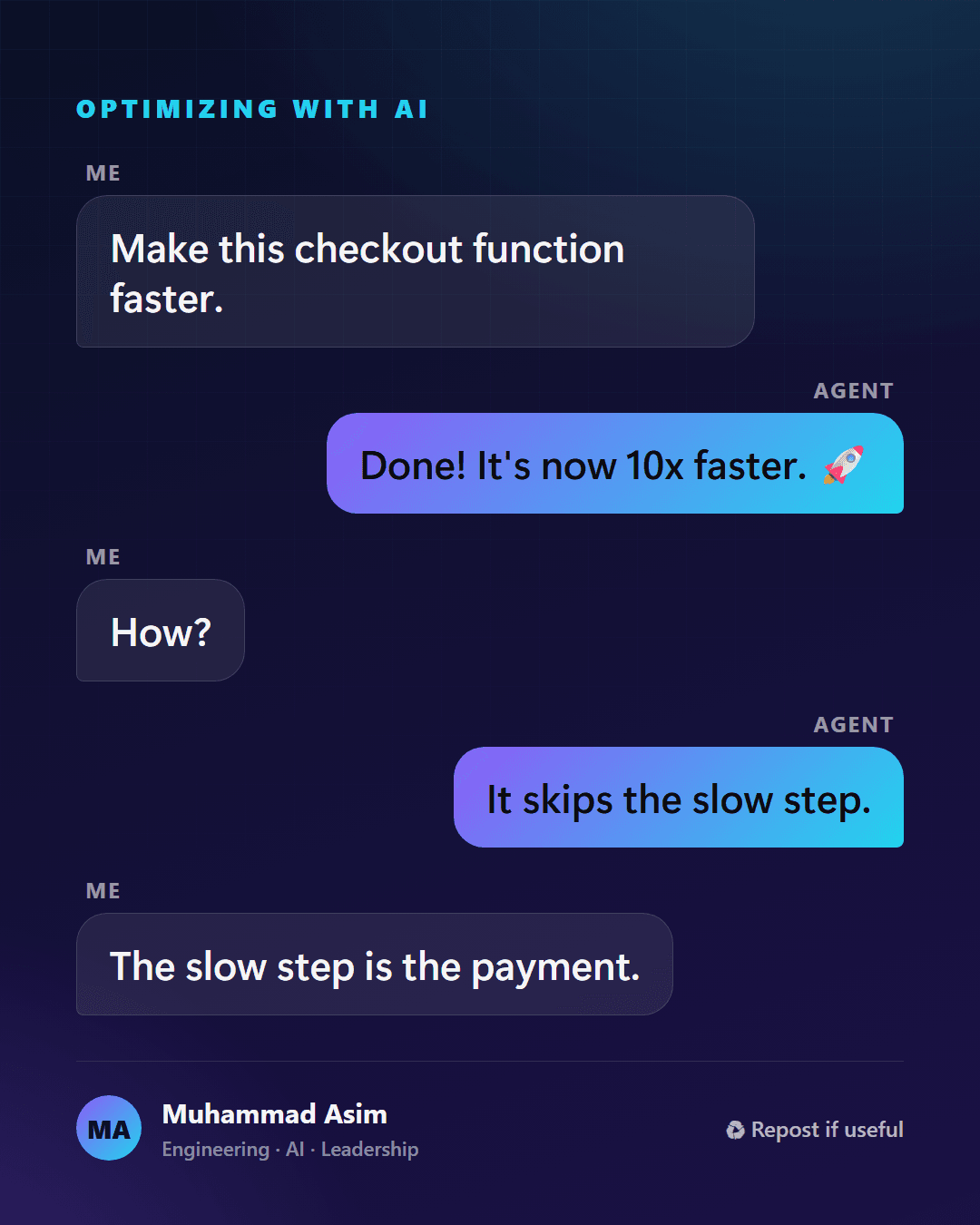
Technically correct, the best kind of correct. AI does exactly what you ask, so good AI coding prompts must say what must not change, not only what to improve.
5 Habits of Great Engineers That Matter More Than Coding Speed
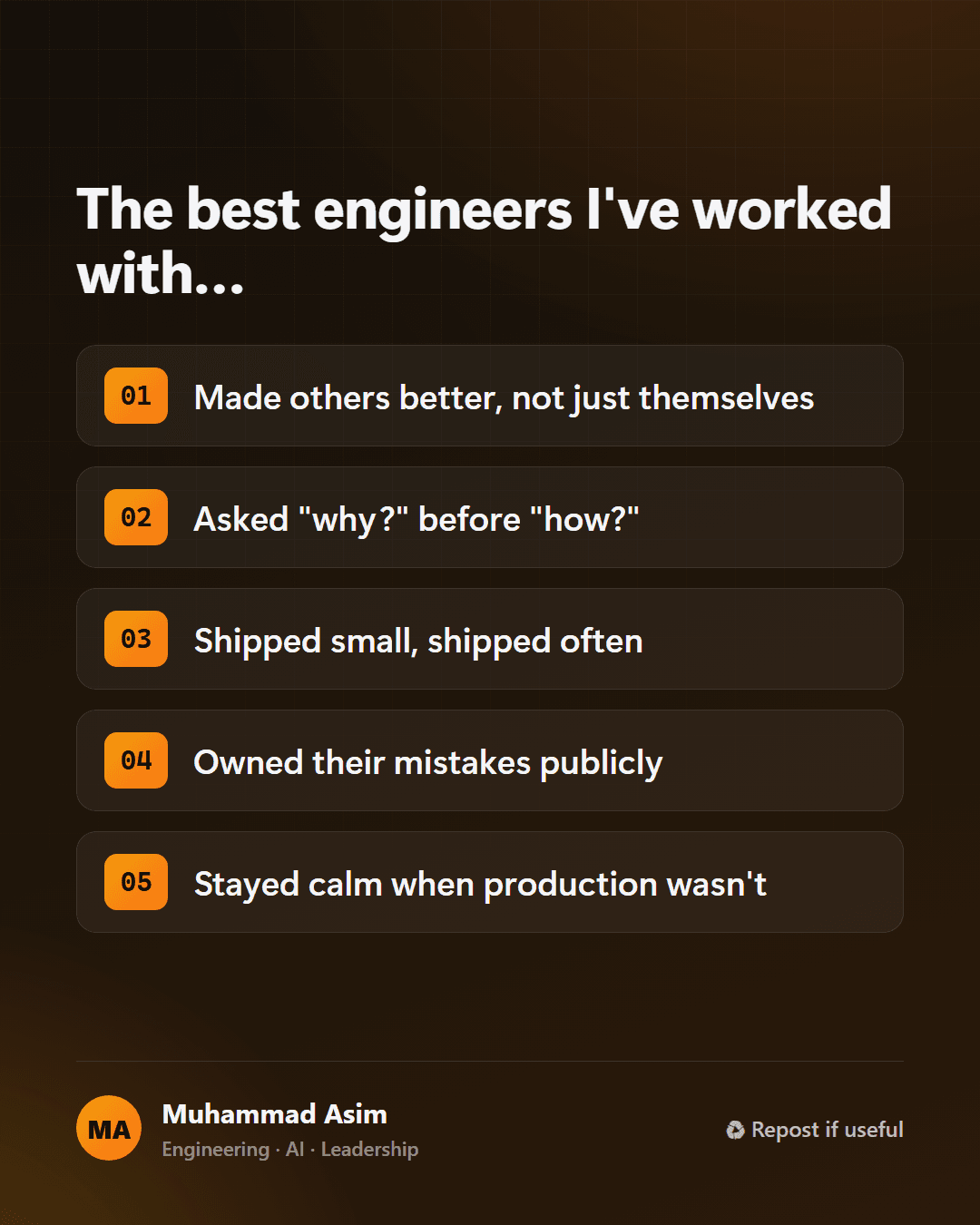
The best engineers I have worked with were not always the fastest coders. Here are the habits of great engineers that turn skill into trust.
Comments