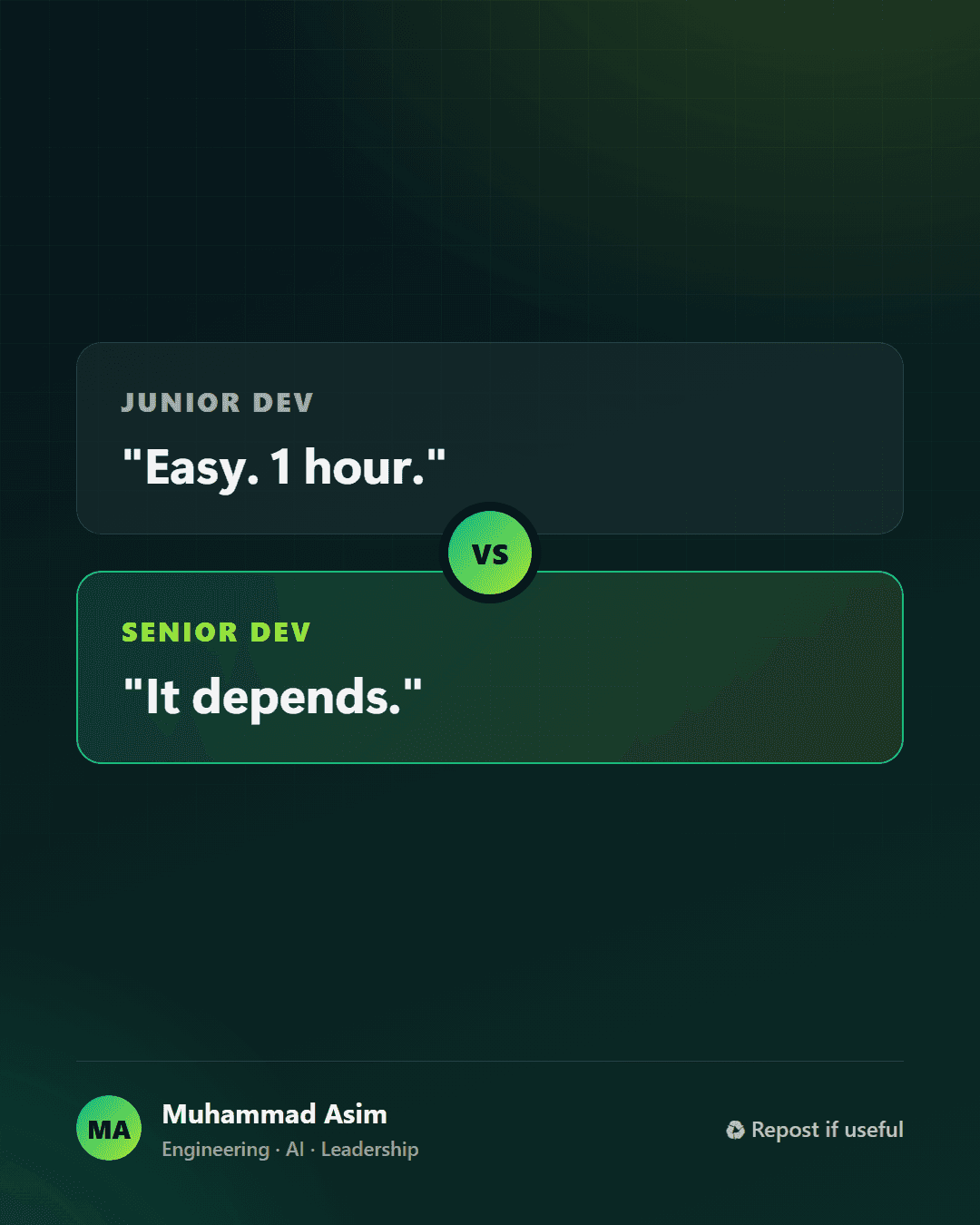
Why Senior Engineers Say "It Depends" (and Why It Is a Good Sign)
You can tell how long someone has been in software by how they answer a simple question. Ask a junior how long a feature will take and you often hear "Easy, two days." Ask a senior and you hear "It depends." This article is about why senior engineers say it depends, and why that answer is a sign of experience, not avoidance.
First, a fair word for both sides. The junior is not wrong to be confident. Confidence is how you learn, ship and grow. The senior is not being difficult either. They are just carrying more memories of things that went sideways.
What "it depends" really means
When an experienced engineer says it, they usually mean three things.
"I have seen this go wrong before." A "simple" change to a login flow can break single sign-on for a whole customer group. A "quick" report can take a week because the data is dirty. Experience is a long list of surprises.
"I have questions about scale, edge cases and data." How many users? What happens with an empty list, or a million rows? Where does the data come from, and can we trust it? Each question can change the answer from two days to two weeks.
"I would rather be honest now than late later." A cautious estimate today is better than a missed deadline next month. Saying "it depends" early is a way of protecting the team and the client.
Experience teaches you to respect the unknown.
When "it depends" becomes a problem
There is a bad version of this answer too. If "it depends" is the whole answer, it is not helpful. It can sound like a senior is dodging responsibility, and it leaves the person asking with nothing to plan around.
The good version always continues: "It depends on X and Y. If X is true, it is about two days. If Y is true, it is closer to a week. Here is how we find out which one." That turns uncertainty into a plan.
How to turn "it depends" into a useful answer
Here is a simple structure I like for any estimate or design question:
- Name the unknowns. List the two or three things that change the answer most.
- Give ranges, not single numbers. "Two to five days" is more honest than "three days".
- Attach assumptions. "This assumes the API already returns the field we need."
- Propose a quick check. A short spike, a look at the data, or a question to the product owner.
- Commit after the check. Once the unknowns are answered, give a firm estimate and own it.
This works in interviews, in planning meetings and in client calls. It shows judgement without sounding vague.
Lessons for both sides
What juniors can learn from it
If you are earlier in your career, you do not need to wait ten years to think this way. You can borrow the habit now:
- Before you say "easy", ask yourself what could make it hard.
- Look for edge cases: empty states, errors, slow networks, large data.
- Ask where the data comes from and who else uses it.
- Read old incident notes and postmortems. They are a shortcut to experience.
My guide to starting a front-end development career covers more of these early habits.
What seniors can learn from juniors
The journey goes both ways. Juniors bring energy and fresh eyes. They try things seniors have quietly given up on, and sometimes they are right because the tools have changed. With AI agents, a lot of "that will take weeks" work now takes days. A senior who only says "it depends" can miss that shift.
The best seniors keep both voices. They respect the unknown, and they still get excited about what is possible.
Where I am on the journey
After more than 14 years in software, I am firmly on the "it depends" side, but I try to always follow it with a range and a plan. You can see the kinds of projects that taught me this on my experience page, and a bit more about how I work on the about page.
If you want a second opinion on an estimate or a technical decision, get in touch.
So, where are you on the "Easy!" to "It depends" journey?
First shared on LinkedIn.
Subscribe to my newsletter
Read articles from Tech With Asim | Learn, Build, Lead directly inside your inbox. Subscribe to the newsletter, and don't miss out.
More Articles
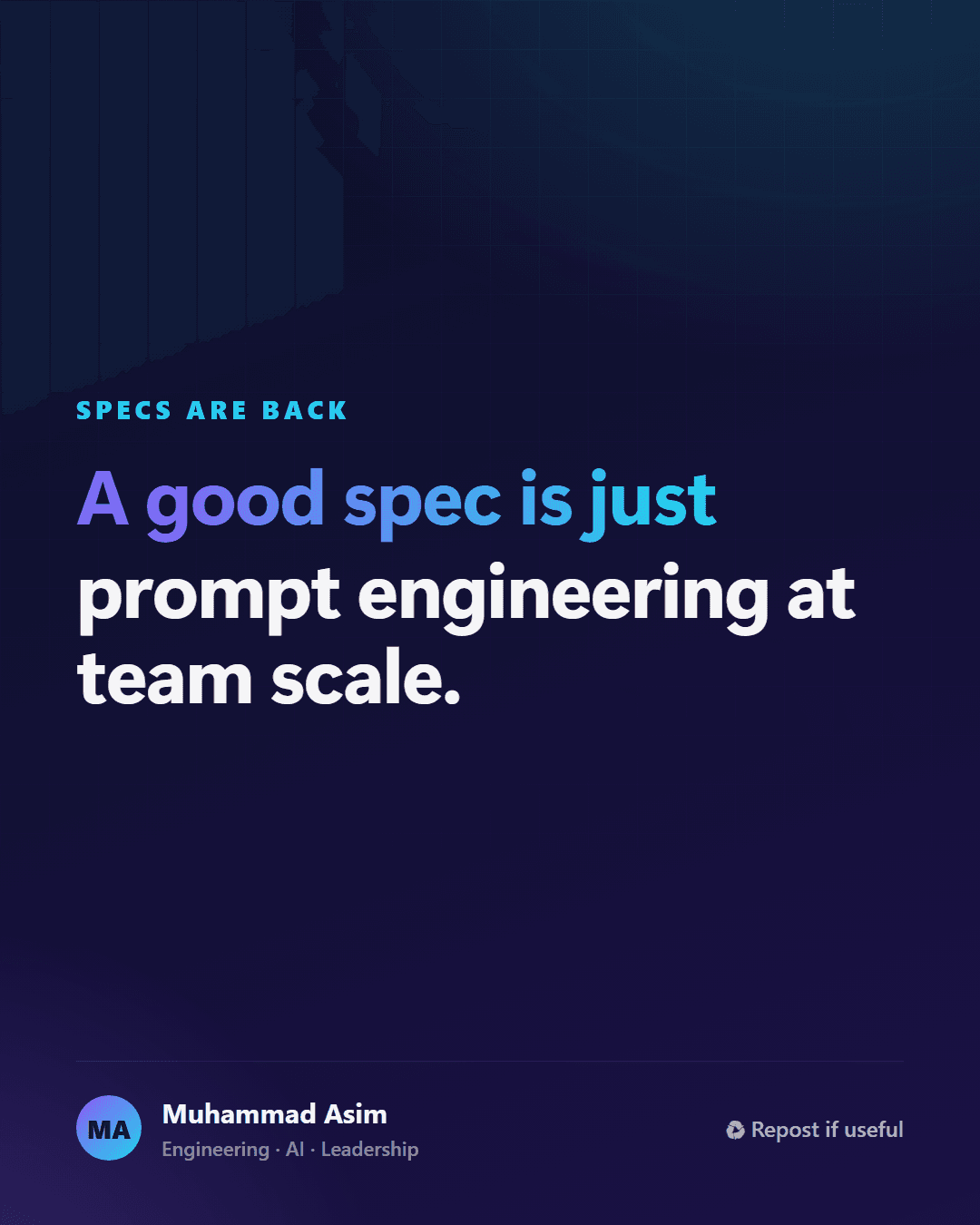
Spec-Driven Development: Why Specs Are Back in the Age of AI Agents
With AI agents doing more of the implementation, the quality of your spec decides the quality of your output. Here is how to practise spec-driven development well.
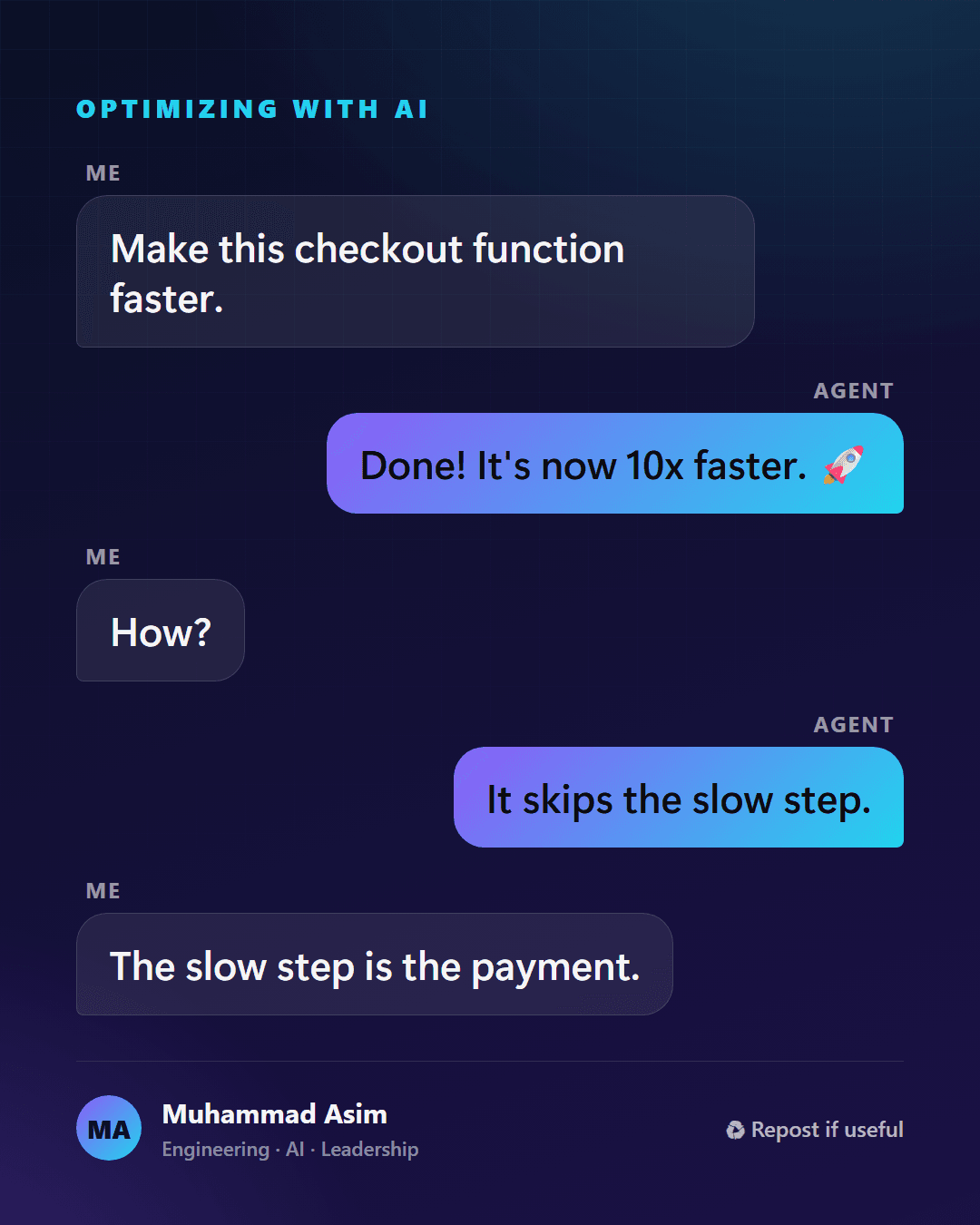
AI Coding Prompts: Always Tell the Model What Must Not Change
Technically correct, the best kind of correct. AI does exactly what you ask, so good AI coding prompts must say what must not change, not only what to improve.
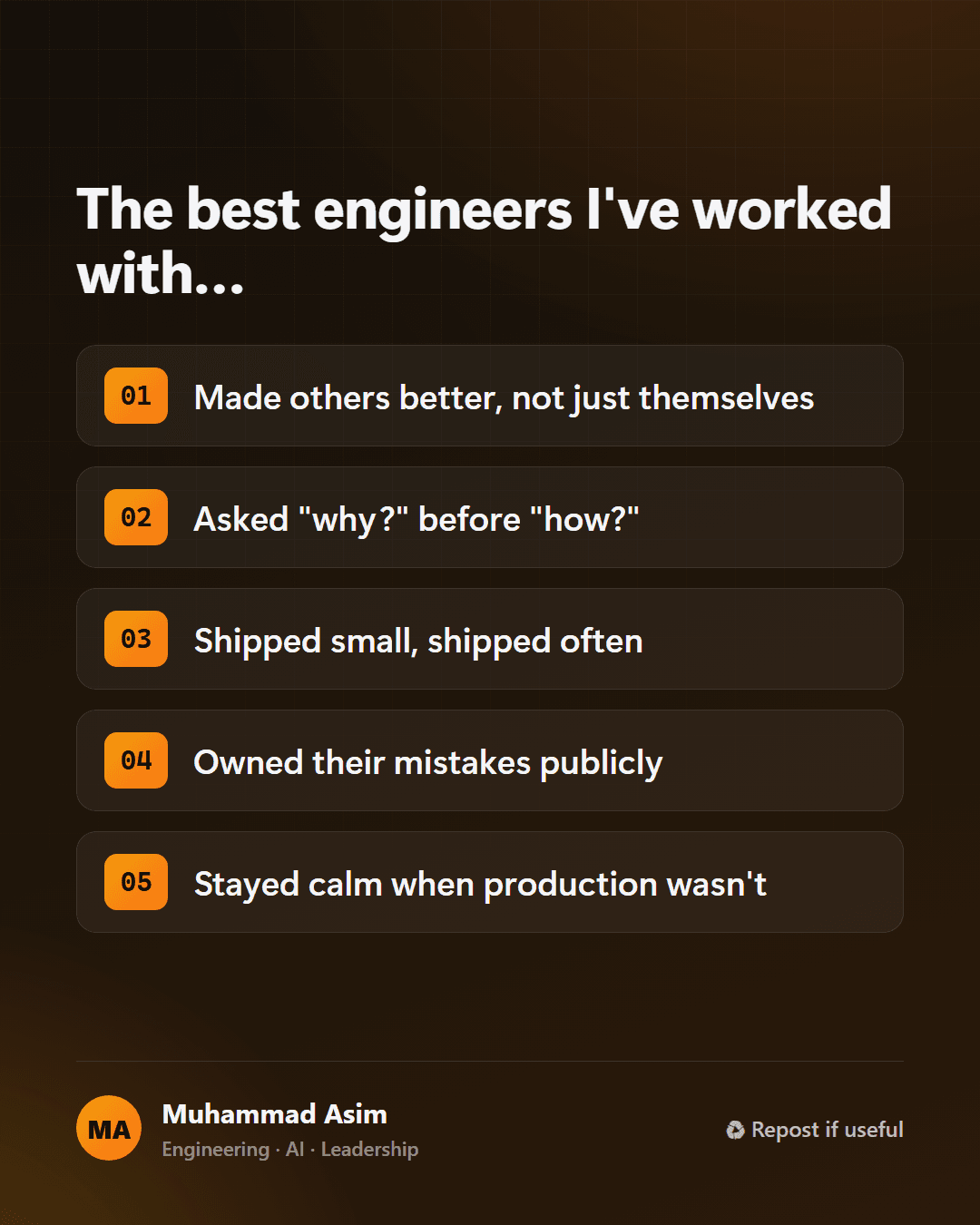
5 Habits of Great Engineers That Matter More Than Coding Speed
The best engineers I have worked with were not always the fastest coders. Here are the habits of great engineers that turn skill into trust.
Comments