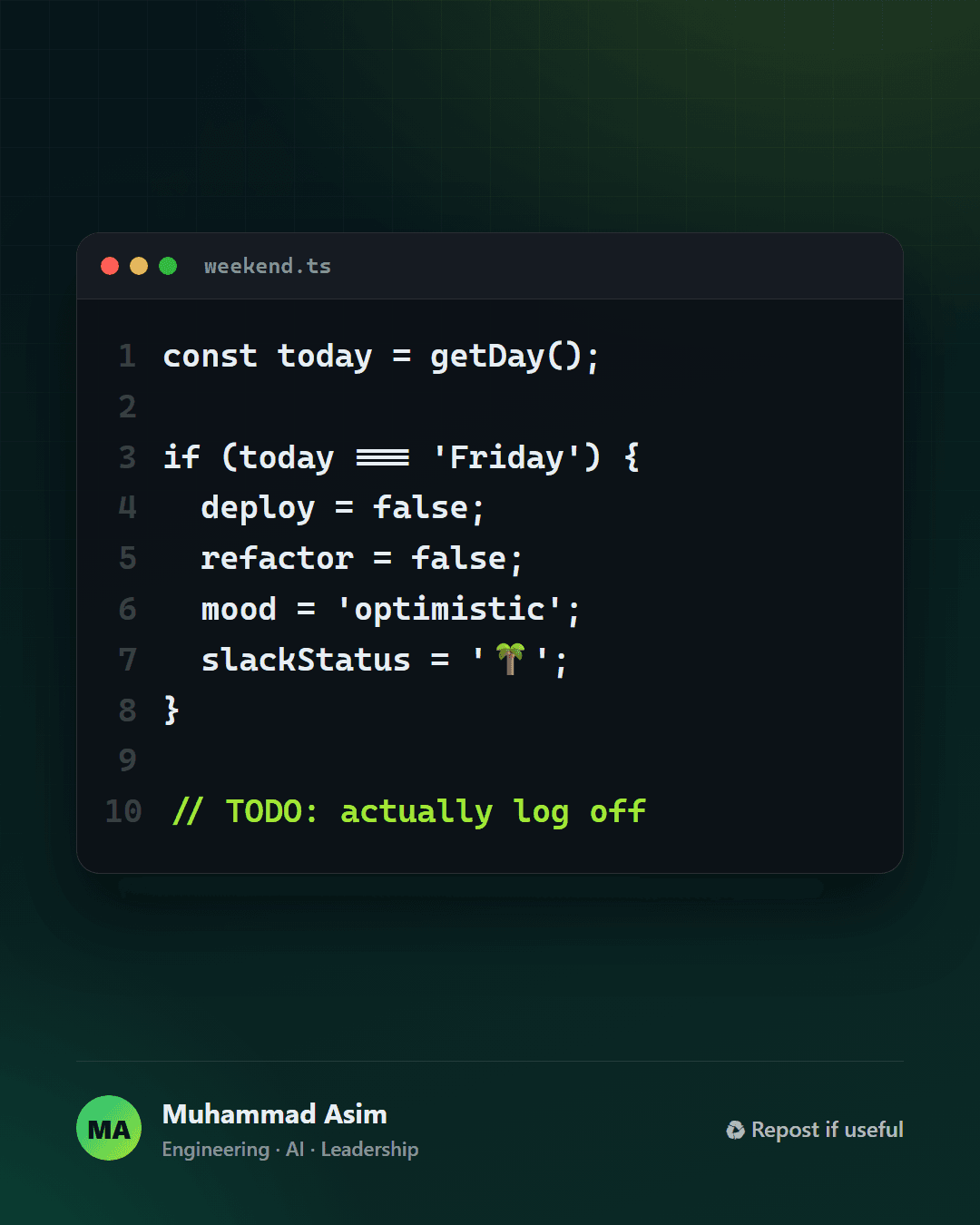
The Friday Weekend Checklist for Engineers Who Want to Actually Rest
Friday mode: activated. Every week I see the same pattern. The last two hours of Friday are where good intentions go to die. So here is my weekend checklist for engineers, the small routine that lets you log off without leaving a mess for Monday you, or for a teammate who gets paged on Saturday.
It has four items. None of them are clever. All of them matter.
Why a Friday routine matters more than it looks
Software work is full of open loops. A half-finished branch, a ticket that still says "In progress" when it is really blocked, a test you meant to fix. On a weekday these loops are fine because you will be back tomorrow. Over a weekend they turn into risk.
If your laptop dies, gets stolen or simply refuses to boot on Monday, unpushed work is gone. If someone needs to pick up your task in an emergency, an outdated ticket sends them in the wrong direction. And if you leave with a vague feeling that something is unfinished, your brain keeps working on it all weekend. That is not rest.
A short Friday checklist closes those loops on purpose. Ten minutes on Friday buys you a clear head for two days.
The weekend checklist for engineers
1. Push your branch
Do not leave work living on one laptop. Push it, even if it is messy. Mark it as a draft or prefix the commit with "WIP" if you need to. A pushed branch is backed up, visible to the team and recoverable from any machine.
2. Update the ticket status
Spend two minutes making your board honest. Move tickets to where they really are. Add one line of context to anything in progress: what is done, what is next, what is blocking you. This helps the person who covers for you, and it helps you on Monday morning when the details are fuzzy.
A good note looks like this: "API endpoint done and tested. UI wiring next. Waiting on design for the empty state." Three short sentences save a lot of guessing.
3. Don't start a "small refactor" at 5 PM
Every engineer knows this trap. You have twenty minutes left, you spot something ugly, and you think it will be quick. It is never quick. Now you have a half-changed codebase, failing tests and a choice between staying late or leaving things broken.
Write the idea down instead. A short note in the ticket or a to-do comment is enough. The refactor will still be there on Monday, and you will do it better with a fresh mind. I wrote more about keeping changes focused in my post on small pull requests, and the same rule applies here: one thing at a time.
4. Actually close the laptop
Not "check Slack once more." Close it. If you are on call, that is different, and your team should have a clear rotation for it. If you are not on call, trust the process. Notifications can wait until Monday.
For people who work remotely, this step is the hardest, because the office is also the living room. I shared some practical ideas on that in my post on work-life balance in remote work.
Rest is performance engineering
Rested engineers write better code. That is not laziness. It is performance engineering.
Tired people make more mistakes, miss edge cases in reviews and choose the quick fix over the right one. Hard bugs are almost always easier to solve after a break than at the end of a long day. Sleep and time away let your brain connect ideas in the background. Many engineers find the answer to Friday's problem while walking on Saturday, without trying.
Teams benefit too. A team where people actually rest has fewer late-night mistakes, less burnout and lower turnover. If you lead a team, model this yourself. If you send messages on Saturday night, people will feel they must reply, whatever you say about balance. Schedule the message for Monday instead. Leaders who want help building healthier delivery habits can look at how I work as a fractional tech lead.
Make it a team habit
A checklist works best when the whole team uses it. A few ideas:
- Add a short "Friday wrap" reminder in your team channel at 4 PM.
- Avoid production deploys late on Friday unless they are urgent and well tested.
- Agree that no one expects replies on weekends outside the on-call rotation.
- Keep the weekend checklist for engineers somewhere visible, like the team wiki or the README of your main repo.
None of this needs a new tool. It needs a shared agreement and a bit of discipline.
Your Friday wrap in one minute
Here is the whole thing again, ready to copy:
- Push your branch.
- Update the ticket status with one line of context.
- Write down the refactor idea, do not start it.
- Close the laptop.
Simple, boring and very effective. That is how most good engineering habits look.
If you want help building these habits into your team's routine, get in touch.
What are your weekend plans? And what is on your own Friday checklist that I should add to mine?
First shared on LinkedIn.
Subscribe to my newsletter
Read articles from Tech With Asim | Learn, Build, Lead directly inside your inbox. Subscribe to the newsletter, and don't miss out.
More Articles

Spec-Driven Development: Why Specs Are Back in the Age of AI Agents
With AI agents doing more of the implementation, the quality of your spec decides the quality of your output. Here is how to practise spec-driven development well.
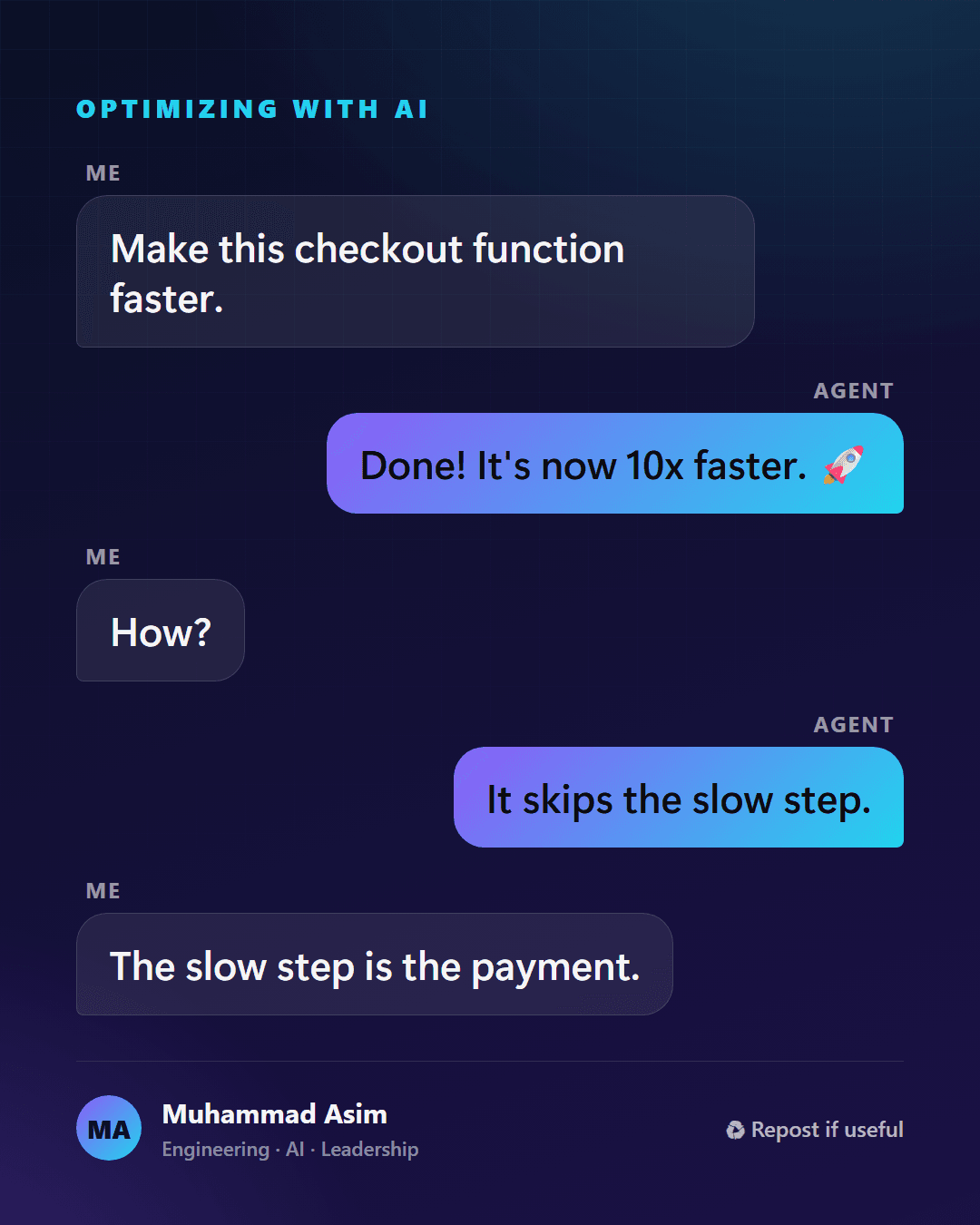
AI Coding Prompts: Always Tell the Model What Must Not Change
Technically correct, the best kind of correct. AI does exactly what you ask, so good AI coding prompts must say what must not change, not only what to improve.
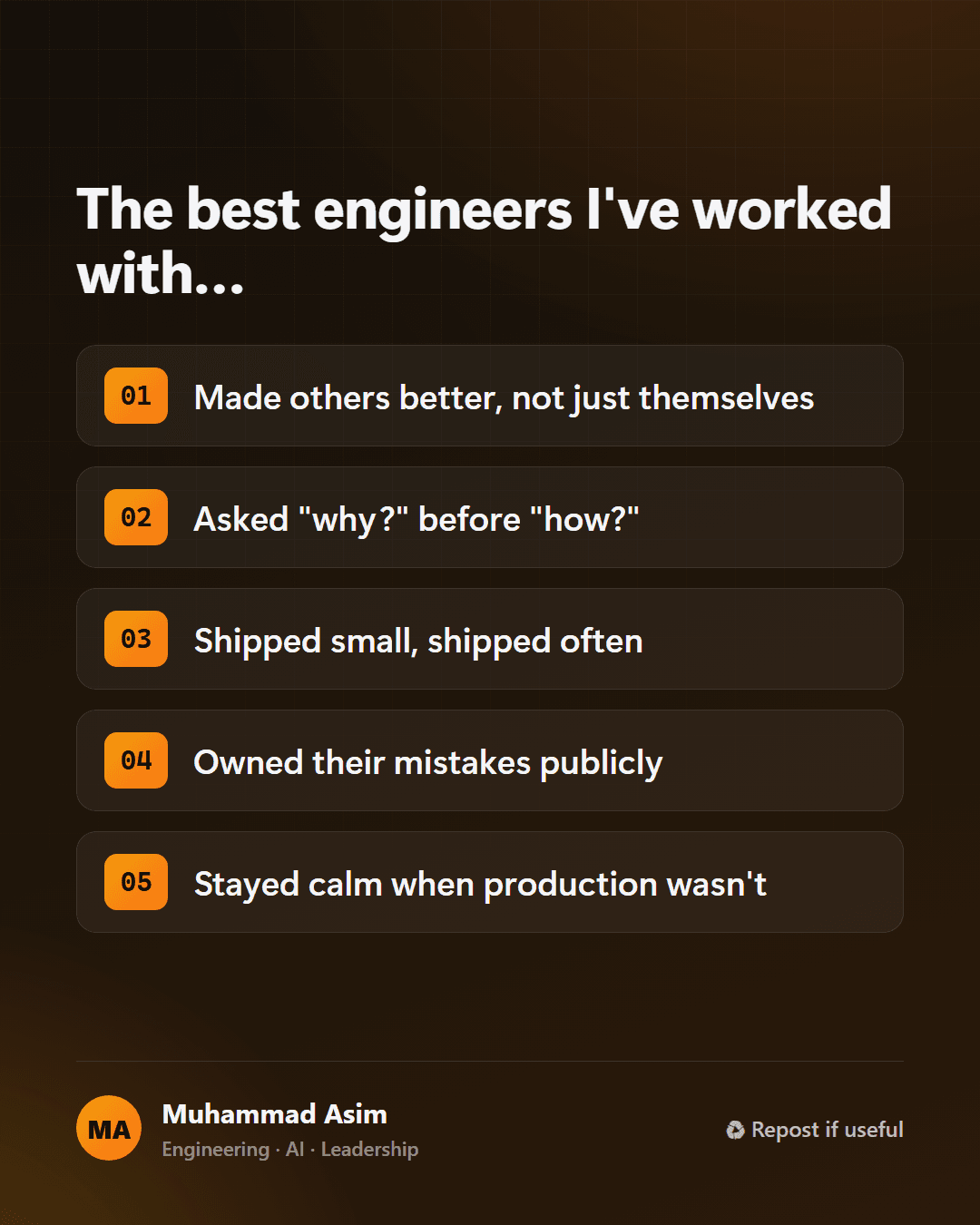
5 Habits of Great Engineers That Matter More Than Coding Speed
The best engineers I have worked with were not always the fastest coders. Here are the habits of great engineers that turn skill into trust.
Comments