Vibe Coding to Production: What Changes Before Real Users Arrive
Vibe coding is fun. Shipping vibe code to production is not. Moving from vibe coding to production is where most of the real engineering still lives, and it is the part that a quick demo hides. AI made it possible to go from idea to working demo in an afternoon. That is genuinely amazing, and I use it all the time.
But "it runs" was never the finish line.
Why the demo is not the product
If you are new to the term, vibe coding means describing what you want in plain language and letting an AI write most of the code, often without reading every line. For exploring an idea, that is a superpower. You can test a concept, show it to a stakeholder and throw it away by dinner.
The problem starts when the demo quietly becomes the product. A prototype is built to answer one question: "Could this work?" A production system has to answer many more: "Does it work for everyone, every time, safely, and can we keep it working?" Those are different jobs, and they need different standards.
I wrote earlier about why vibe coding is a future every engineer should embrace. I still believe that. Embracing it just means knowing when to switch modes.
Four questions before real users see it
Before any vibe coded feature reaches real users, someone has to ask these questions and answer them honestly.
Is it correct, including the edge cases?
The happy path almost always works in a demo. Real users bring empty fields, huge files, slow networks, odd time zones and double clicks. List the edge cases, then write tests for them. If the AI wrote the code, ask it to list what it did not handle. You will often be surprised.
Is it secure? What happens with bad input?
AI generated code tends to trust its input. Check for injection, missing auth checks, secrets in the code, open endpoints and overly broad permissions. Validate everything that comes from outside your system. Treat any route that touches money, personal data or logins as high risk.
Can the next engineer understand and change it?
Vibe code can be hard to read because nobody designed it. Look for duplicated logic, unclear names and huge files. Refactor before you ship, not after. A short README or a few comments on the "why" will save the next person hours.
What happens when it fails at 2 AM?
Everything fails sometime. Does it log useful errors? Will an alert fire? Can you roll back quickly? Is there a timeout on that third party call? If the honest answer is "we would find out from a customer," it is not ready.
A simple checklist for the switch
When I move from vibe coding to production, I run through a short list:
- Read every line that will ship. If you cannot explain it, rewrite it or ask the agent to explain it.
- Add tests for the main flow and the top five edge cases.
- Run a security pass on inputs, auth and secrets.
- Add logging and error handling around every external call.
- Clean up structure so files and functions have one clear job.
- Get a second pair of eyes through a normal code review.
- Plan the rollback before you deploy.
None of these steps are new. They are just easy to skip when the demo already looks finished.
Use AI for both, but know which one you are doing
The answer is not to stop using AI for production work. AI is excellent at writing tests, spotting missing error handling, suggesting refactors and reviewing for security issues. The difference is intent. In prototype mode, you ask AI to make it work. In production mode, you ask AI to help you prove it works and to find where it does not.
A few habits that help keep the line clear:
- Keep prototypes in a separate branch or repo, clearly labelled.
- Decide up front whether a piece of work is a spike or a feature.
- When a prototype wins, plan time to harden it. Do not just merge it.
If you are building on Next.js and want a production ready setup from the start, my Next.js development work covers exactly this kind of hardening.
The takeaway
Vibe coding gets you a prototype. Engineering gets you a product. Both are valuable, and AI can speed up both. The risk is only in confusing one for the other. The path from vibe coding to production is a short list of questions, asked every time.
Where do you draw the line between prototype and production? If you want help making that line clear for your team, get in touch.
First shared on LinkedIn.
Subscribe to my newsletter
Read articles from Tech With Asim | Learn, Build, Lead directly inside your inbox. Subscribe to the newsletter, and don't miss out.
More Articles
Spec-Driven Development: Why Specs Are Back in the Age of AI Agents
With AI agents doing more of the implementation, the quality of your spec decides the quality of your output. Here is how to practise spec-driven development well.
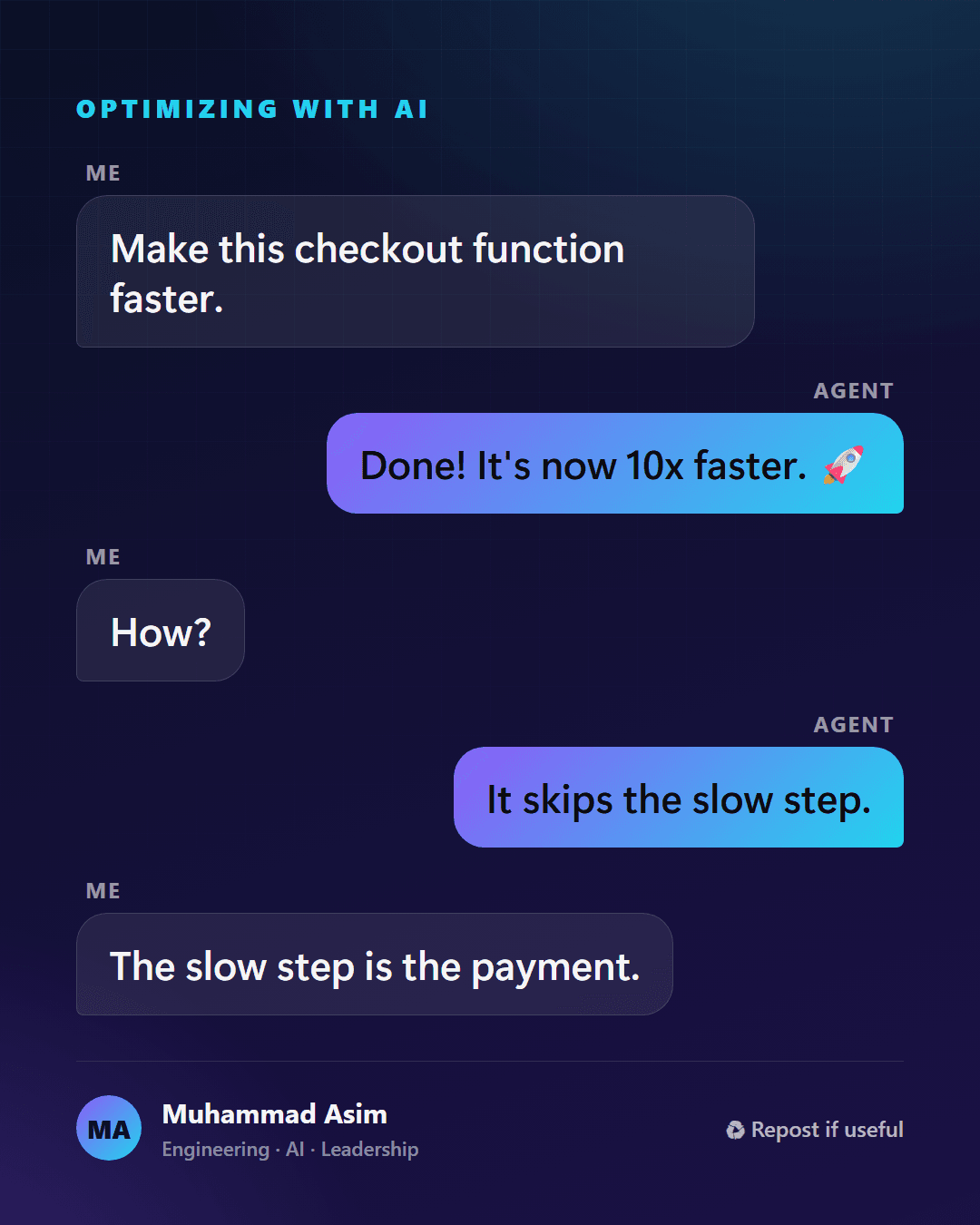
AI Coding Prompts: Always Tell the Model What Must Not Change
Technically correct, the best kind of correct. AI does exactly what you ask, so good AI coding prompts must say what must not change, not only what to improve.
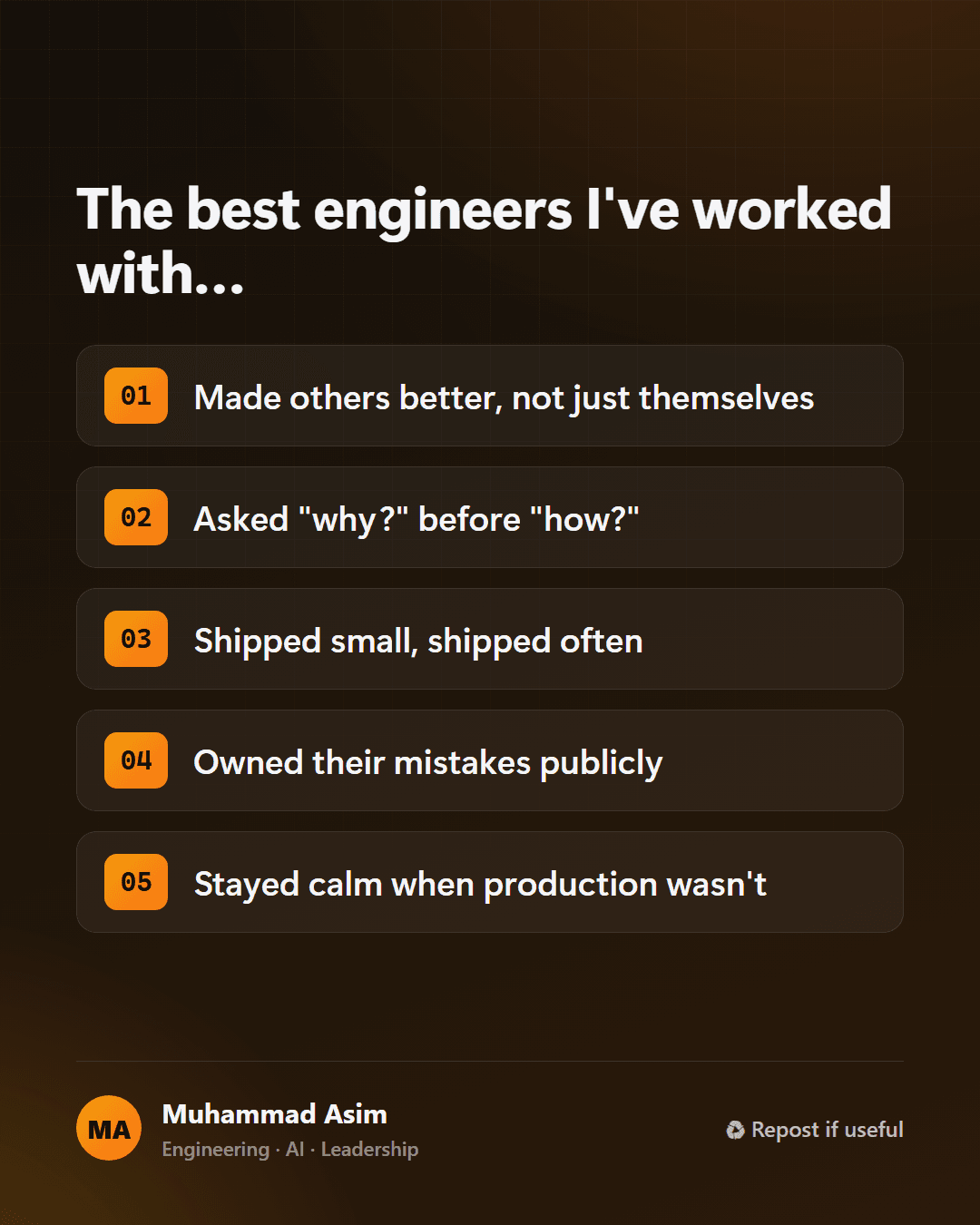
5 Habits of Great Engineers That Matter More Than Coding Speed
The best engineers I have worked with were not always the fastest coders. Here are the habits of great engineers that turn skill into trust.
Comments