Thanking the Unsung Heroes of Software Teams (and Making Their Work Visible)
It is Thanksgiving in the US, so let us take a moment for the people who keep software running and rarely get thanked. Every team has them. They are the unsung heroes of software, and their work is often invisible exactly because it is done well.
When nothing breaks, nobody asks why. When a bug never reaches customers, nobody sees it. When the docs answer your question, you rarely wonder who wrote them. This post is a thank-you, and also a practical look at how teams can recognise this work properly.
Who deserves a thank-you
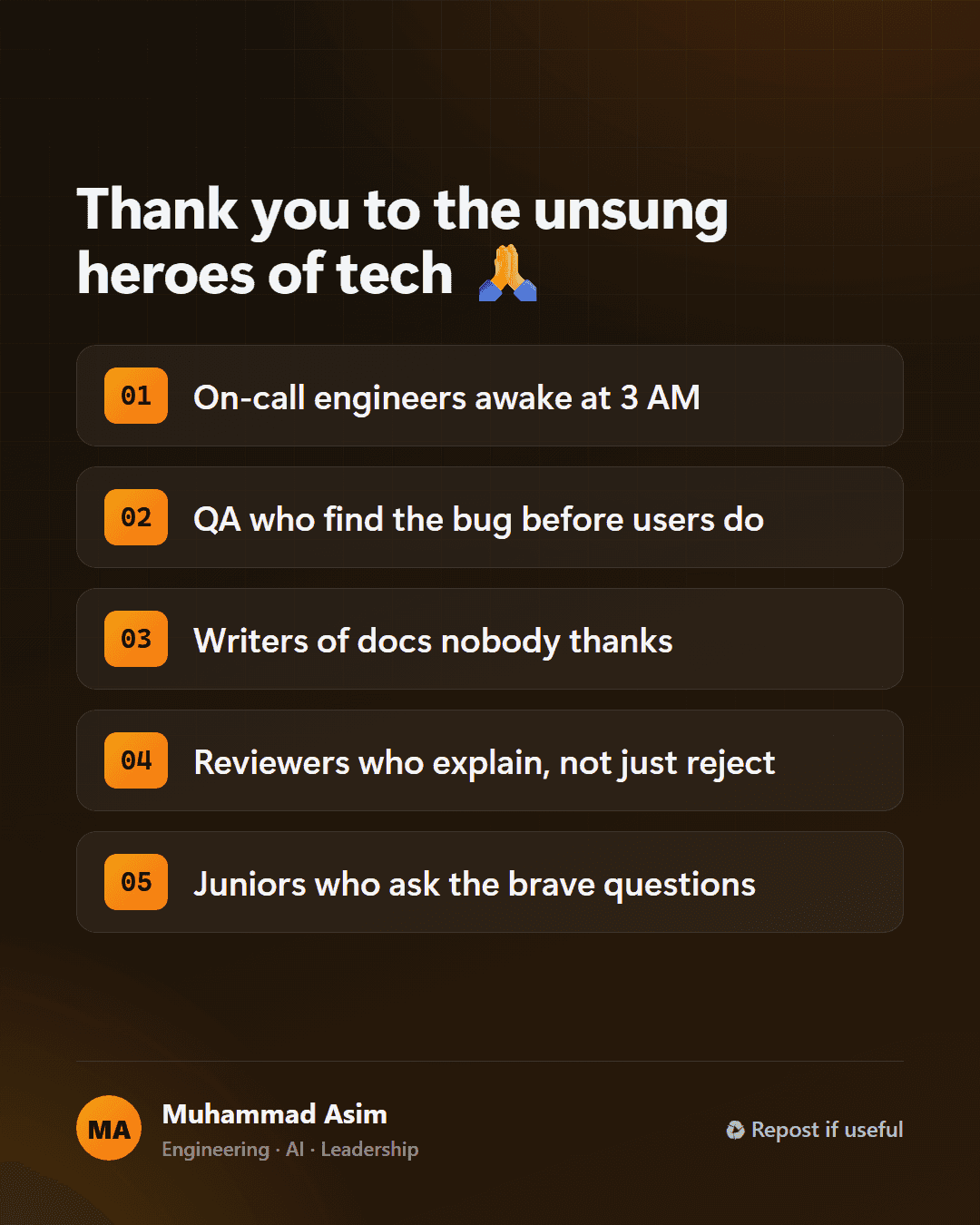
On-call engineers awake at 3 AM
They wake up to alerts so the rest of us can sleep. They fix problems under pressure, often alone, often tired. Then they still join the morning stand-up. On-call is one of the hardest and least visible jobs in engineering.
QA engineers who find the bug before customers do
A bug found in testing is a bug that never hurts a customer. Good QA engineers think like users, and sometimes like attackers. They try the strange inputs, the slow networks and the paths nobody planned for. Their best work is the incident that never happened.
Everyone who writes the docs nobody thanks them for
Setup guides, runbooks, architecture notes, API references. Good documentation saves hours for every person who reads it. Yet writing docs rarely shows up in performance reviews or release notes.
Reviewers who explain, not just reject
A comment like "this will not scale" is easy. A comment that explains why, and suggests a better way, takes time and care. Reviewers who teach make the whole team stronger.
Juniors who ask the questions everyone else was afraid to ask
"Why do we do it this way?" Sometimes the answer is good. Sometimes nobody knows, and that question leads to a real improvement. Curious juniors keep teams honest.
Why invisible work gets missed
Most teams measure what is easy to see: features shipped, tickets closed, demos given. The work above does not fit those measures well. A quiet night on call, a bug caught early or a clear runbook does not produce a shiny result.
Over time, this creates a problem. People learn that only visible work is rewarded. They stop writing docs, rush reviews and avoid on-call. Quality slowly drops, and nobody can point to the moment it happened.
How to recognise the unsung heroes of software on your team
Saying thank you once a year is nice. Building it into how the team works is better. A few practical ideas:
- Thank people in public, with specifics. A specific note, such as "thanks for the runbook, it made last night's recovery much easier," means far more than a general "great job, team."
- Include invisible work in reviews. Ask about docs written, reviews given, incidents handled and people helped, not only features delivered.
- Make on-call fair and supported. Rotate it, give time off after hard nights, and fix the noisy alerts that wake people for nothing.
- Celebrate bugs found early. Treat a bug caught in QA as a win, not a delay.
- Reward good questions. When a junior's question leads to a change, say so in front of the team.
- Write it down. Keep a simple shared note of thank-yous. It helps with recognition later and lifts the mood now.
These are small habits, but they shape culture. A team that notices invisible work keeps doing it. This kind of team health is a big part of what I focus on as a fractional tech lead, because good culture is what makes good engineering last. You can read more about my own path on the about page.
A short gratitude checklist for leaders
- Name one person on call this month and thank them directly.
- Read one doc your team wrote recently and tell the author it helped.
- Point out one great review comment in your next team meeting.
- Ask your QA team what risk they caught that nobody noticed.
- Thank a junior for a question that made you think.
If you want help building a team culture where this work is seen and valued, get in touch.
Tag someone who deserves a thank-you today, and tell them what they did that made a difference.
First shared on LinkedIn.
Subscribe to my newsletter
Read articles from Tech With Asim | Learn, Build, Lead directly inside your inbox. Subscribe to the newsletter, and don't miss out.
More Articles
How to Use AI to Understand a Legacy Codebase Faster
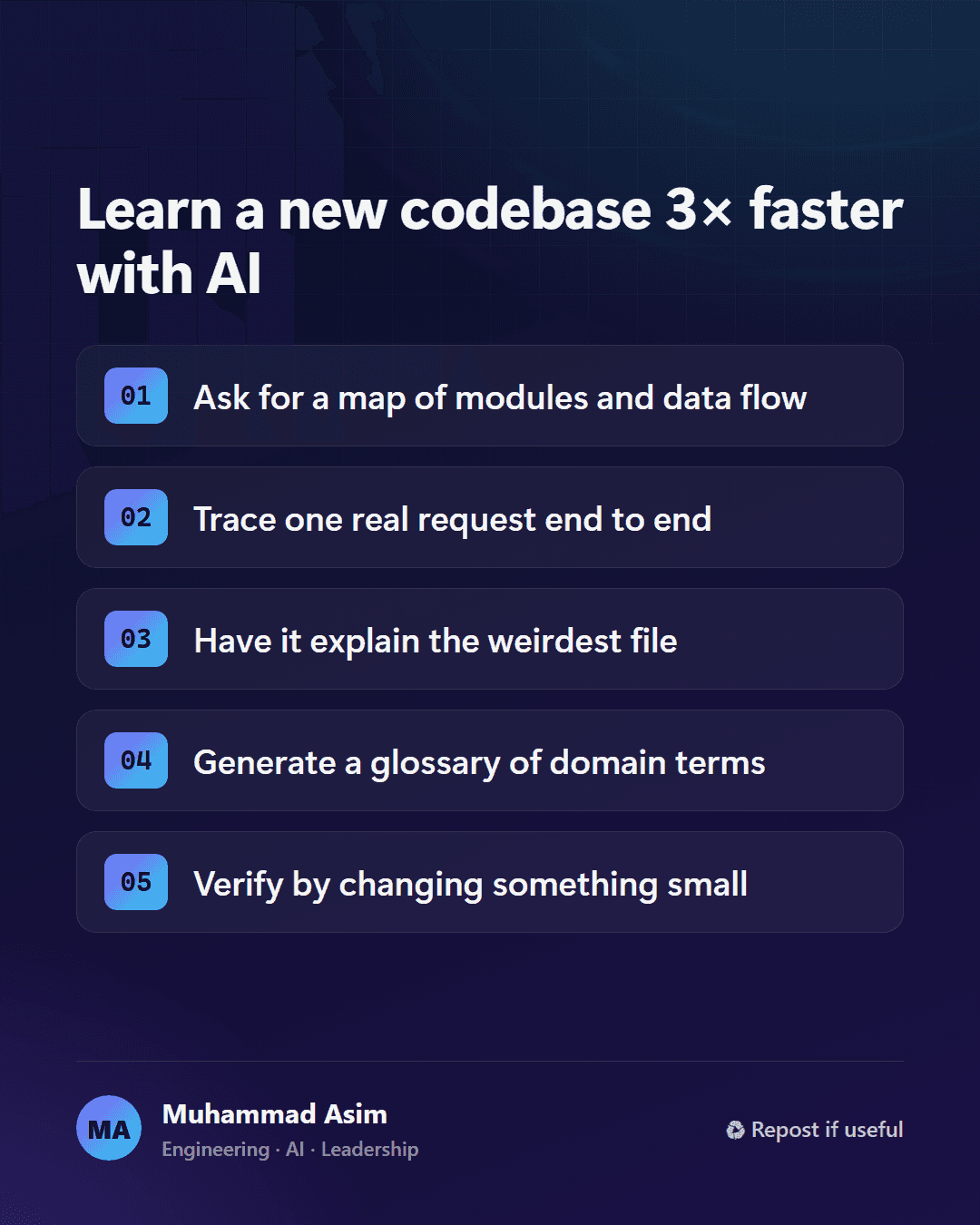
Joined a new team or inherited old code? AI is an amazing tour guide. Here is my five-step process to understand a legacy codebase faster, while you stay in control.
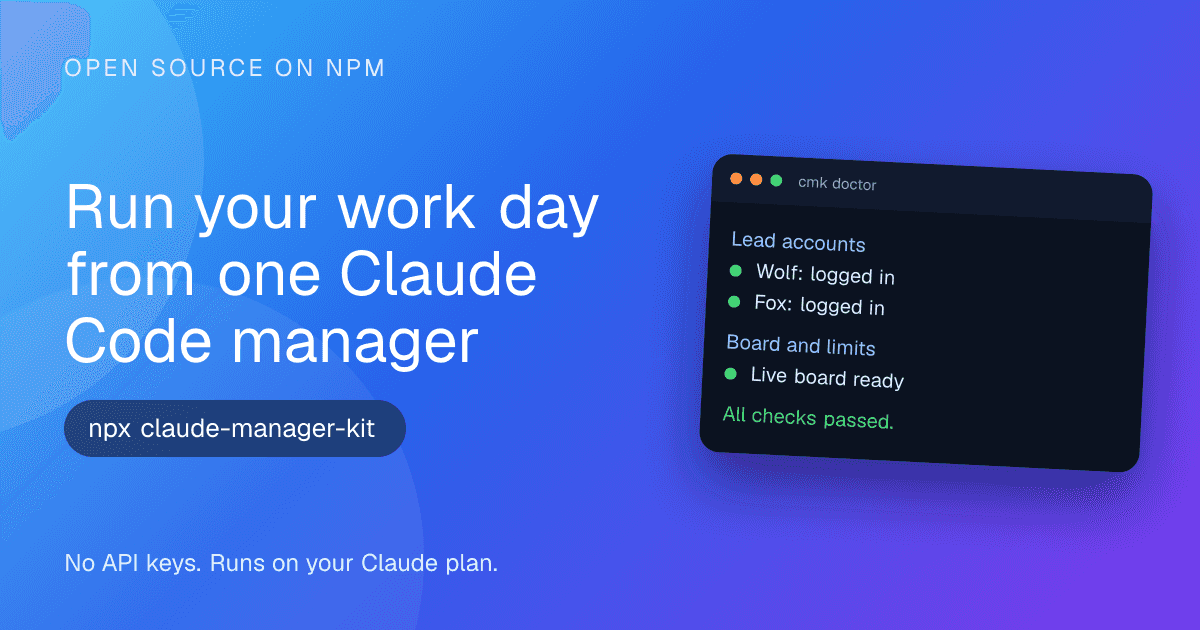
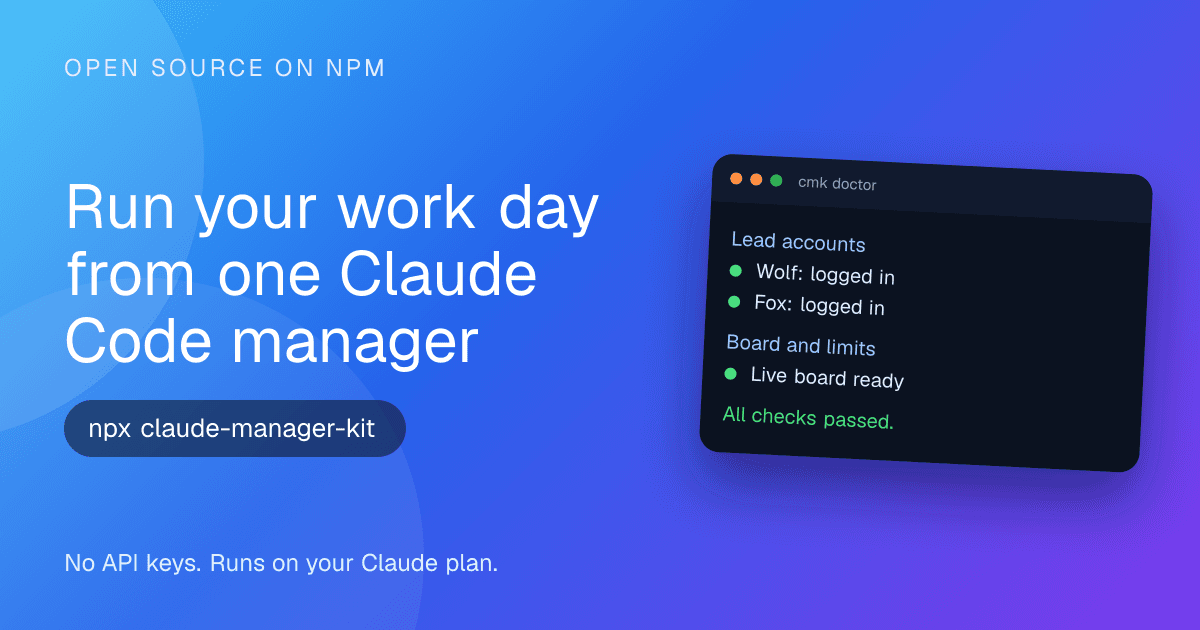
claude-manager-kit: Run Your Work Day From One Claude Code Manager Session
An open-source npm package that turns your Claude plan into a manager that triages, delegates to parallel leads and learns from ratings. No API keys.
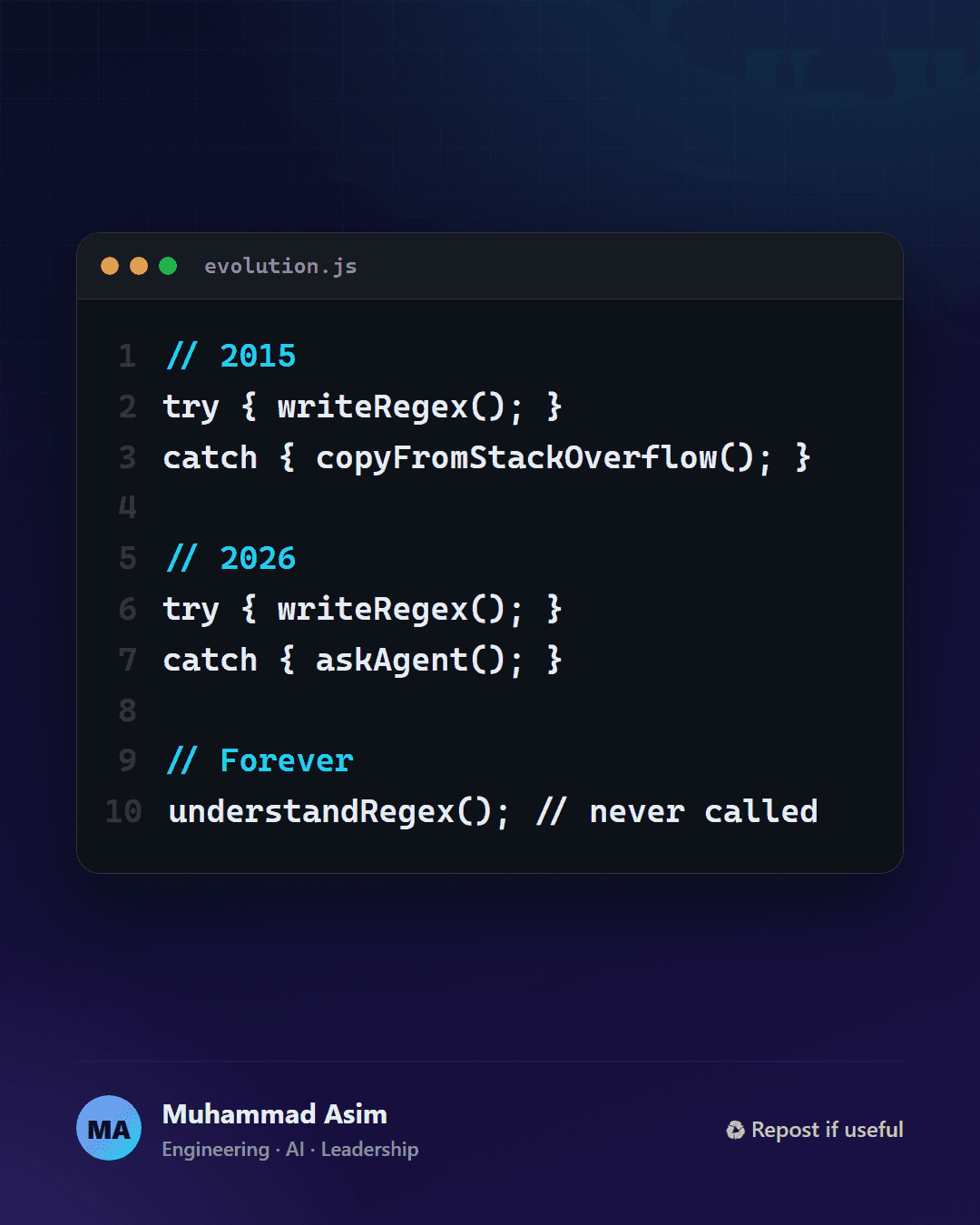
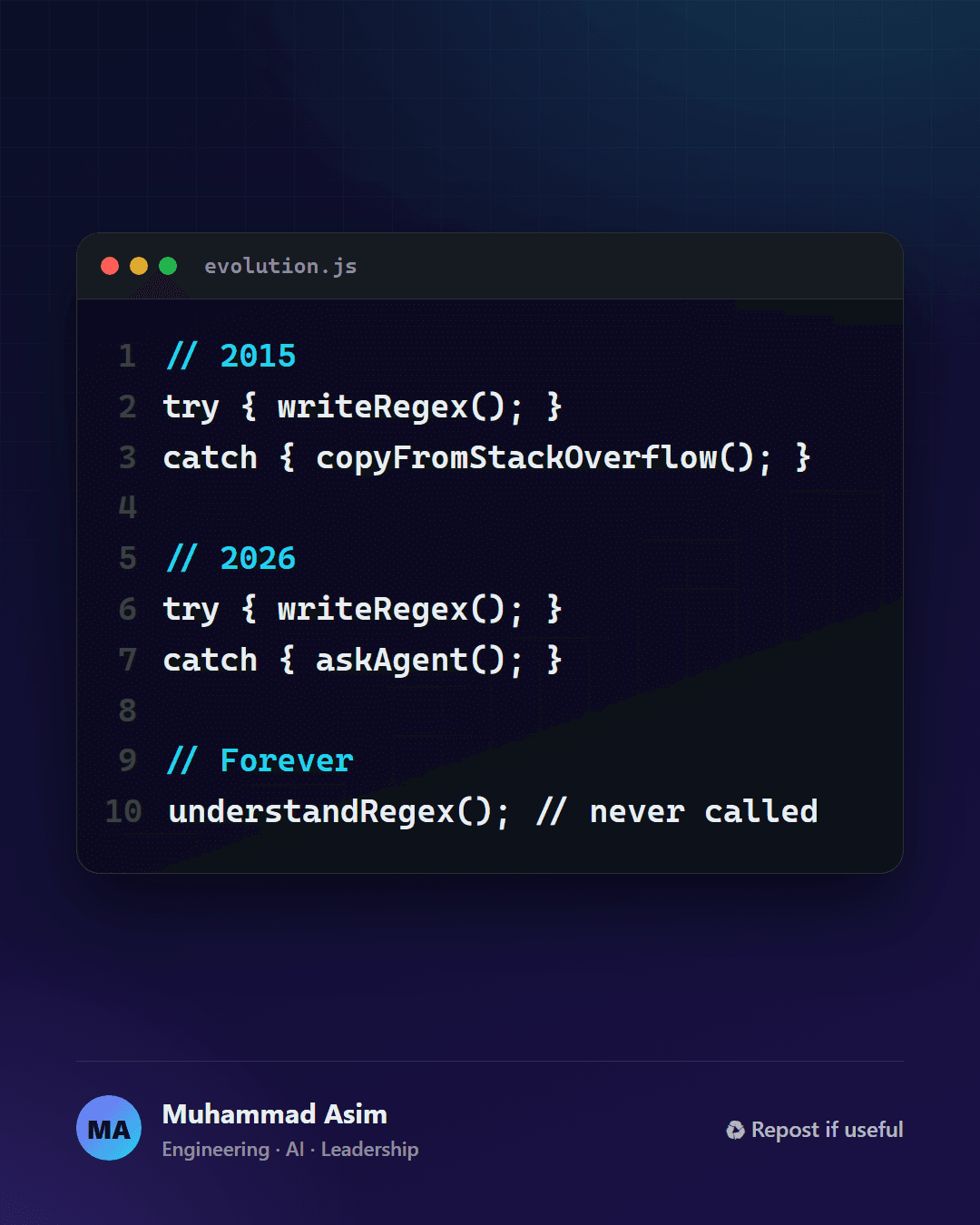
How to Trust an AI-Generated Regex Before It Reaches Production
The evolution of writing regex: memory, Stack Overflow, now AI. The tools changed, the understanding did not. Here is how to trust an AI-generated regex in production.
Comments