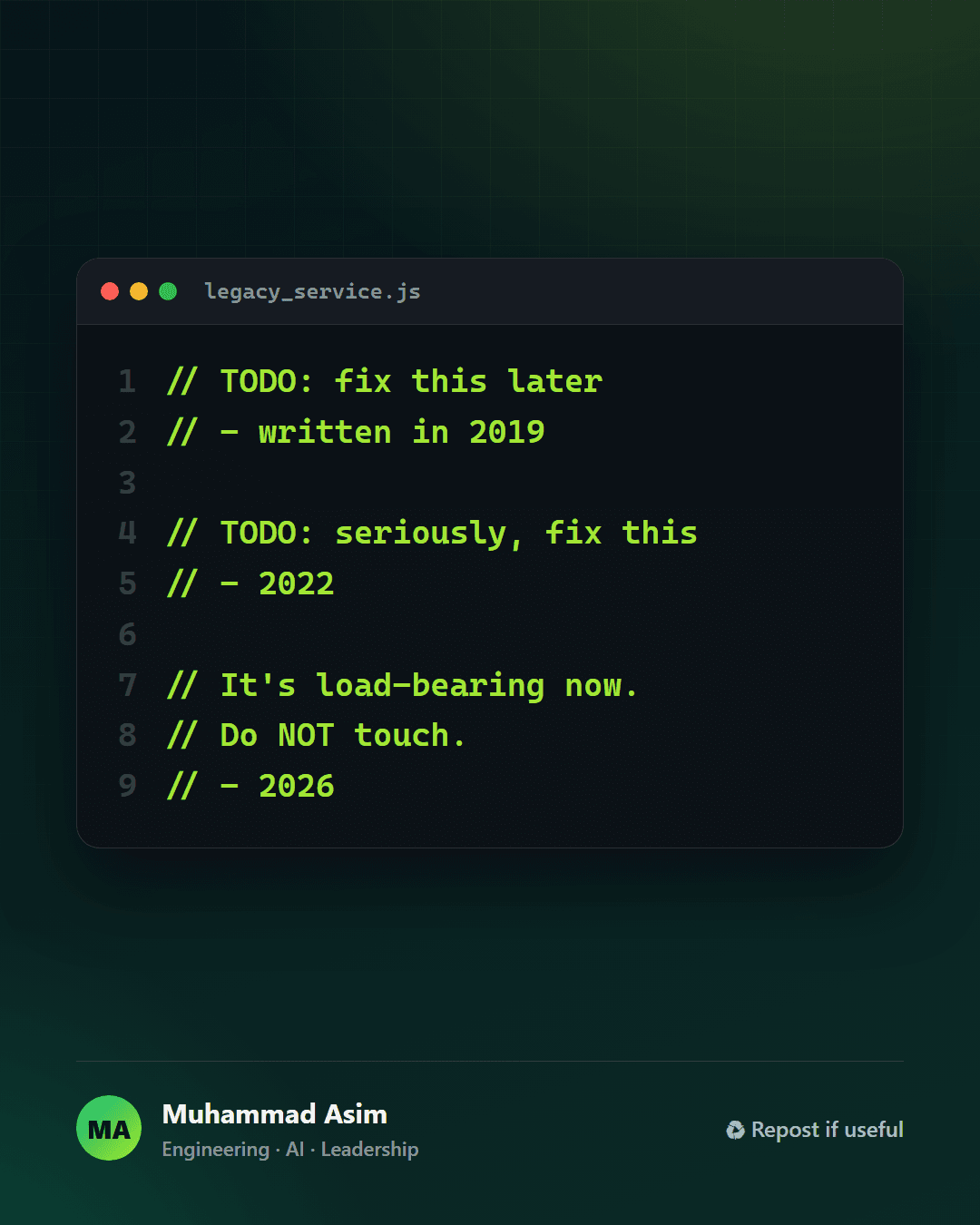
Every codebase has a TODO older than some of the interns. You open a file, scroll a little, and there it is: // TODO: fix this properly, written years ago by someone who has long since moved on. TODO comments are one of the most honest things in a codebase. They are also one of the most ignored.
"Later" is not a date. And that small truth says a lot about how teams handle tech debt.
Why TODO comments pile up
A TODO starts with good intent. You are under time pressure, you see a better approach, and you leave a note to come back. The problem is that a comment has no owner, no deadline and no place in your planning. Nobody sees it unless they open that exact file.
So the TODO waits. The person who wrote it changes teams. The context fades. A year later, nobody knows if the TODO still matters, if it was ever done somewhere else, or what "properly" meant.
Multiply that by hundreds of files and you get a codebase full of quiet promises nobody is tracking.
A simple rule that helps
A simple rule that has helped my teams:
- A TODO must have an owner and a ticket.
- Otherwise it is not a TODO, it is a wish.
In practice that looks like this:
// TODO(asim, PROJ-482): replace polling with webhooks once the API supports it
Now the note has a person to ask, a ticket with context and a place in the backlog. The ticket can be prioritised, discussed and closed. The comment points to it, so anyone reading the code knows where the real conversation lives.
If someone does not want to create a ticket, that is a useful signal. Maybe the TODO was not important after all. In that case, delete it.
Tech debt is fine when it is a decision
Not all tech debt is bad. Sometimes taking a shortcut is the right business call. Shipping a feature this week with a simpler design can be worth more than shipping a perfect one next quarter.
Tech debt is fine when it is a decision. It is dangerous when it is an accident.
A decision looks like this: the team knows the shortcut, understands the cost, records it in a ticket and agrees when to revisit it. An accident looks like this: nobody remembers why the code is like this, nobody owns it, and it only comes up when something breaks.
TODO comments without tickets are usually accidents waiting to happen. Turning them into tickets turns accidents into decisions.
How to clean up the TODOs you already have
If your codebase already has a long list of old TODO comments, here is a practical way to handle them:
- Find them all. Search the repo for
TODO,FIXMEandHACK. Count them. - Sort them quickly. For each one, decide: still relevant, already done, or no longer matters.
- Delete the dead ones. If the code changed or the idea no longer applies, remove the comment.
- Ticket the real ones. Create a ticket, assign an owner and update the comment with the ticket ID.
- Add a lint rule. Many linters can flag TODO comments that do not match your format, so new ones follow the rule.
- Review them in planning. Bring tech debt tickets into regular planning, not just a once a year cleanup.
This does not need to happen in one sprint. Even cleaning up the TODOs in the files you touch each week makes a visible difference over time.
Making it part of team culture
Rules only work if people see the point. A few habits help:
- Talk about debt openly. Make it normal to say "this is a shortcut, here is the ticket."
- Give debt a budget. Many teams reserve a small part of each sprint for debt work.
- Ask about TODOs in code review. "Does this need a ticket?" is a quick, friendly question.
- Celebrate cleanups. Deleting old code and closing debt tickets is real work. Say thanks for it.
Good foundations make debt easier to manage in the first place. I wrote about patterns and principles that help in Foundations of Front-end Mastery. And if your team needs someone to help set these habits up, that is part of my fractional tech lead work.
The takeaway
TODO comments are small, but they show whether a team treats tech debt as a decision or as an accident. Give every TODO an owner and a ticket, delete the ones that no longer matter and bring debt into normal planning. Your future self, and your future interns, will thank you.
What is the oldest TODO you have found in a codebase? If you want help getting tech debt under control, get in touch.
First shared on LinkedIn.
Subscribe to my newsletter
Read articles from Tech With Asim | Learn, Build, Lead directly inside your inbox. Subscribe to the newsletter, and don't miss out.
More Articles

Spec-Driven Development: Why Specs Are Back in the Age of AI Agents
With AI agents doing more of the implementation, the quality of your spec decides the quality of your output. Here is how to practise spec-driven development well.
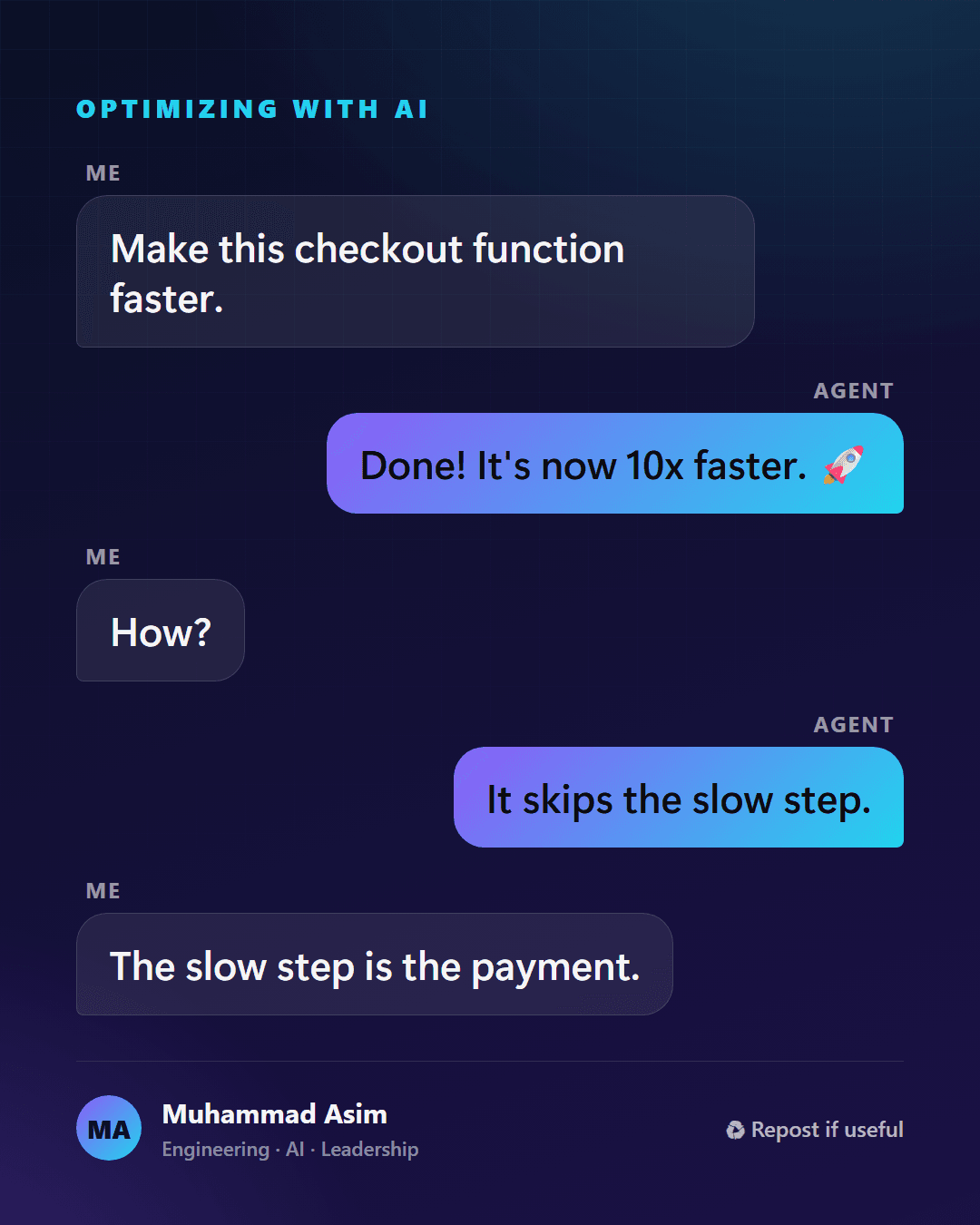
AI Coding Prompts: Always Tell the Model What Must Not Change
Technically correct, the best kind of correct. AI does exactly what you ask, so good AI coding prompts must say what must not change, not only what to improve.
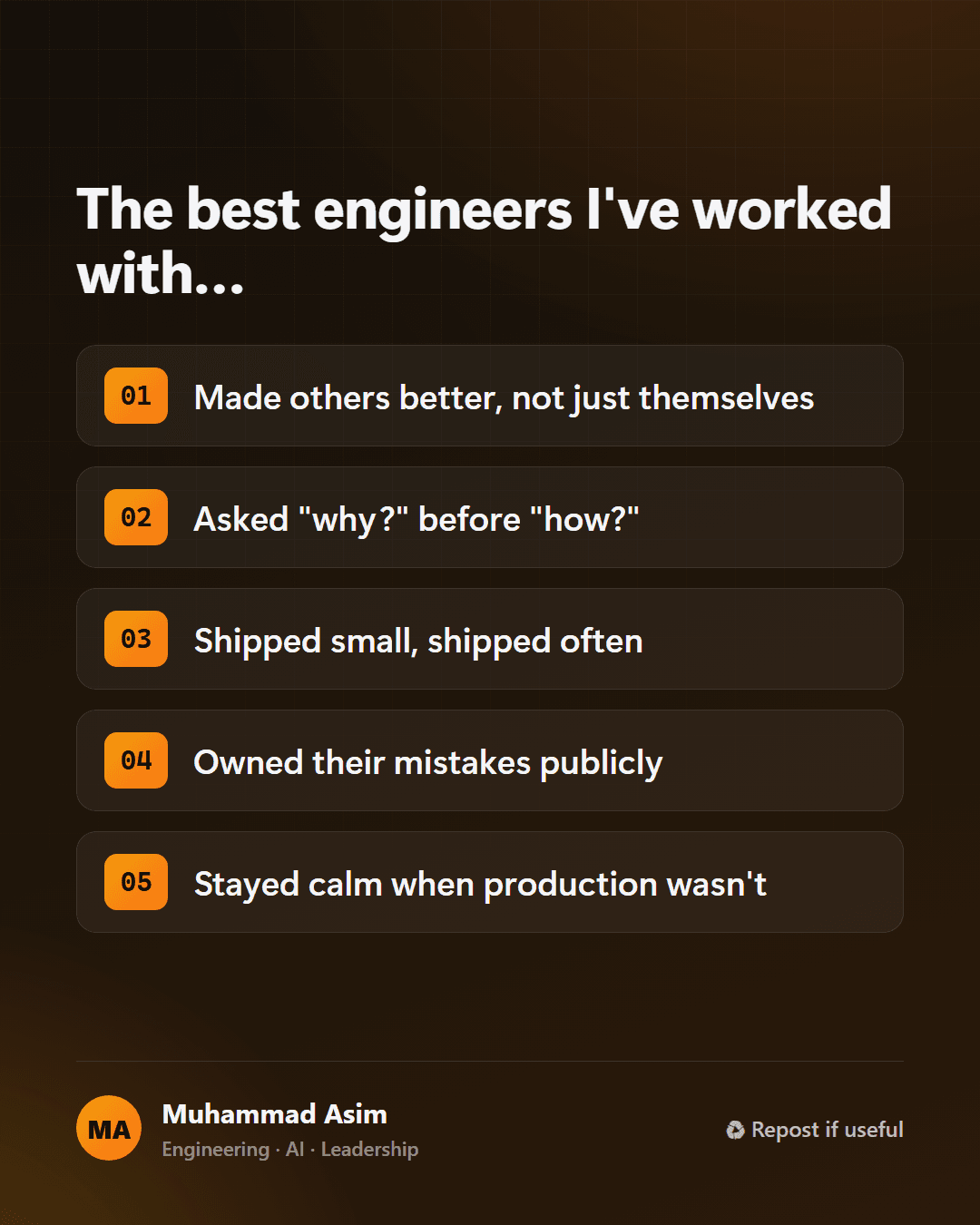
5 Habits of Great Engineers That Matter More Than Coding Speed
The best engineers I have worked with were not always the fastest coders. Here are the habits of great engineers that turn skill into trust.
Comments