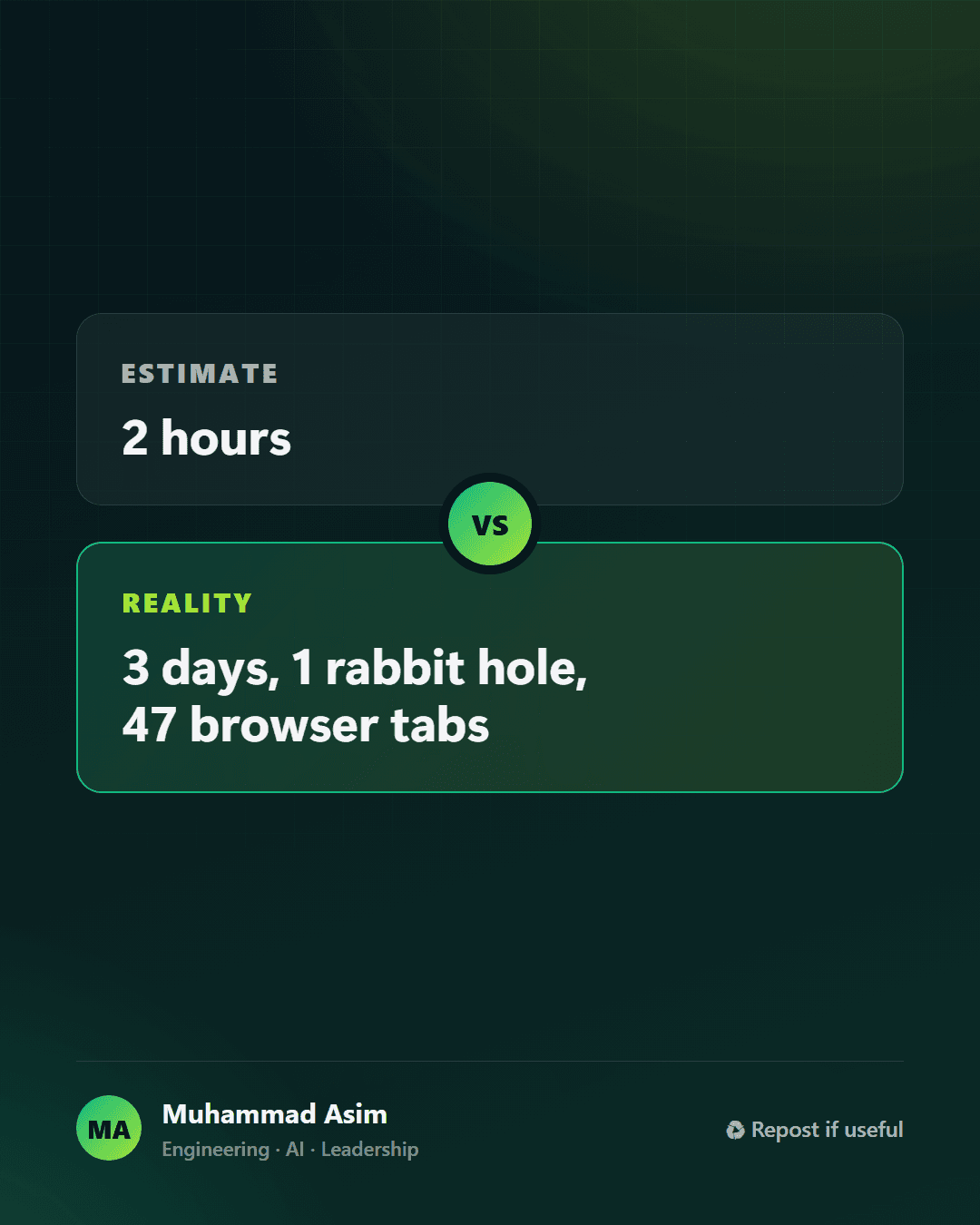
Software Estimation, Explained: Why Quick Tasks Never Are
Software estimation, explained in one line: it is not that engineers are bad at math. It is that we estimate the work we can see, and the work we can't see is always bigger. Every developer has a story about a "quick task" that took a week. Most of us have several.
The good news is that estimates can get better. Not perfect, but more honest and more useful. Here is why they go wrong and what helps.
Why software estimation goes wrong
When you look at a task, your brain pictures the main work: add the field, update the form, write the query. That part is real, and you are often right about it. What you do not picture is everything around it:
- The old code that does not work the way you assumed.
- The test suite that breaks for an unrelated reason.
- The edge case nobody mentioned in the ticket.
- The review comments, the second round of changes, the deploy.
- The meeting, the question from support and the context switch.
None of these are surprises in general. They are only surprises in the moment. That is why the same mistake repeats on every team: we estimate the visible work and forget the invisible work that always comes with it.
Add some natural optimism (we picture the version where things go well) and pressure to give a small number, and estimates drift low.
Habit 1: Break tasks down until each piece is under a day
Large tasks hide unknowns. "Build the checkout page" sounds like one thing, but it is really ten or twenty smaller things. Breaking work down forces you to think about each part, and that is where hidden work shows up.
A good rule: keep splitting until each piece is under a day. If you cannot break a piece down, that usually means you do not understand it yet. That is useful to know before you commit to a date.
When a task is unclear, plan a short spike first: a small, time boxed piece of research to answer the open questions. Then estimate the real work.
Habit 2: Add a line item called "unknowns"
It is real. Every project has work you cannot name yet. Pretending it does not exist does not make it go away; it just moves the surprise to later, when it is more expensive.
Making unknowns a visible line item does two things. First, it gives the work a place to land. Second, it starts an honest conversation with stakeholders about risk. A new integration, an unfamiliar codebase or vague requirements should all mean a bigger unknowns line.
Ranges help too. "Three to five days" is often more honest than "four days," and it tells people how confident you are.
Habit 3: Track estimate vs actual, without blame
The fastest way to get better at estimates is to compare them with what really happened. Keep a simple record: what you estimated, what it actually took and a short note on why it differed.
The important part is "without blame." If people get punished for missed estimates, they will pad numbers or hide the truth, and you lose the data you need to learn. If the review is safe, patterns show up fast. Maybe every task touching one old module takes twice as long. Maybe reviews always add a day. Now you can plan for that.
Tips for leads and managers
Estimation is a team skill, and leads shape it:
- Ask for ranges, not single numbers.
- Let the people doing the work estimate it.
- Treat estimates as forecasts, not promises. Update them when you learn more.
- Protect time for unknowns instead of filling every hour.
- Review estimate vs actual in retros, calmly and regularly.
Helping teams build calmer planning habits is a regular part of my fractional tech lead work. If you are bringing in a remote tech lead, a clear approach to software estimation is one of the first things worth agreeing on.
What about AI?
AI tools can make some tasks much faster, but they do not remove the invisible work. Reviewing, testing, integrating and deploying still take time. If anything, AI makes the visible part smaller, so the invisible part becomes a bigger share of the total. Keep the unknowns line.
The takeaway
Software estimation is hard because the work we cannot see is always bigger than the work we can. Break tasks down until each piece is under a day, add a real line for unknowns and track estimate vs actual without blame. Your estimates will not be perfect, but they will be honest, and that is what teams can plan around.
What is your personal record for a "quick task" gone wrong? If you want help building better planning habits, get in touch.
First shared on LinkedIn.
Subscribe to my newsletter
Read articles from Tech With Asim | Learn, Build, Lead directly inside your inbox. Subscribe to the newsletter, and don't miss out.
More Articles
Spec-Driven Development: Why Specs Are Back in the Age of AI Agents
With AI agents doing more of the implementation, the quality of your spec decides the quality of your output. Here is how to practise spec-driven development well.
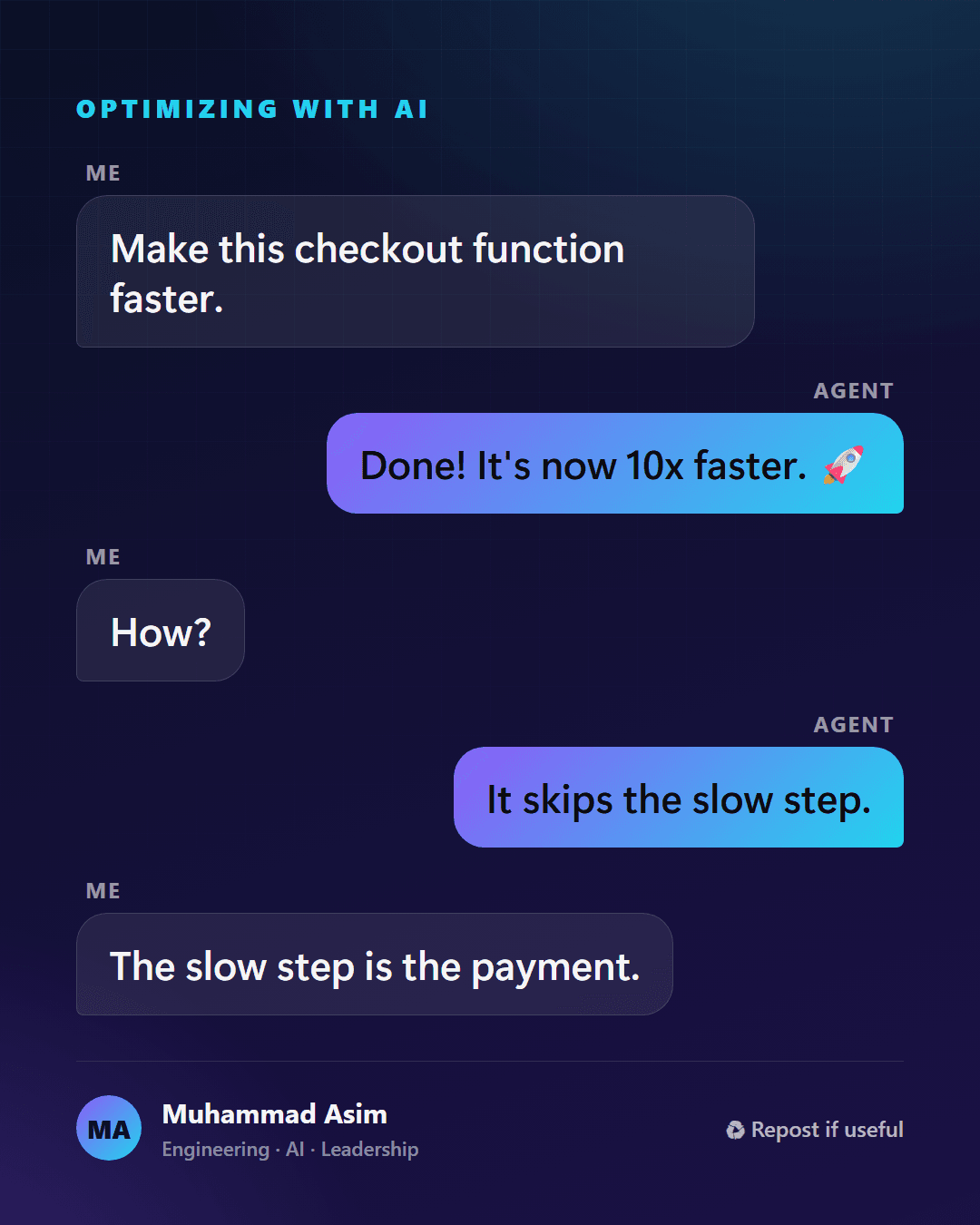
AI Coding Prompts: Always Tell the Model What Must Not Change
Technically correct, the best kind of correct. AI does exactly what you ask, so good AI coding prompts must say what must not change, not only what to improve.
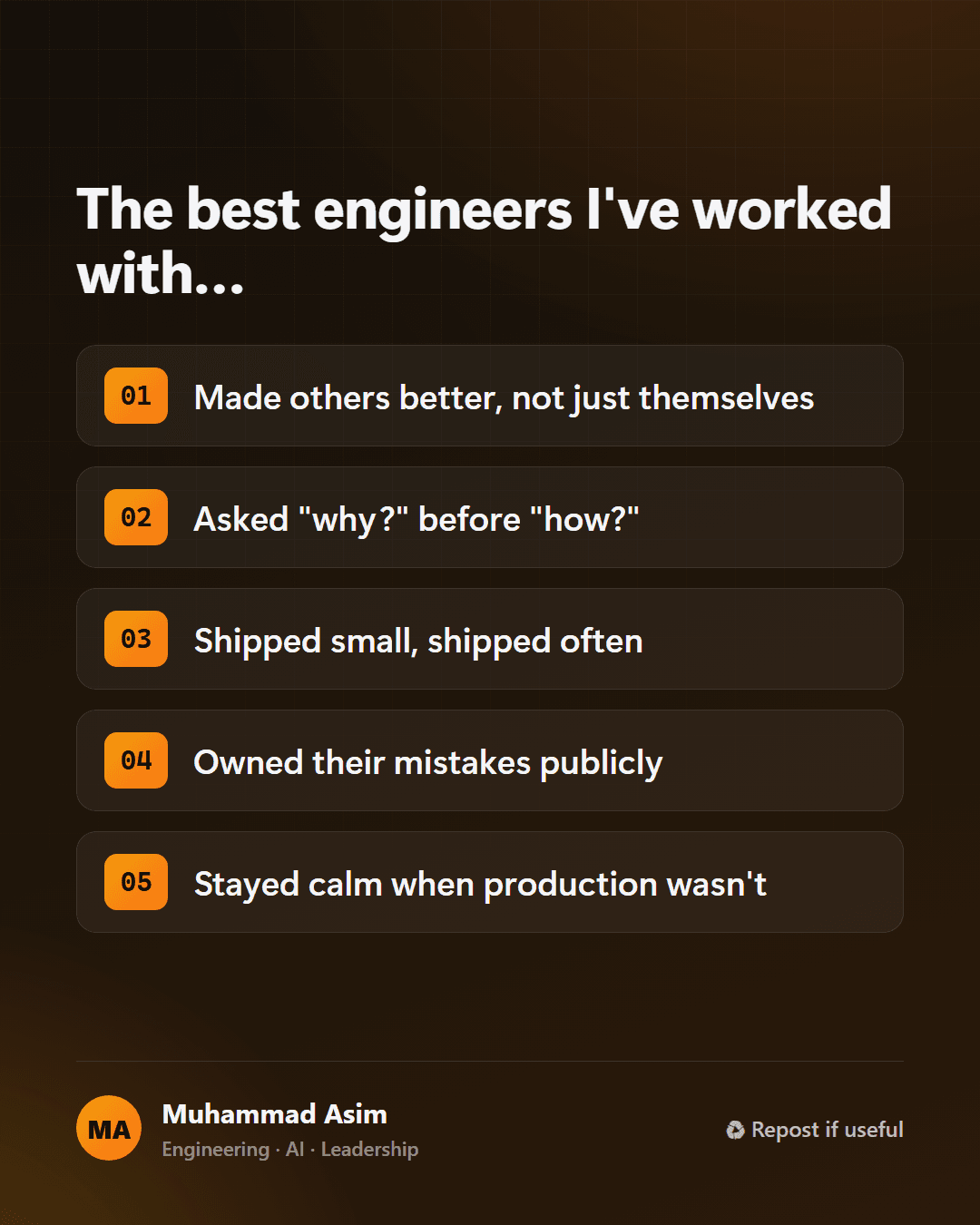
5 Habits of Great Engineers That Matter More Than Coding Speed
The best engineers I have worked with were not always the fastest coders. Here are the habits of great engineers that turn skill into trust.
Comments