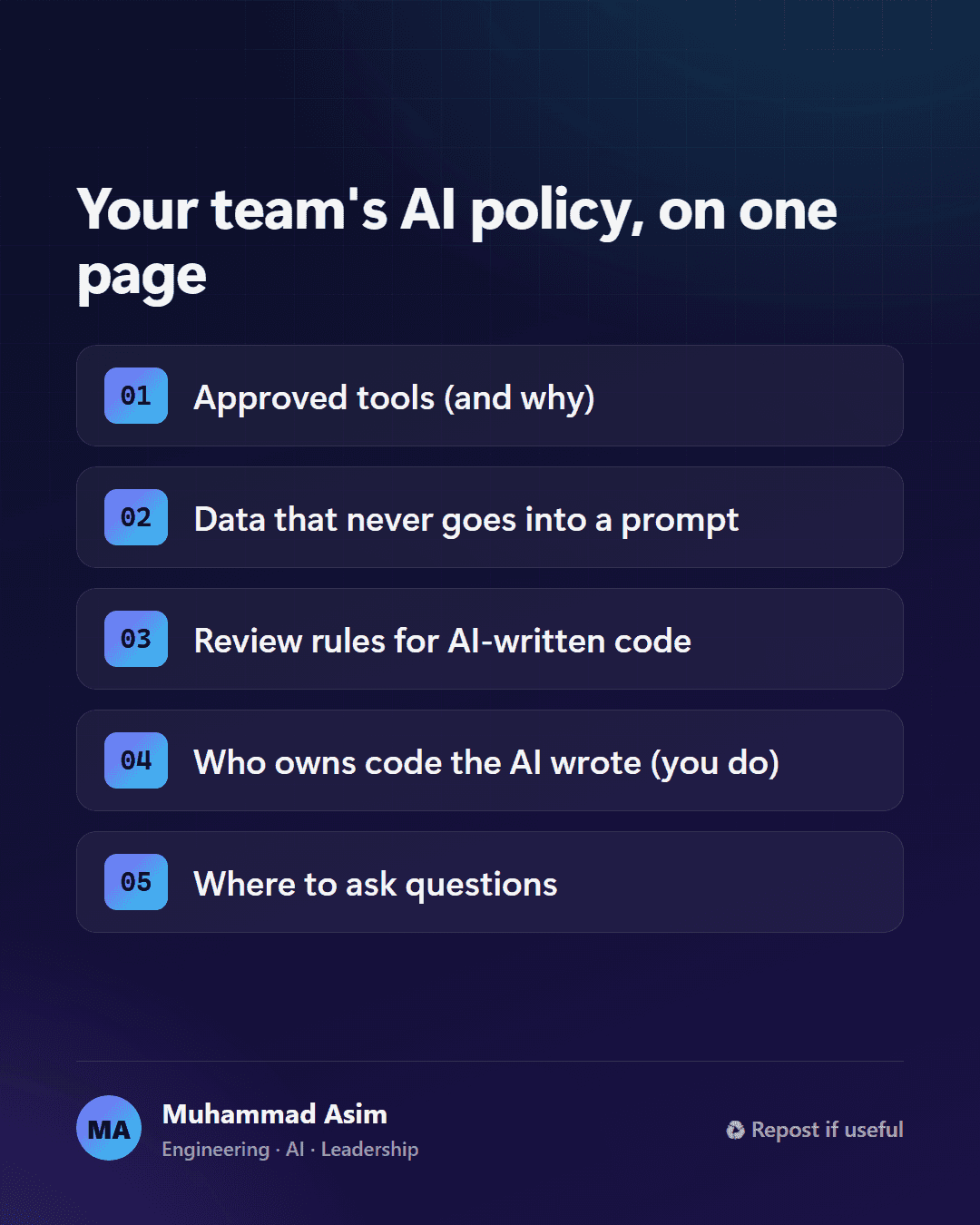
How to Write a One-Page AI Usage Policy for Your Engineering Team
Does your team have an AI policy? It doesn't need to be a 40-page document that nobody reads. One page is enough. A short, clear AI usage policy tells people what they can do, what they must never do and where to go when they are unsure.
Clear rules don't slow people down. Uncertainty does.
Why teams need an AI usage policy now
Most engineers already use AI tools, whether the company has approved them or not. Without guidance, each person makes their own choices. Some avoid AI completely because they are afraid of breaking a rule. Others paste customer data into a public chatbot without thinking twice. Both outcomes are bad.
A policy fixes this. It gives confident users clear limits and gives cautious users permission. It also protects the company: its data, its customers and its reputation.
The trick is to keep it short. Long policies get ignored. A single page can be read in five minutes, remembered and actually followed.
The five sections of a one-page policy
1. Approved tools, and why those
List the AI tools people are allowed to use for work, and briefly explain why. For example, a tool might be approved because the company has a business agreement that keeps prompts private and excludes them from training. Explaining the reason helps people make good choices when a new tool appears.
Also say how to request a new tool. AI moves fast, and people will want to try new things. Give them a simple path to do that safely.
2. Data that never goes into a prompt
This is the most important section. Be specific:
- Customer personal data.
- Secrets, API keys, passwords and credentials.
- Financial or health information.
- Anything marked confidential by contract.
If possible, give examples of safe alternatives, such as using fake sample data or removing names and IDs before sharing.
3. Review rules for AI-written code
AI-written code goes through the same review as any other code, with no shortcuts. You can add a few extra rules: changes to authentication, payments or personal data need careful review; new dependencies must be checked; tests must not be edited just to pass. Keep this section to a few lines that match how your team already works.
4. Ownership: the engineer who merges it owns it
This rule removes a lot of confusion. The AI is a tool, not a team member. The engineer who merges the code is responsible for it, exactly as if they had written it by hand. "The AI wrote it" is never an explanation for a bug.
Clear ownership also encourages better habits. If you own it, you read it.
5. Where to ask when you're not sure
Name a person, a channel or a small group that answers AI questions. People will hit grey areas: a new tool, an unusual data type, a client with special rules. Make it easy and safe to ask before acting.
How to roll it out
Writing the policy is the easy part. Making it real takes a few more steps:
- Draft it with engineers, not just for them. People follow rules they helped shape.
- Check it with legal and security, especially the data section.
- Share it in a team meeting and answer questions openly.
- Link it everywhere: the onboarding doc, the engineering handbook, the PR template.
- Review it every few months. Tools and risks change quickly.
You can also turn parts of the policy into automation. Secret scanning, dependency checks and code owner rules enforce the important points without relying on memory.
Common mistakes to avoid
- Banning everything. People will use AI anyway, just without guidance.
- Being vague. "Use AI responsibly" tells nobody what to do.
- Writing it once and forgetting it. An outdated policy is almost as bad as none.
- Ignoring the why. Rules without reasons get bent.
The wider questions about how AI changes work and responsibility are worth thinking about too. I explored some of them in The Dark Side of AI. For practical help adopting AI tools safely, see my Claude Code consulting, or if you are a business in the region, how I work as an AI engineer in the UAE. You can also get in touch directly.
Does your company have an AI usage policy yet? If not, one page this week is a great start.
First shared on LinkedIn.
Subscribe to my newsletter
Read articles from Tech With Asim | Learn, Build, Lead directly inside your inbox. Subscribe to the newsletter, and don't miss out.
More Articles


The Hidden Cost of AI-Generated Code (and How to Budget for It)
Unlimited AI-generated code, reviews sold separately. AI made writing code almost free, so the real cost of AI-generated code moved to review, testing and maintenance.
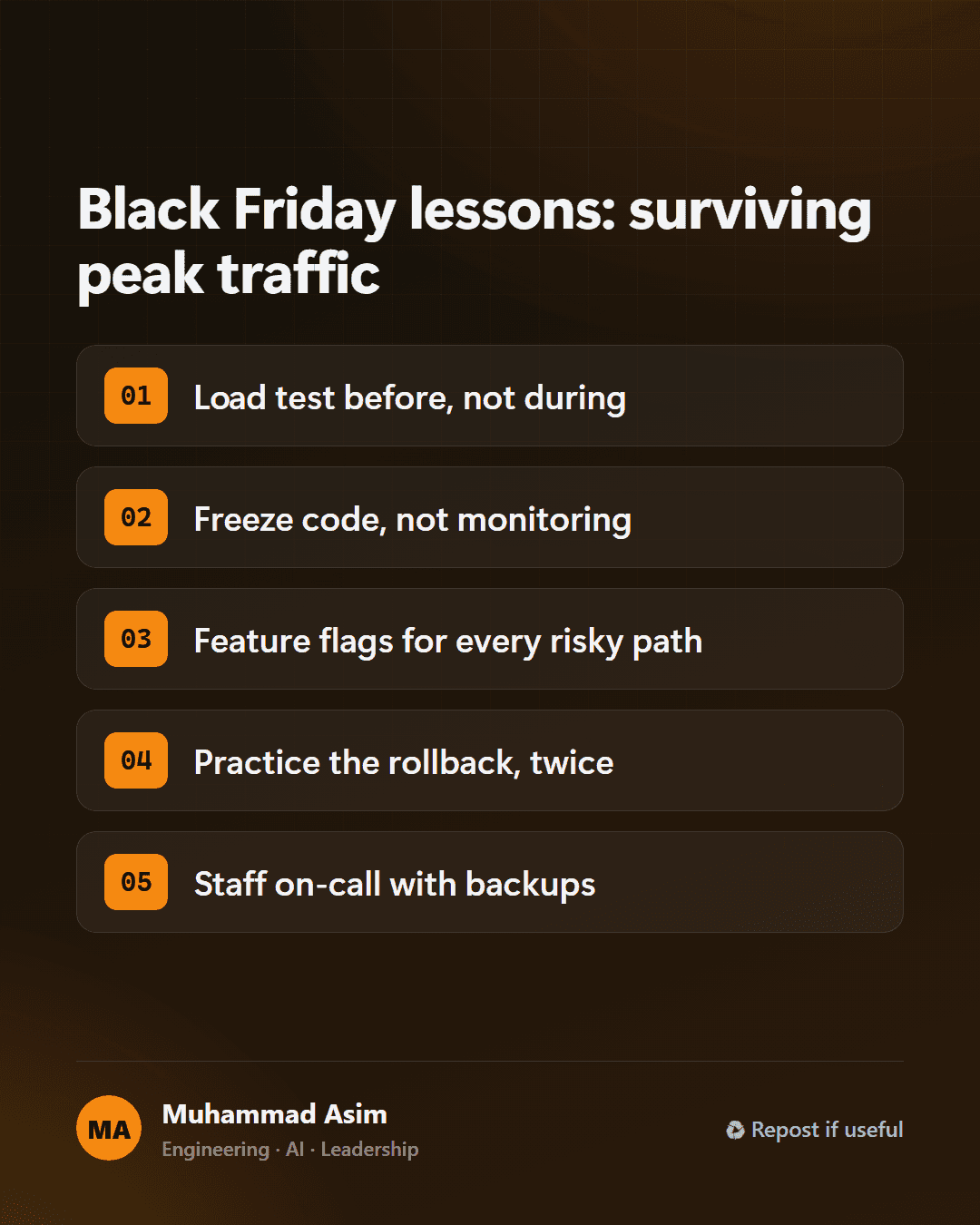
How to Prepare for Black Friday Traffic: 5 Lessons From Peak Seasons
Black Friday is the biggest stress test of the year for many engineering teams. Here are five lessons to prepare for Black Friday traffic, and any other peak day.
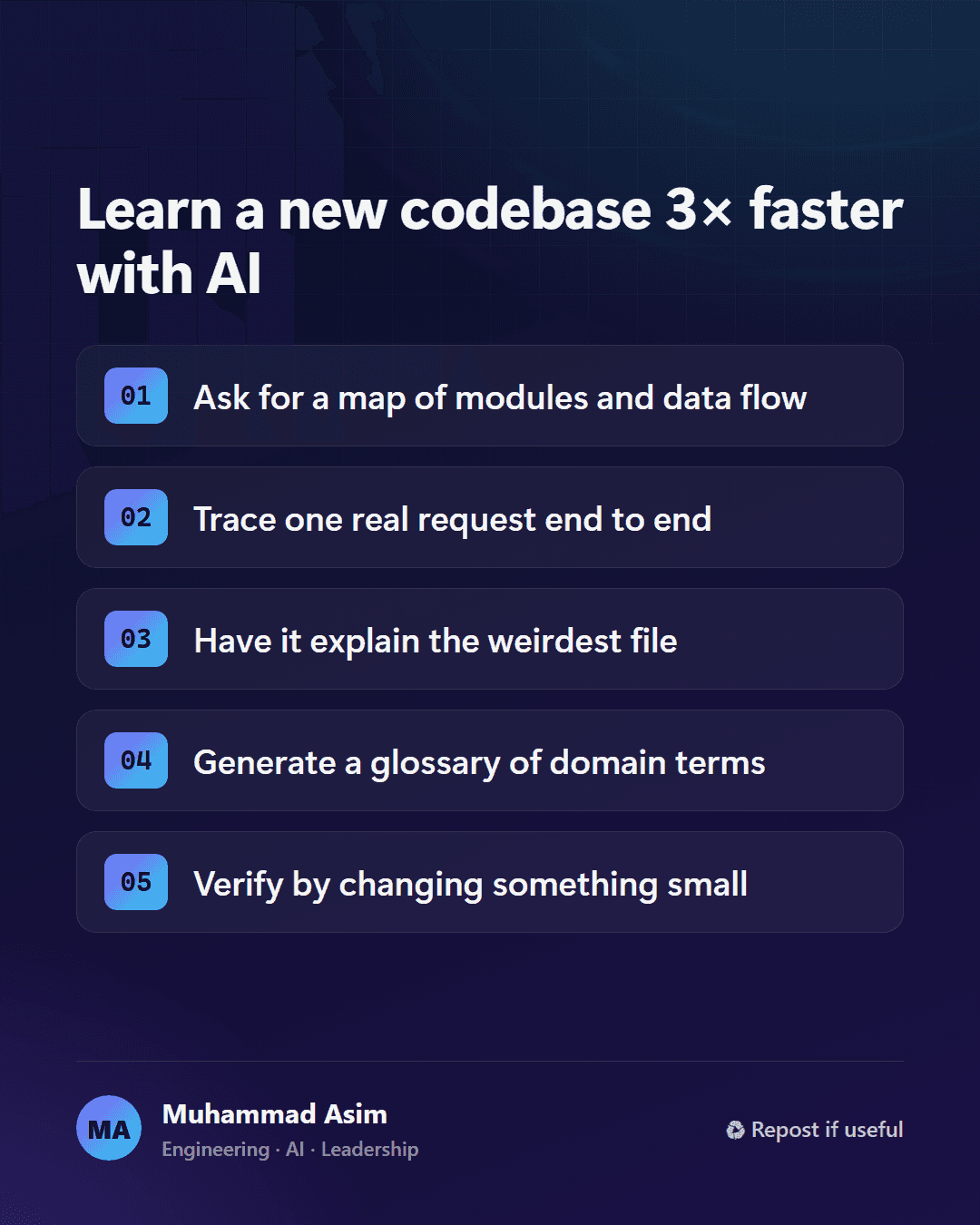
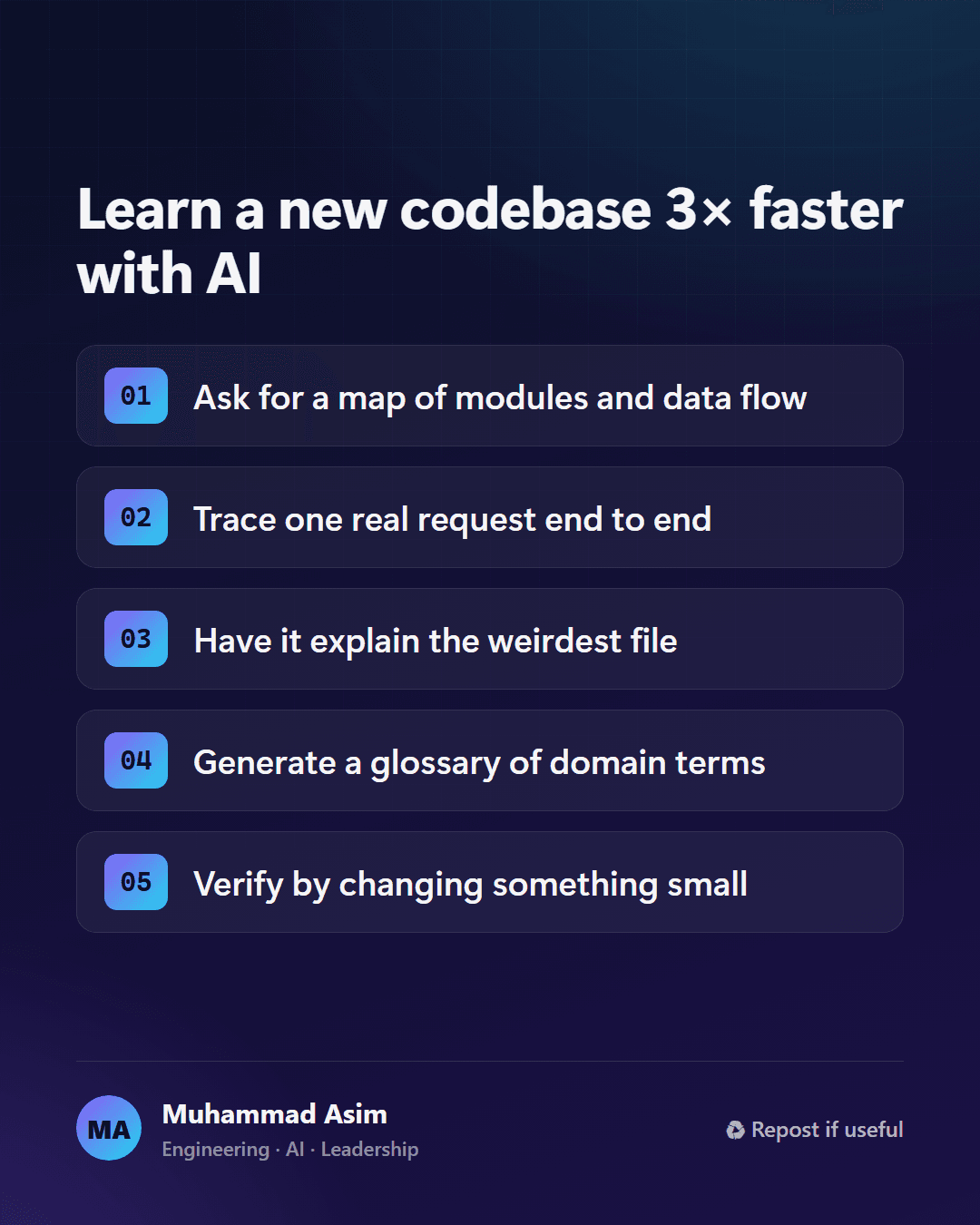
How to Use AI to Understand a Legacy Codebase Faster
Joined a new team or inherited old code? AI is an amazing tour guide. Here is my five-step process to understand a legacy codebase faster, while you stay in control.
Comments