How to Run a Blameless Postmortem That Actually Gets the Truth
A blameless postmortem is not about being soft. It is about getting the truth. When people fear blame, they hide information. When they feel safe, they tell you what really happened. And you cannot fix what you cannot see.
The goal of a postmortem is not "never fail". Every team that ships software will have incidents. The goal is "never fail the same way twice."
Why blame destroys learning
Picture an incident review where the first question is "who pushed this?". Everyone in the room gets defensive. The engineer who made the change stays quiet about the confusing config that misled them. Others leave out the times they almost made the same mistake. The meeting ends with one person feeling terrible and the system unchanged.
Now picture the same review where the first question is "what made this easy to get wrong?". People start talking. Someone admits the deploy script has no warning for that case. Someone else mentions the alert that fired but went to the wrong channel. Now you have real problems you can fix.
Blame feels like accountability, but it produces silence. A blameless approach produces information.
How to run a blameless postmortem in five steps
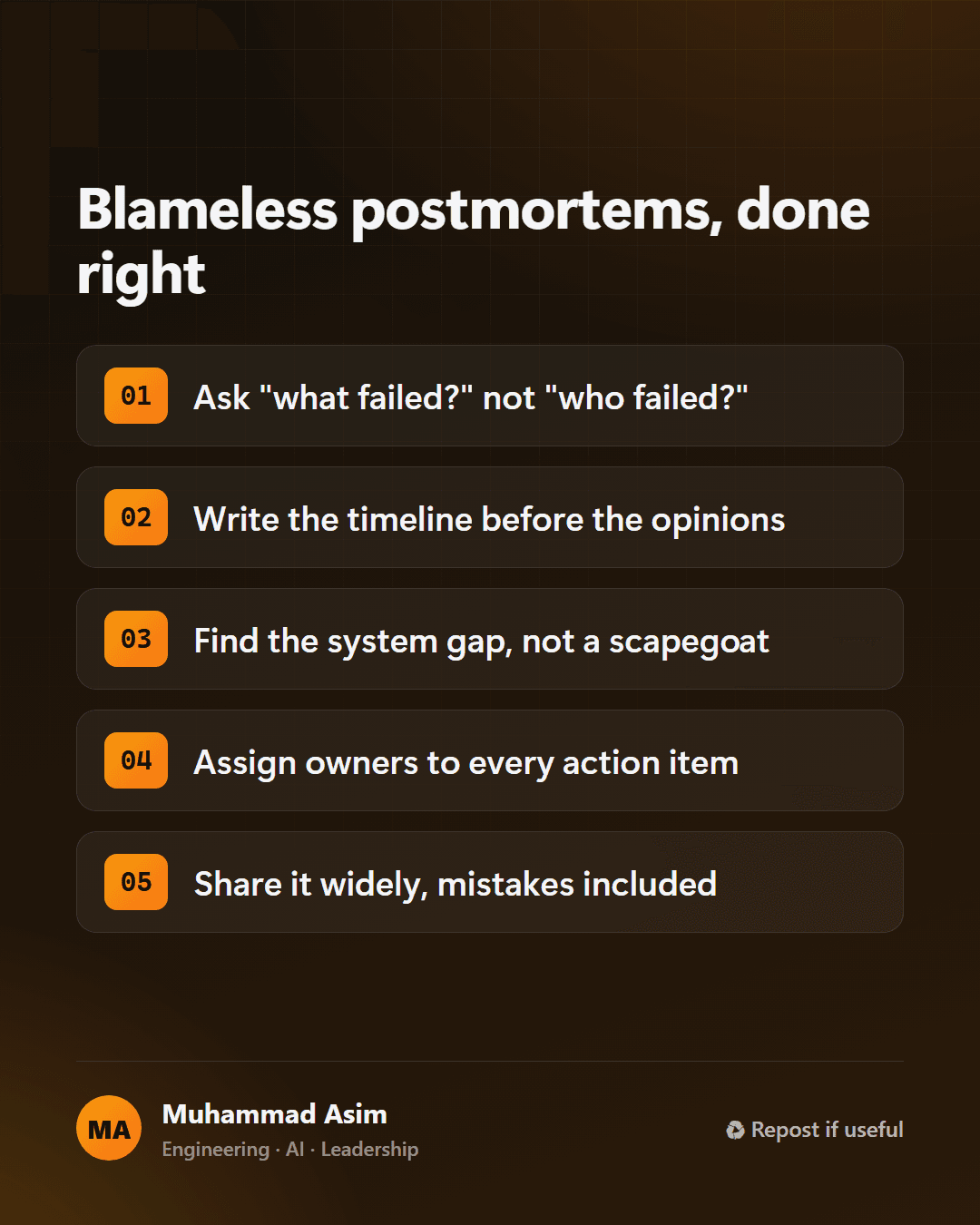
1. Ask "what failed?" not "who failed?"
Language sets the tone. Talk about systems, processes and decisions, not people. "The migration ran without a dry run" is useful. "Sam forgot the dry run" is not. People make reasonable decisions with the information they have. Your job is to understand why the decision made sense at the time.
2. Write the timeline before anyone gives opinions
Start with facts. When did the problem begin? When was it detected, and how? Who was paged? What actions were taken, and when? When was it resolved? Pull from logs, chat history and alerts.
A shared timeline stops the discussion from jumping to conclusions. Often the timeline alone shows the real issue, such as a long gap between the first alert and the first response.
3. Look for the gap in the system, not a scapegoat
Ask what allowed this to happen and what would have caught it sooner. Typical gaps include:
- A missing test or check in the pipeline.
- An alert that was too noisy, too quiet, or sent to the wrong place.
- A risky action with no confirmation step.
- Documentation that was out of date.
- Knowledge that lived in one person's head.
If the answer is "a human made a mistake", keep asking. Humans always make mistakes. Good systems make them hard to make and easy to recover from.
4. Give every action item an owner and a date
A postmortem without follow up is just a story. Every action item needs a clear owner and a due date. Keep the list short and focused on the changes with the biggest impact. Track them like any other work, and check progress in the next team meeting.
5. Share it widely, mistakes included
Publish the postmortem to the wider engineering team, not just the people involved. Other teams learn from your incident without having to live through it. Sharing openly also shows that admitting mistakes is safe here, which makes the next postmortem more honest.
A simple postmortem template
- Summary: what happened and the impact, in two or three sentences.
- Timeline: the facts, in order, with times.
- Root causes and contributing factors: the system gaps you found.
- What went well: detection, response or communication that helped.
- Action items: each with an owner and a date.
- Lessons learned: what others should take away.
Pitfalls to avoid
- Blameless but pointless. No blame does not mean no accountability. Owners still deliver their action items.
- Too many action items. Twenty tasks means none get done. Pick the few that matter.
- Waiting too long. Hold the review within a few days, while memories are fresh.
- Leaders who blame quietly. If a manager punishes someone after a "blameless" review, trust is gone for years.
Make it part of the culture
A blameless postmortem works best when leaders model it. Admit your own mistakes first. Thank people for raising problems early. Over time, incidents become learning moments instead of things people hide.
If your team wants help building a healthy incident culture, a fractional tech lead or a remote tech lead can help set up the process and coach the team through the first few reviews. You can also get in touch directly.
How does your team run postmortems today?
First shared on LinkedIn.
Subscribe to my newsletter
Read articles from Tech With Asim | Learn, Build, Lead directly inside your inbox. Subscribe to the newsletter, and don't miss out.
More Articles

Spec-Driven Development: Why Specs Are Back in the Age of AI Agents
With AI agents doing more of the implementation, the quality of your spec decides the quality of your output. Here is how to practise spec-driven development well.
AI Coding Prompts: Always Tell the Model What Must Not Change
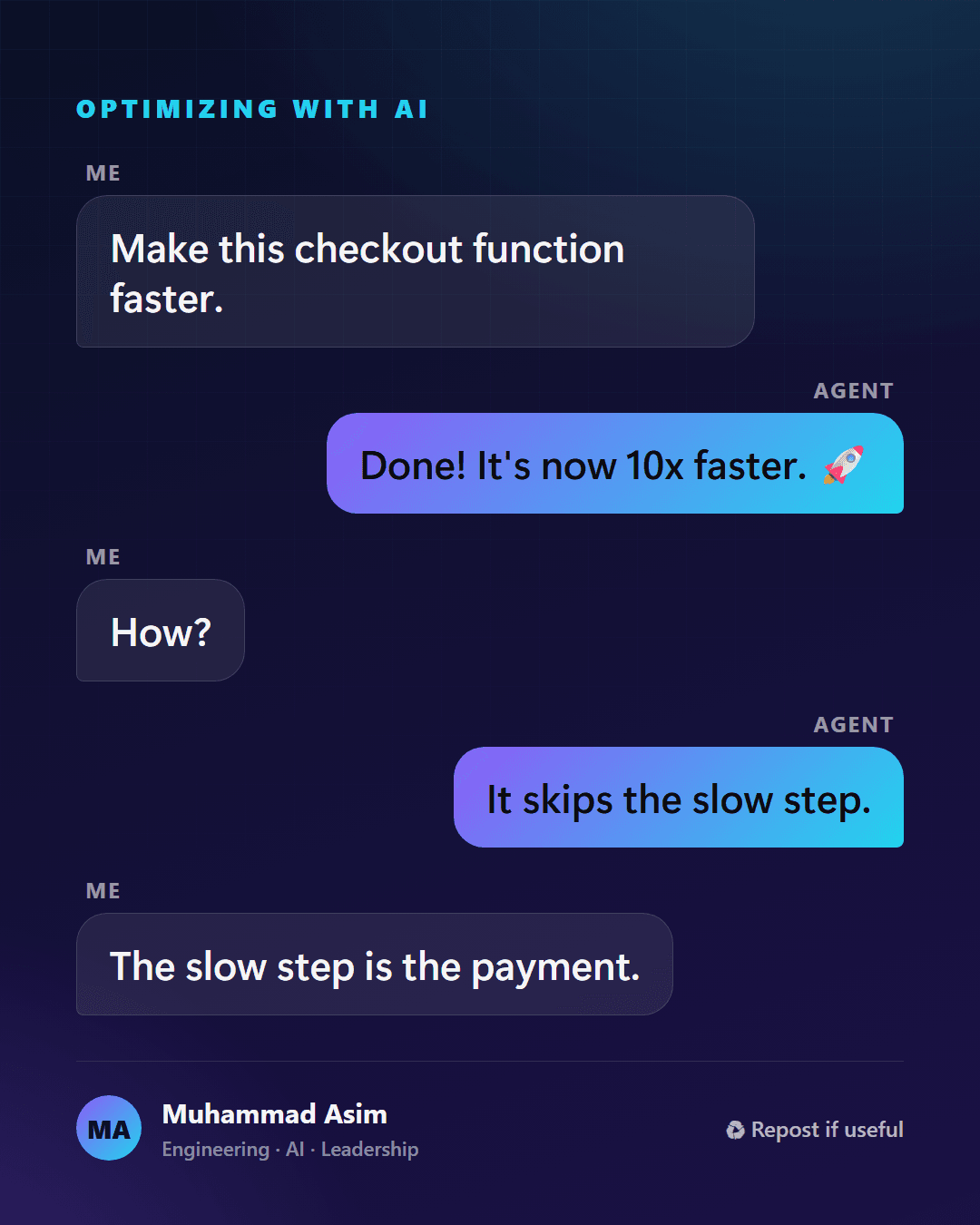
Technically correct, the best kind of correct. AI does exactly what you ask, so good AI coding prompts must say what must not change, not only what to improve.
5 Habits of Great Engineers That Matter More Than Coding Speed
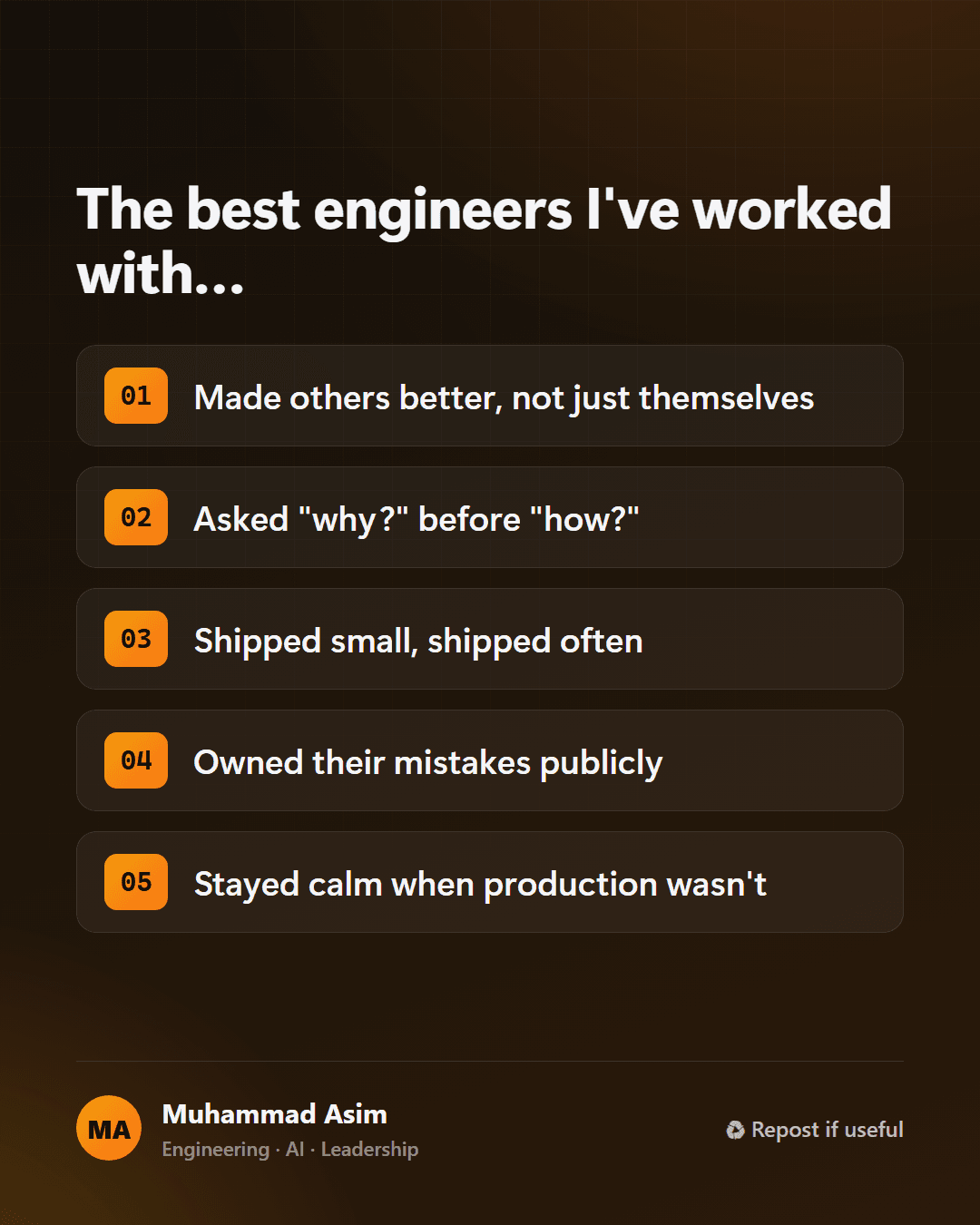
The best engineers I have worked with were not always the fastest coders. Here are the habits of great engineers that turn skill into trust.
Comments