How to Build a Healthy Code Review Culture, Not Border Control
If your code reviews feel like border control, your code review culture has a problem. You know the feeling: you submit a pull request, wait two days, and get back twenty comments about spacing and one "Change this." with no reason. Nobody learns anything, and everyone starts to dread the process.
Code review is where engineers learn the most, or quietly stop caring. Which one happens depends almost entirely on culture.
Why code review culture matters so much
A review is one of the few moments when two engineers look closely at the same piece of work. Done well, it spreads knowledge, catches real bugs and keeps the codebase consistent. Done badly, it slows delivery, damages trust and teaches people to submit as little as possible.
The tone of reviews shapes the tone of the team. Engineers who feel judged stop asking questions. Engineers who feel helped start asking more.
Five practices that work
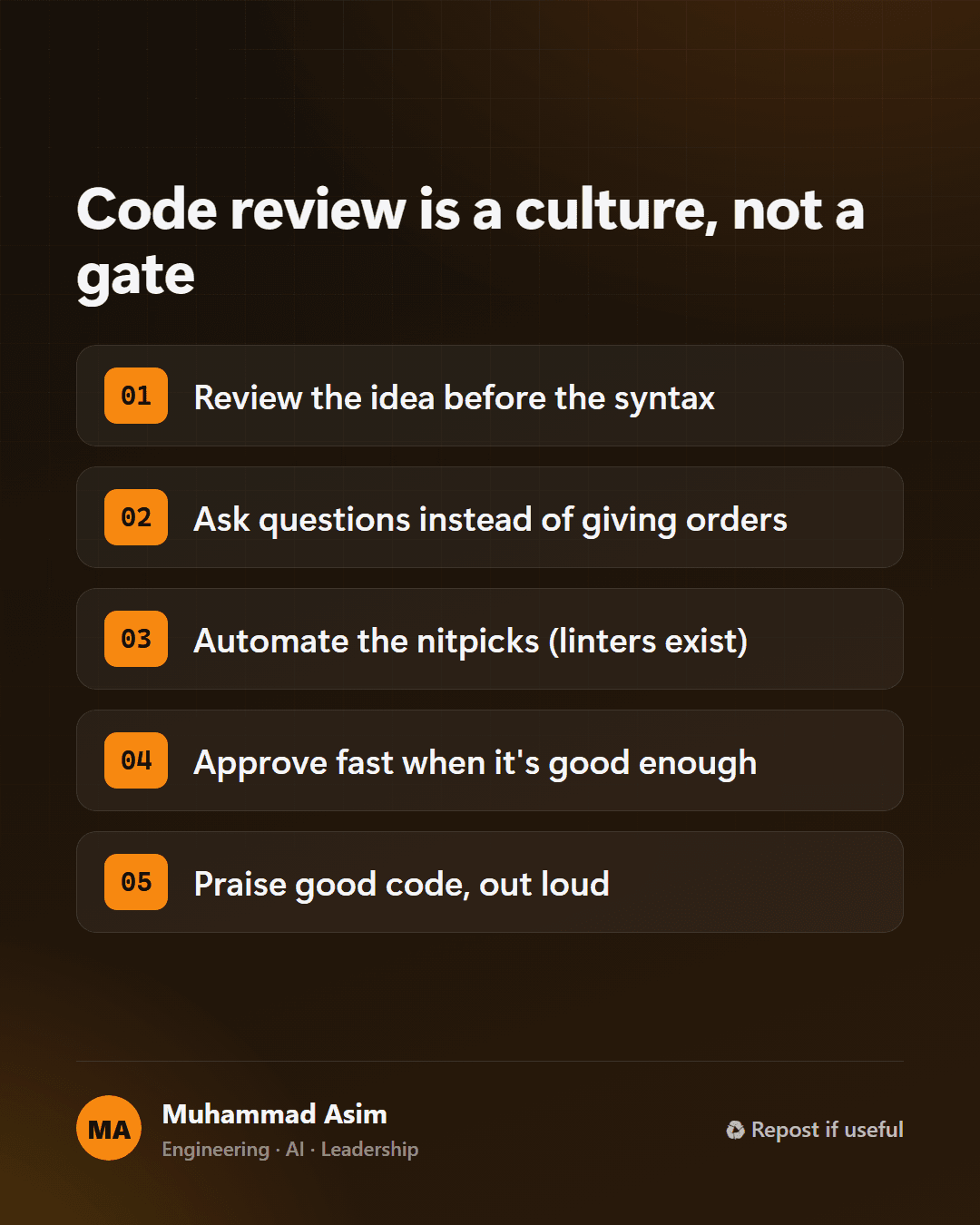
1. Review the idea before the syntax
Start with the big questions. Does this solve the right problem? Is the approach sound? Does it fit the architecture? If the idea is wrong, comments on variable names are wasted effort. Get alignment on the approach first, then look at the details.
2. Ask questions instead of giving orders
"What if we moved this into the service layer?" beats "Change this." A question invites the author to think and explain. Maybe they had a good reason you did not see. Maybe they will spot the issue themselves. Either way, the conversation stays respectful and both people learn.
3. Let linters handle the nitpicks
Formatting, import order, unused variables and naming rules should be automated. A formatter and a linter in CI remove a whole category of comments. Humans should spend review time on logic, design and risk, not on things a tool can catch.
4. Approve fast when it is good enough
Perfect is a moving target. If a change is correct, safe and clear, approve it, even if you would have written it a bit differently. Leave optional suggestions as "nit" or "non-blocking." Long review queues hurt flow more than small style differences ever will.
5. Praise good code, out loud
When you see a clean solution, a good test or a helpful comment, say so. Positive feedback is not fluff. It tells people what "good" looks like on your team, and it makes the critical comments easier to hear.
Why this matters more in the AI era
With AI generating more code than ever, review quality now decides your product quality. When an agent can produce a large diff in minutes, the bottleneck moves to the reviewer. A team with a weak review culture will ship more code, faster, with more hidden problems.
A few extra habits help when reviewing AI generated code:
- Ask the author to explain the change. If they cannot, the review is not ready.
- Keep pull requests small, even when the agent could do more in one go.
- Check for missing pieces, like error handling and edge cases, not just what is there.
- Use AI as a first pass reviewer, but never as the final approver.
Tools can help with that first pass. I compared some options in AI-powered VS Code extensions.
A quick checklist for reviewers
Before you submit a review, ask yourself:
- Did I comment on the approach before the details?
- Are my comments questions or suggestions, not orders?
- Did I mark optional comments as non-blocking?
- Would I be happy to receive this review?
- Did I say what was good?
And for the team as a whole, track one simple number: how long does a typical pull request wait for its first review? If the answer is days, that is the first thing to fix.
How leaders can shape it
Culture follows behaviour, especially from senior people. If leads write kind, clear, question based reviews, others copy them. If leads nitpick and block, others do the same. Set the tone in your own reviews, agree on review norms as a team and revisit them now and then.
Building this kind of culture is a big part of my fractional tech lead work, and it is one of the first things I look at when helping a remote tech lead settle into a new team.
The takeaway
A healthy code review culture turns reviews into the best learning moment of the week instead of a checkpoint to get through. Review the idea first, ask instead of order, automate the nitpicks, approve when it is good enough and praise good work.
How long does a typical PR wait for review on your team? If you want help improving your review process, get in touch.
First shared on LinkedIn.
Subscribe to my newsletter
Read articles from Tech With Asim | Learn, Build, Lead directly inside your inbox. Subscribe to the newsletter, and don't miss out.
More Articles
Spec-Driven Development: Why Specs Are Back in the Age of AI Agents
With AI agents doing more of the implementation, the quality of your spec decides the quality of your output. Here is how to practise spec-driven development well.
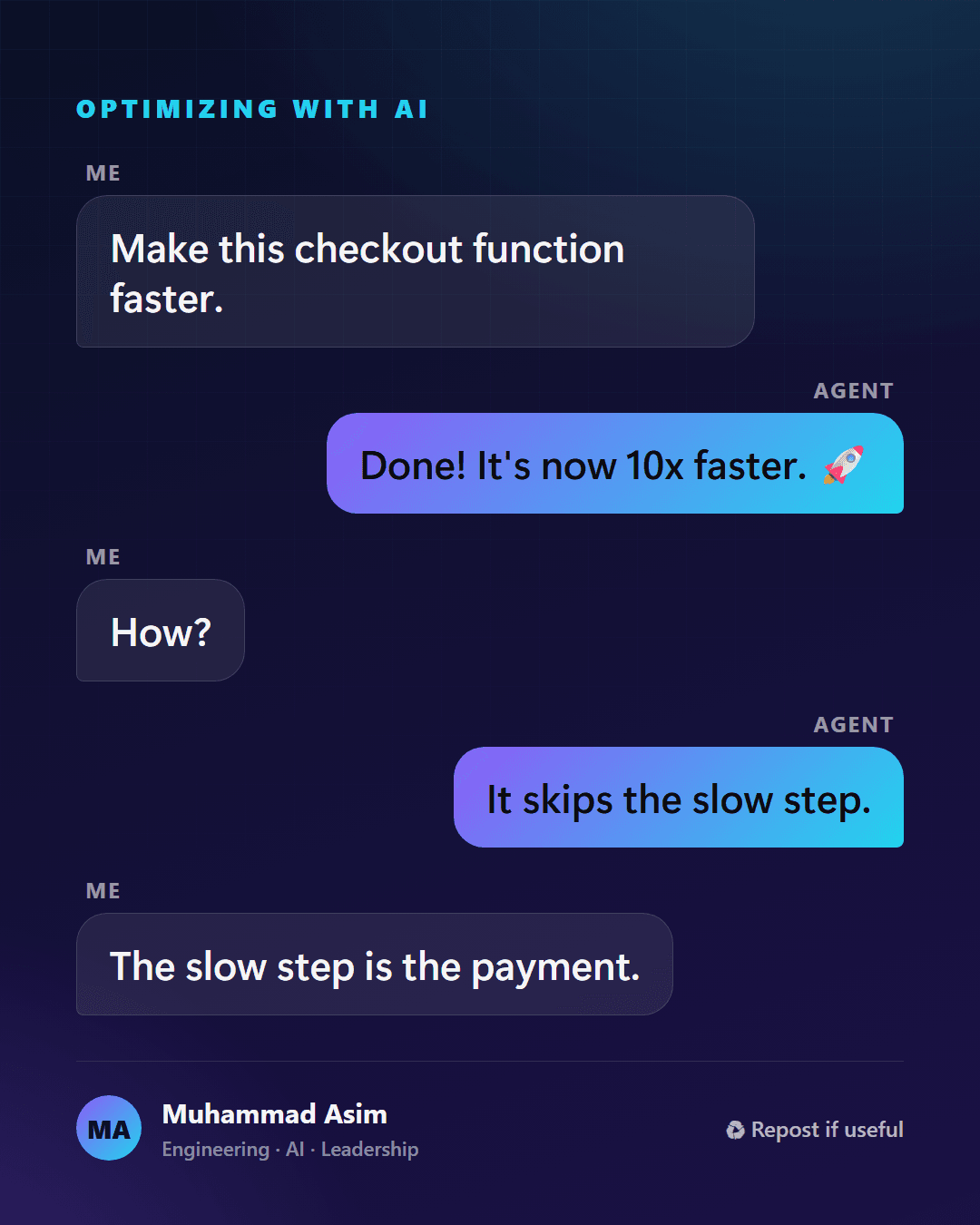
AI Coding Prompts: Always Tell the Model What Must Not Change
Technically correct, the best kind of correct. AI does exactly what you ask, so good AI coding prompts must say what must not change, not only what to improve.
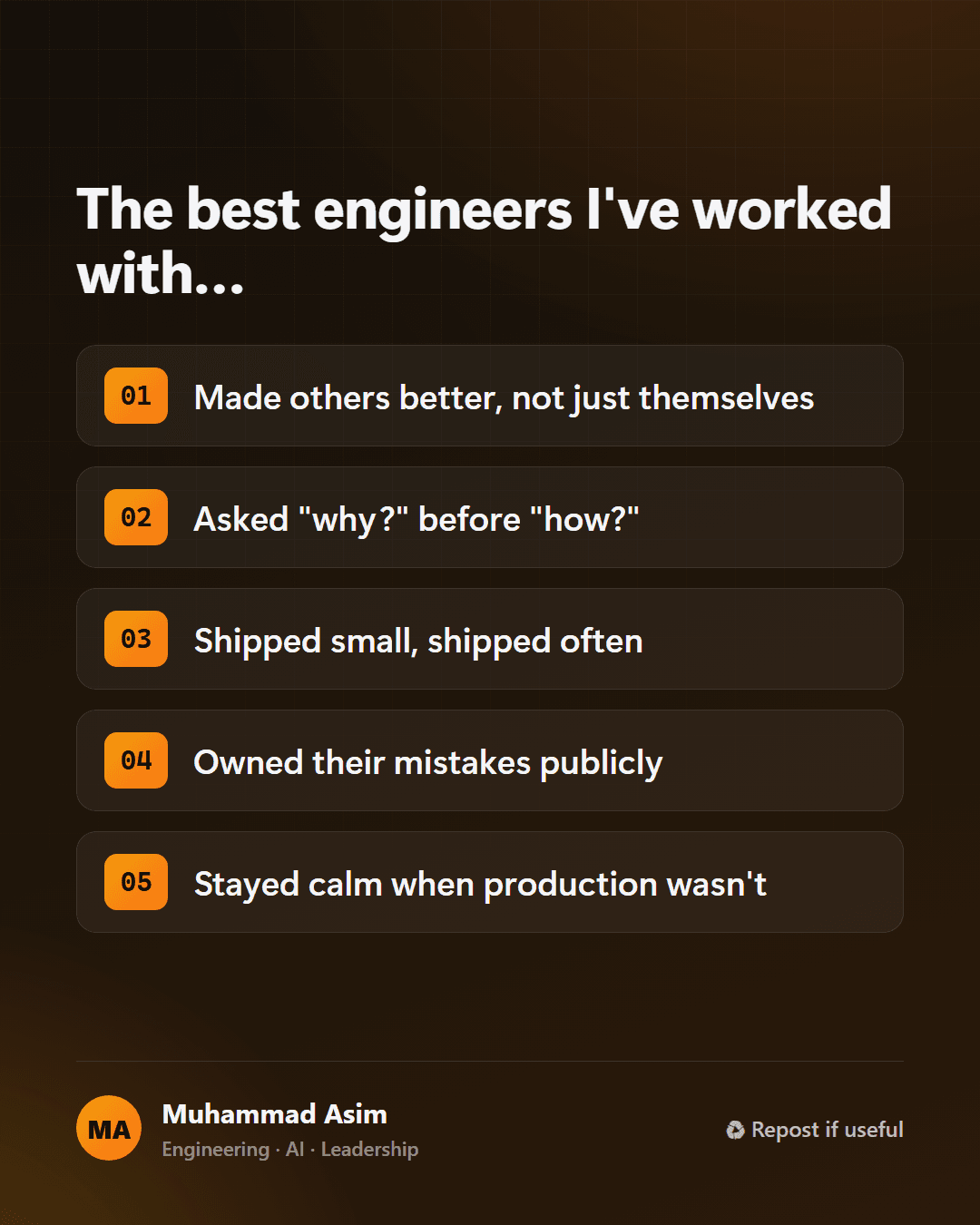
5 Habits of Great Engineers That Matter More Than Coding Speed
The best engineers I have worked with were not always the fastest coders. Here are the habits of great engineers that turn skill into trust.
Comments