Why You Should Choose Boring Technology Before the Next Shiny Framework
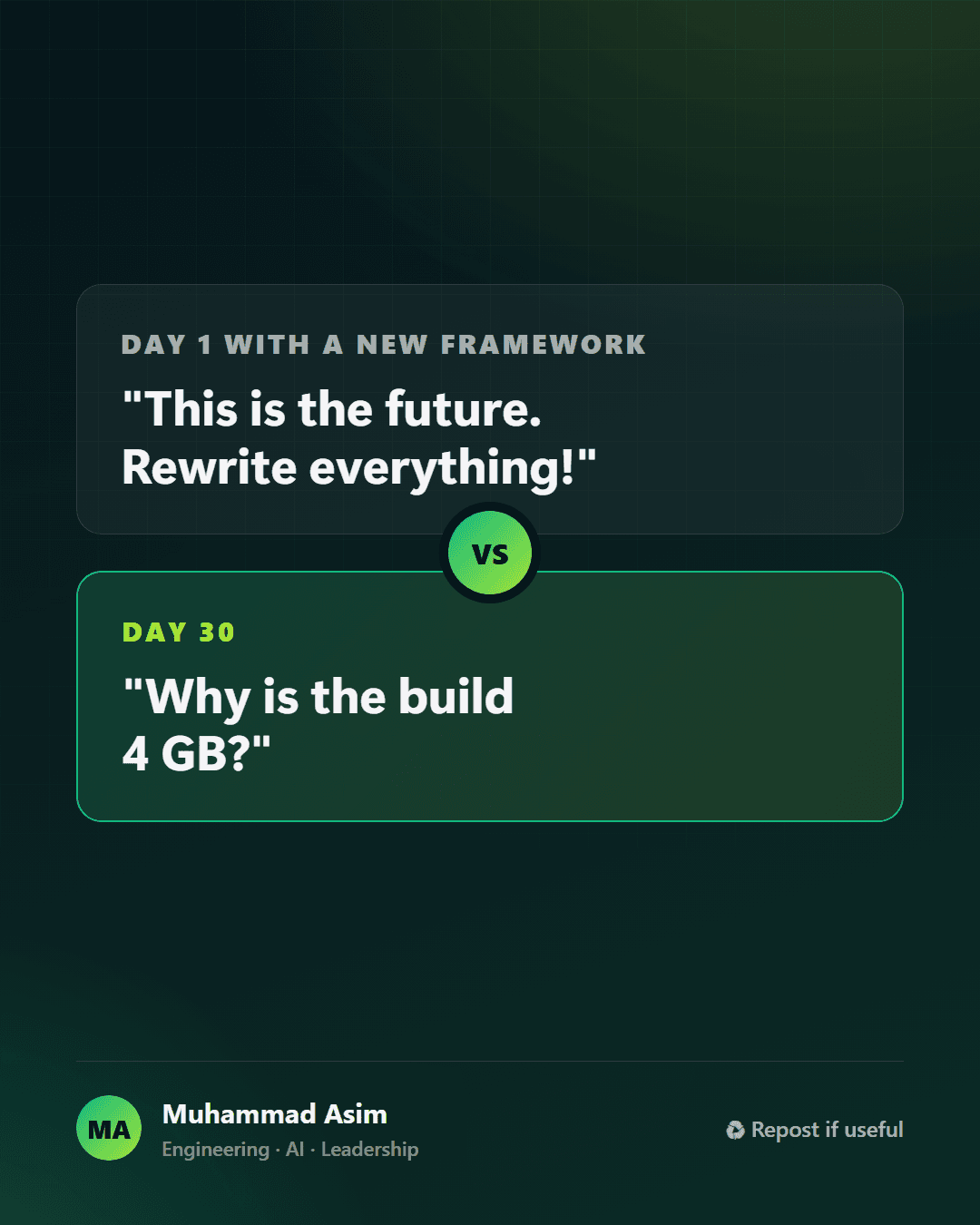
The new-framework life cycle fits in two panels: excitement, tutorial, production, confusion, acceptance. Most engineers will recognise the pattern. That is why my default advice to teams is simple: choose boring technology unless you have a real reason not to.
"Boring" does not mean old or bad. It means well understood. It has known failure modes, good documentation, many answered questions online and people you can hire who already know it.
The life cycle of framework hype
Let me unpack the five stages, because each one has a cost.
- Excitement. A new tool appears. The demo is beautiful. Someone on the team is very keen.
- Tutorial. The getting-started guide works perfectly. A todo app takes ten minutes.
- Production. Real data, real users, real edge cases. Things the tutorial never mentioned start to matter: authentication, caching, error handling, deployment.
- Confusion. The docs are thin for your case. The answers online are for an older version. A breaking change lands in a minor release.
- Acceptance. You either learn to live with it, write workarounds, or plan a migration.
None of this means new tools are bad. Many great tools today were once the shiny new thing. The point is that the cost of adoption shows up late, after you are committed.
Three questions before you adopt anything new
Before adopting a new framework, library or platform, I ask three questions.
What problem does it solve that we actually have?
Not a problem we might have one day. Not a problem a famous company has at a scale we will never reach. A real, current problem that is costing us time or money today. If you cannot write that problem down in one or two sentences, you are not ready to adopt.
Who maintains it in 3 years?
Look at the project, not the hype. How many active maintainers? Is there a company or foundation behind it? How are breaking changes handled? Then look at your own team. If the one person who championed it leaves, can the rest of the team support it?
What's the migration cost, really?
Teams almost always underestimate this. Count everything: rewriting code, retraining people, updating CI and deployment, fixing the bugs you will introduce, and running two systems side by side during the move. Then add a buffer. If the benefit is still clear, good. If it is marginal, wait.
Spend your innovation budget on your product
There is an idea I find very useful: every team has a limited innovation budget. You can only absorb so many new, unproven things at once before the risk becomes too high.
If you spend that budget on a new state library, a new build tool and a new database in the same quarter, you have nothing left for the part that matters: the product your customers pay for. When you choose boring technology for the foundations, you free up energy for real differentiation.
This is especially true on the front end, where new tools appear every week. The principles behind good front-end work change much more slowly than the tools. I wrote about those lasting ideas in Foundations of Front-end Mastery.
When new technology is the right call
Choosing boring technology is a default, not a rule. Sometimes the new thing is clearly right:
- It solves a real problem your current stack cannot solve well.
- It has strong backing, a clear roadmap and an active community.
- You can adopt it in one small area first, without betting the whole system.
- You have a way back if it does not work out.
The safest approach is a contained experiment. Use the new tool for one internal feature or one service. Set a time limit. Write down what you learned. Then decide with evidence instead of excitement.
A short adoption checklist
- Write down the real problem in two sentences.
- Check maintainers, release history and breaking change policy.
- Estimate the full migration cost, then add a buffer.
- Trial it in one small, low-risk area.
- Decide as a team, with a clear way back.
Good architecture is often about saying "not yet." If you want a second opinion on a stack decision, I help teams with exactly this through React front-end architecture reviews. You can also get in touch directly.
Boring technology is underrated. It lets you spend your innovation budget where it counts.
What framework hype have you lived through, and where did your team end up in the cycle?
First shared on LinkedIn.
Subscribe to my newsletter
Read articles from Tech With Asim | Learn, Build, Lead directly inside your inbox. Subscribe to the newsletter, and don't miss out.
More Articles
Spec-Driven Development: Why Specs Are Back in the Age of AI Agents
With AI agents doing more of the implementation, the quality of your spec decides the quality of your output. Here is how to practise spec-driven development well.
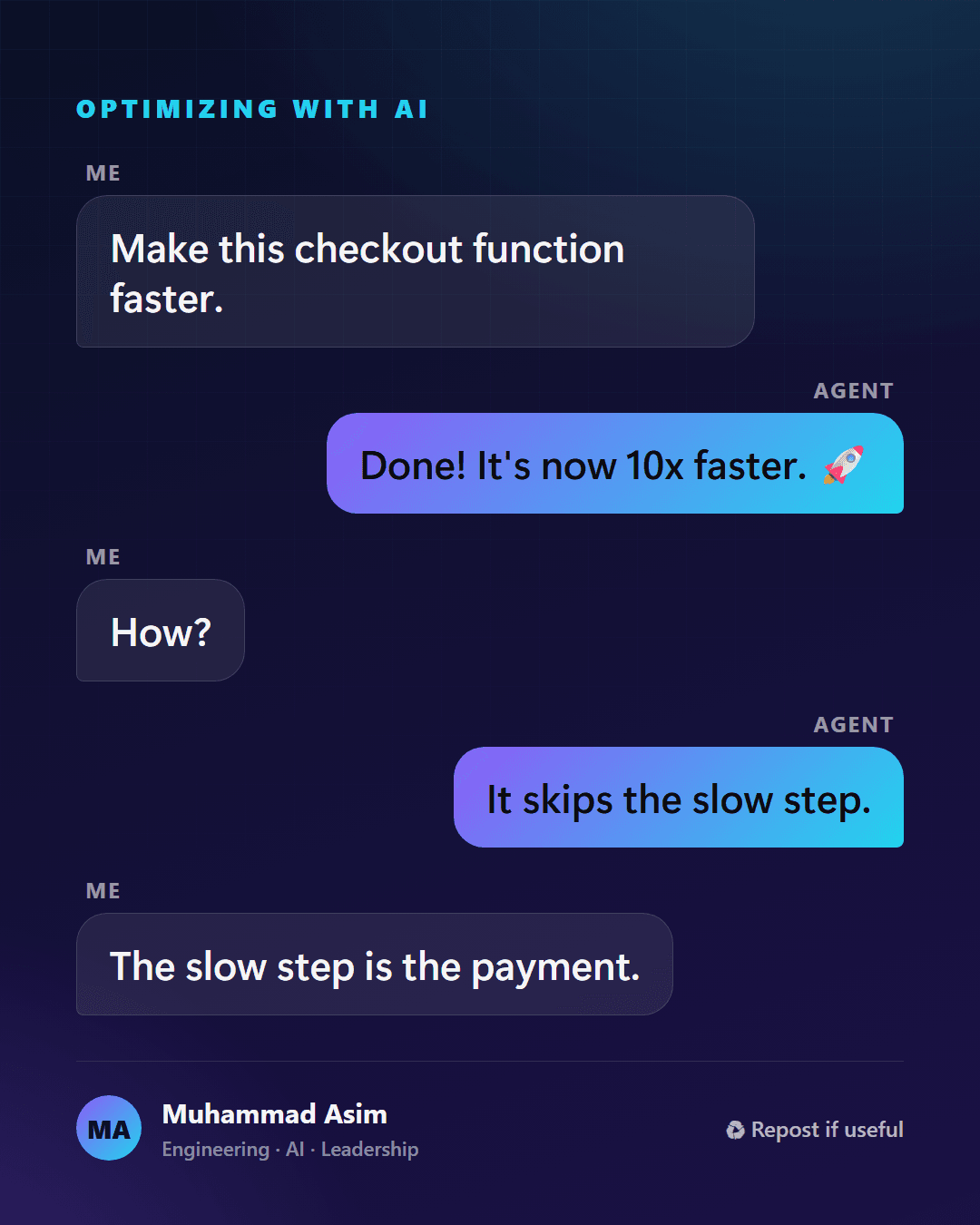
AI Coding Prompts: Always Tell the Model What Must Not Change
Technically correct, the best kind of correct. AI does exactly what you ask, so good AI coding prompts must say what must not change, not only what to improve.
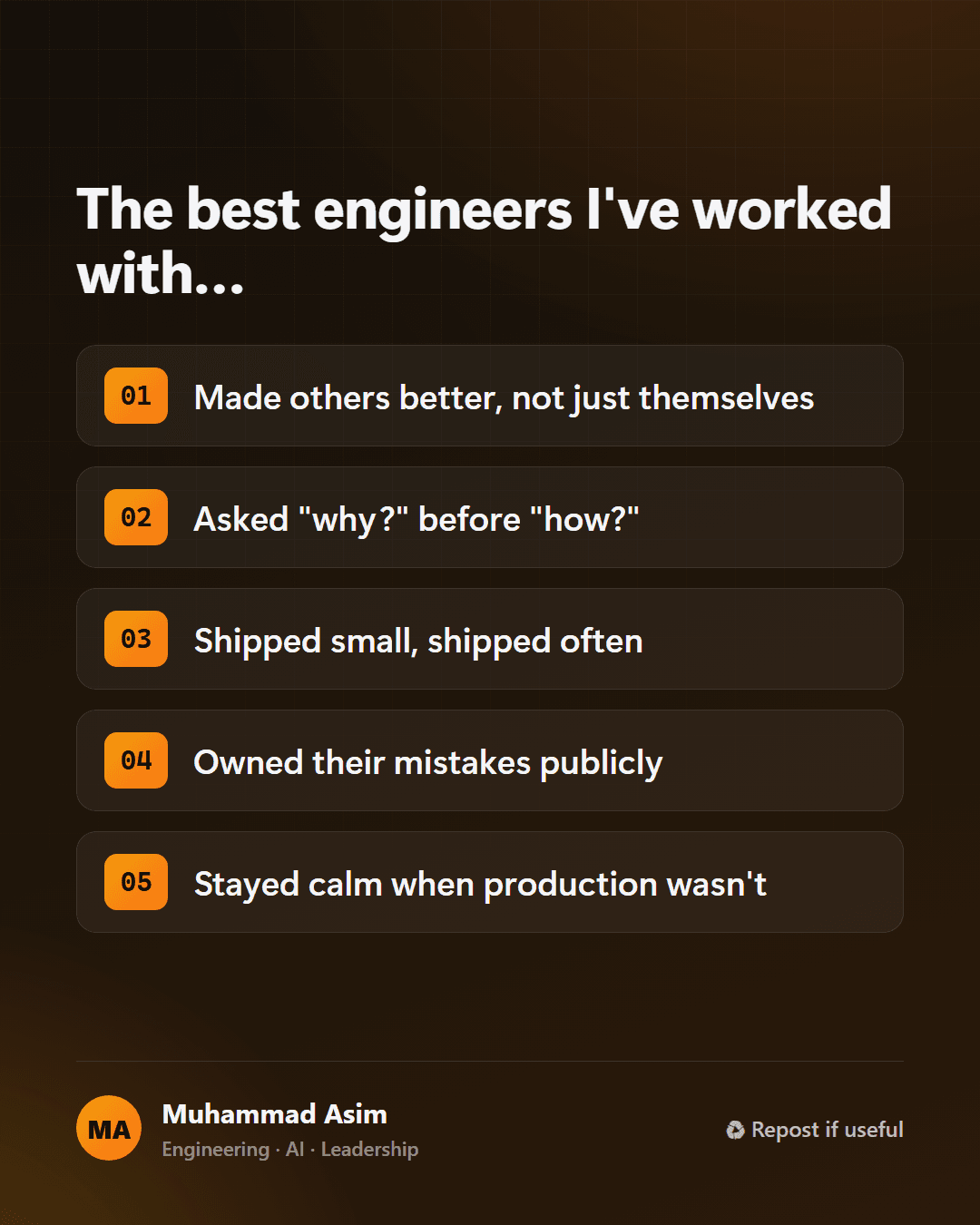
5 Habits of Great Engineers That Matter More Than Coding Speed
The best engineers I have worked with were not always the fastest coders. Here are the habits of great engineers that turn skill into trust.
Comments