A 30-Day Engineer Onboarding Plan That Gets New Hires Shipping Fast
How fast your new engineers become productive says a lot about your team. It shows how clear your code is, how good your docs are, how easy your setup is and how welcoming your people are. A clear engineer onboarding plan turns that first month from "read the wiki and wait" into steady, confident progress.
Here is a 30-day plan that works, and why each step matters.
Why onboarding deserves a plan
Many teams treat onboarding as a side task. The new person gets a laptop, a few links and a buddy who is already overloaded. They spend days fighting their local setup, weeks reading code without context, and a long time feeling unsure if they are doing well.
That is expensive. Every week a new engineer is not productive is a week of salary with little output, plus the time of the people helping them. Worse, a confusing first month shapes how people feel about the team for a long time.
A good plan fixes this with clear, small goals and early wins.
The 30-day engineer onboarding plan
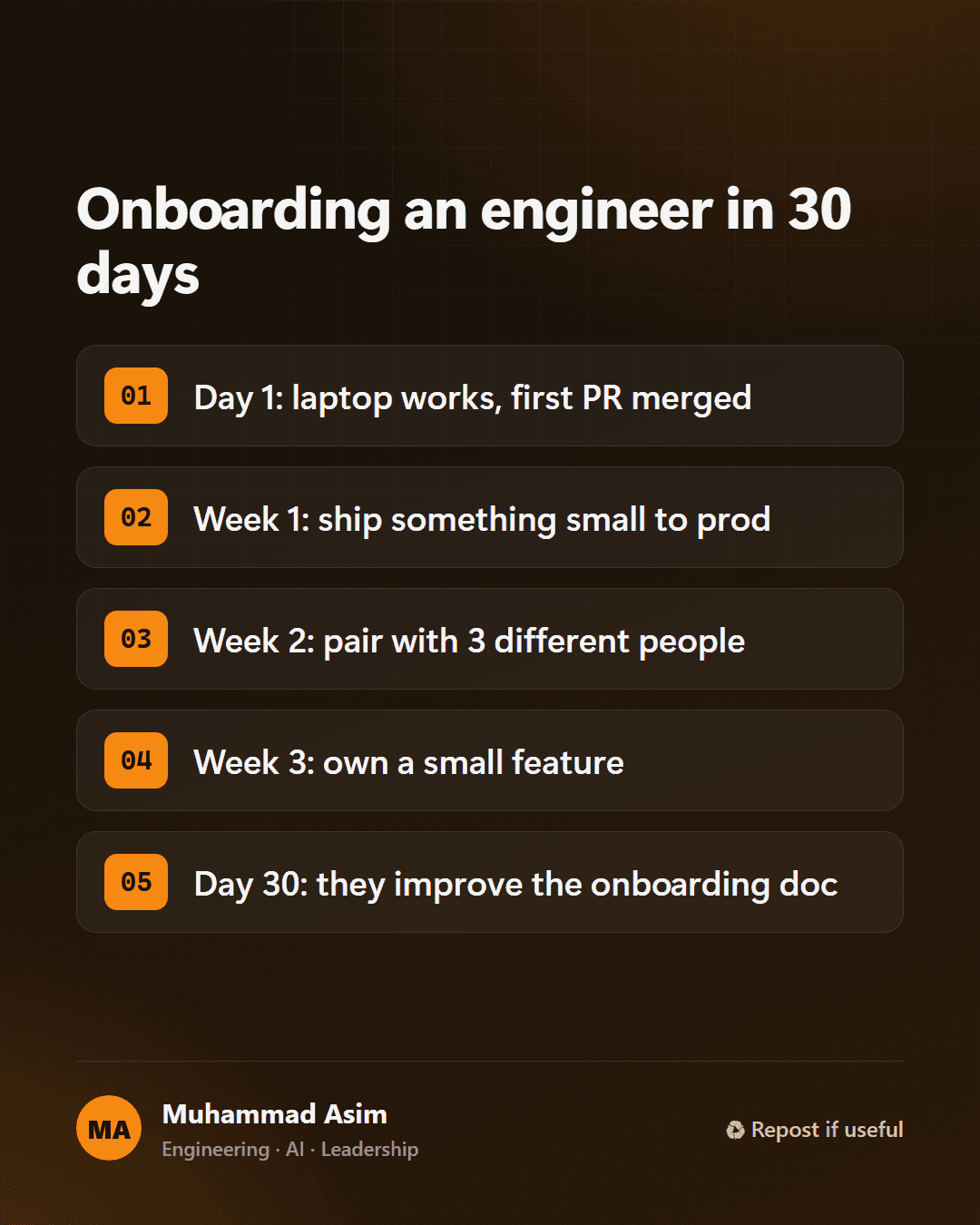
Day 1: laptop works, first (tiny) PR merged
The goal for day one is simple: the environment works and something is merged. The PR can be tiny. Fix a typo in the docs, update a comment, add a missing test case. What matters is that the new engineer has gone through the full path: clone, set up, change, commit, review, merge.
If this is not possible on day one, that is a signal. Your setup is too complex, your docs are out of date, or your review process is too slow. Fix that, and every future hire benefits.
Week 1: ship something small to production
By the end of the first week, the new engineer should ship a small, real change to production. A minor bug fix or a small UI improvement is perfect. It teaches the deployment process, the monitoring and the release habits of the team. It also gives a real feeling of contribution early on.
Week 2: pair with 3 different teammates
Pairing is the fastest way to transfer the knowledge that is not written anywhere. Why things are built the way they are, which parts of the code are fragile, who knows what. Pairing with three different people also builds relationships across the team and shows different working styles.
Keep these sessions focused on real work, not presentations.
Week 3: own a small feature end to end
Now the new engineer takes a small feature from ticket to production on their own, with support when needed. This includes understanding the requirement, designing the approach, writing the code and tests, getting it reviewed, deploying it and checking it works.
Ownership builds confidence. It also shows quickly where the person needs more help.
Day 30: improve the onboarding doc for the next person
That last step is the secret. Every new hire makes onboarding better.
By day 30, the new engineer remembers exactly what was confusing, missing or wrong. They are the best person to fix the onboarding doc. Ask them to update it: setup steps that failed, terms they did not understand, things they wish someone had told them. Over time, the doc stays fresh without anyone having to own it full time.
Make the plan easy to follow
A few things help every step of this plan:
- A working setup script. One command, or as close as you can get, to set up a local environment.
- A clear onboarding doc. Short, current and focused on what new people need first.
- A named buddy. One person who answers questions, with time set aside for it.
- Starter tickets. Keep a small list of good first issues ready before the person joins.
- Regular check-ins. A short weekly chat with their lead about progress and blockers.
AI tools can help too. A new engineer can ask an AI agent to explain a module, trace a request or build a glossary of domain terms, then confirm that understanding with a teammate. Used this way, AI speeds up learning without replacing the human connection.
Measuring onboarding
You do not need complex metrics. Track a few simple things for each new hire:
- Days to first merged PR.
- Days to first production change.
- How confident they feel at the end of each week, on a simple 1 to 5 scale.
- What they changed in the onboarding doc.
Look at these across several hires and you will see where your process is slow.
Onboarding is one of the areas I focus on when I help teams as a fractional tech lead, especially for distributed teams. If you are building a remote team, my page on hiring a remote tech lead in Pakistan explains how I support that. Or simply get in touch.
How long does it take a new engineer to ship on your team?
First shared on LinkedIn.
Subscribe to my newsletter
Read articles from Tech With Asim | Learn, Build, Lead directly inside your inbox. Subscribe to the newsletter, and don't miss out.
More Articles
Small Pull Requests Are Kind Pull Requests: Beating Personal Scope Creep
Scope creep, but make it personal. You open a file to fix one line and suddenly you are improving everything. Small pull requests are kind pull requests.
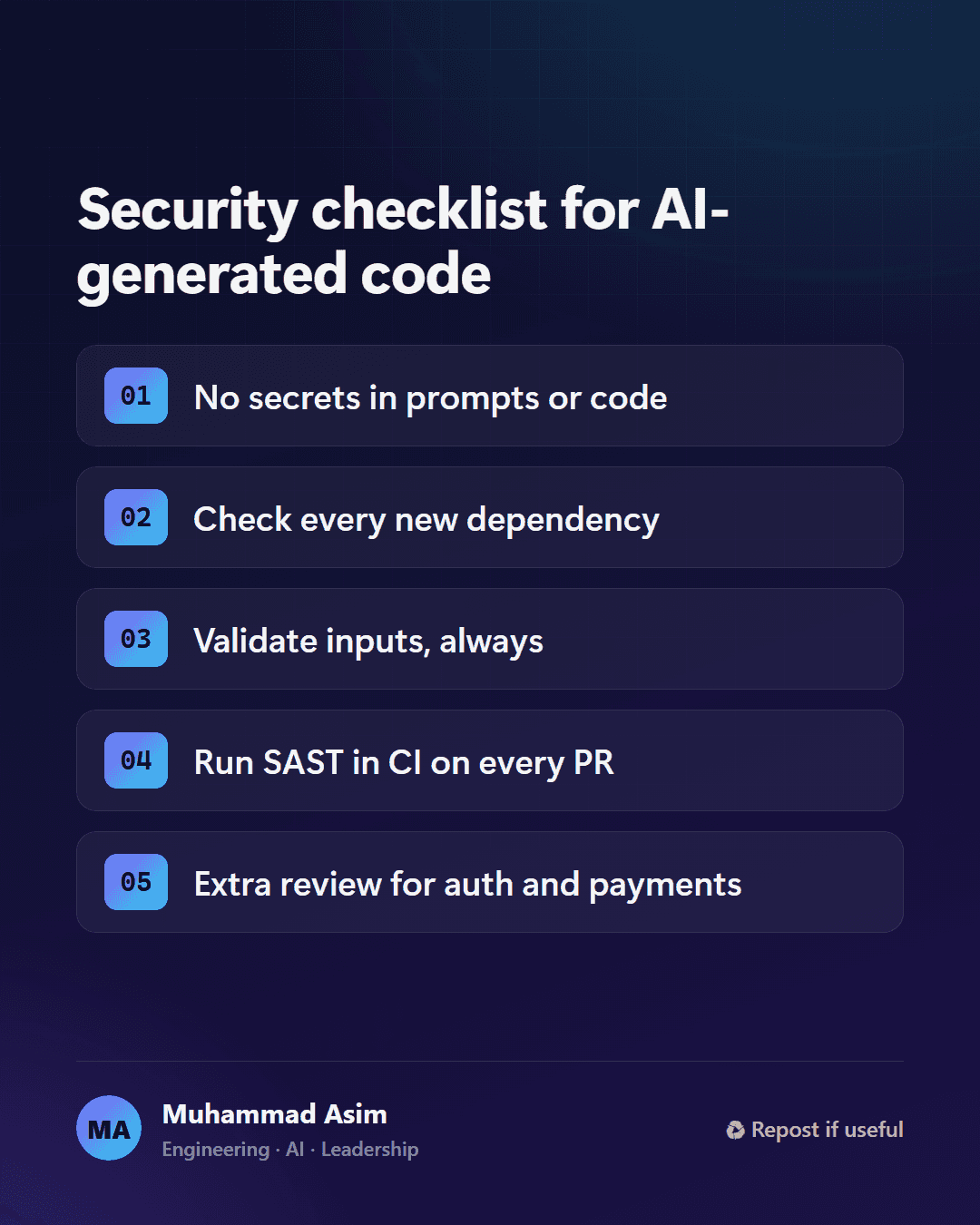
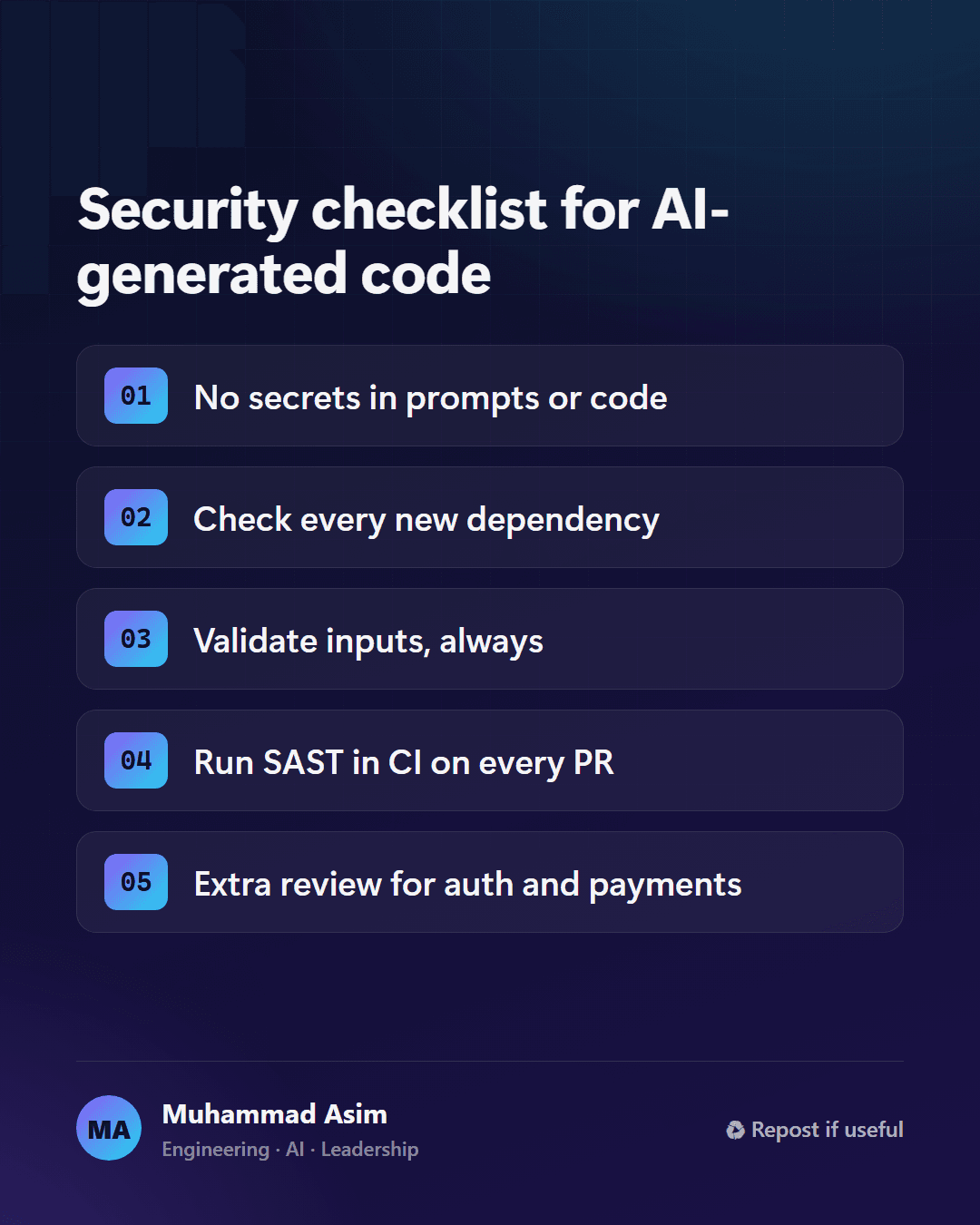
An AI Code Security Checklist for AI-Assisted Development
AI writes code fast. Attackers read code fast too. This AI code security checklist covers the five habits that keep AI-assisted development safe.
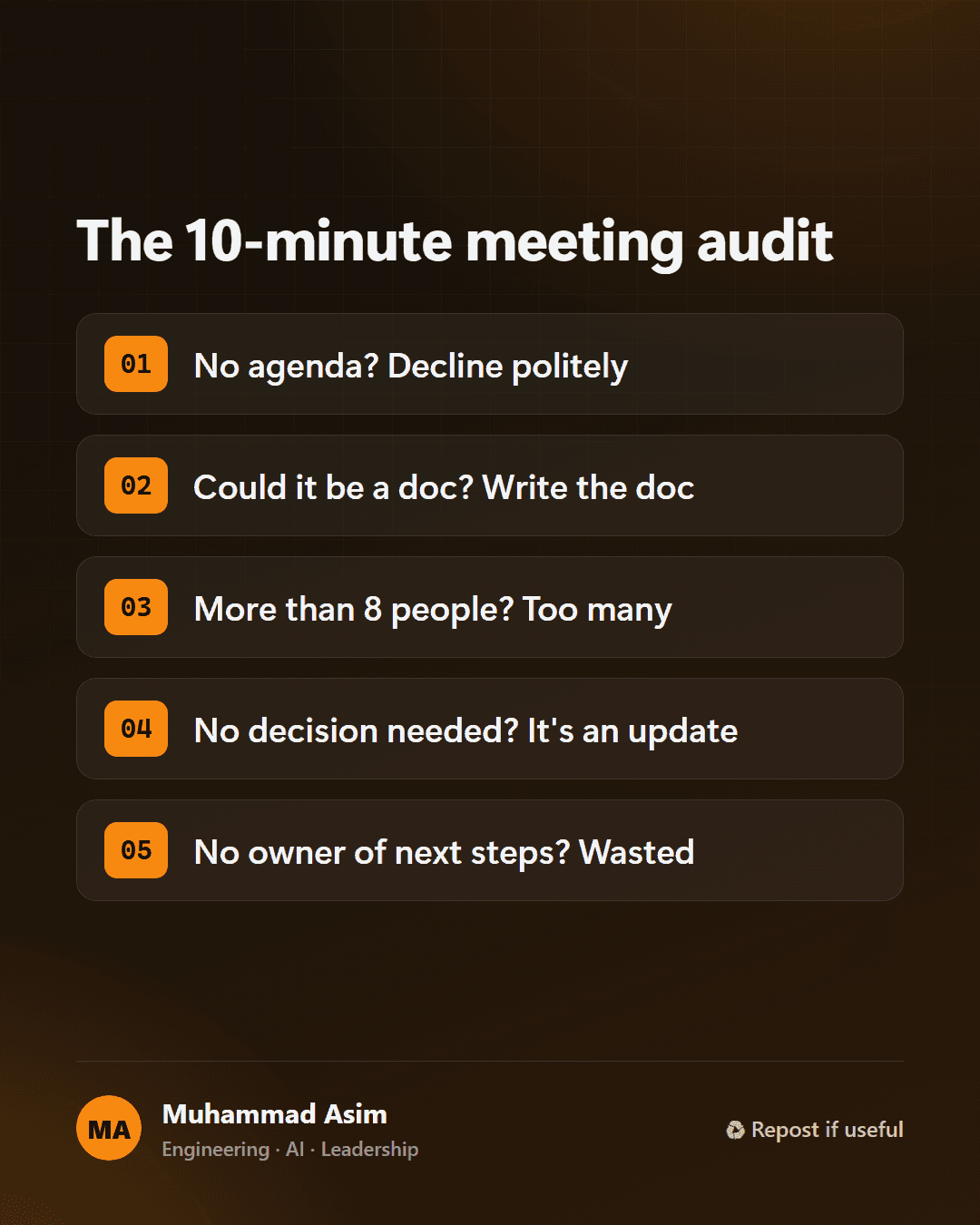
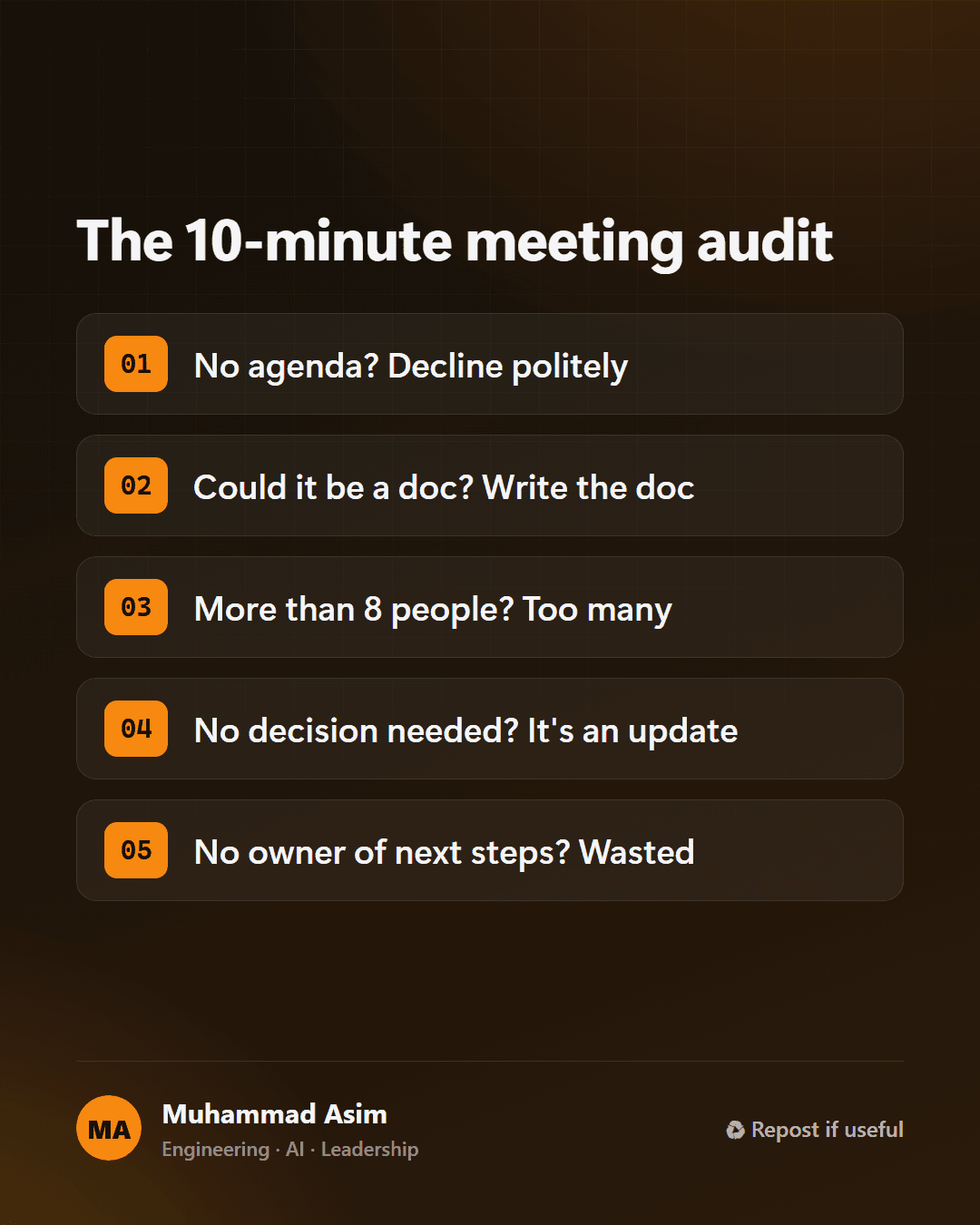
A 10-Minute Meeting Audit to Win Back Engineering Focus Time
Engineers need long blocks of focus, and every unneeded meeting is a tax on your product. A 10-minute meeting audit with five simple questions helps you win that time back.
Comments